

Ukraine’s Strike on Russian Ship in Libya Signals Widening War
Ukraine's night-time strike on a Russian corvette in Benghazi harbour signals the war's expansion beyond its borders. The attack, nearly 2,000 miles from Moscow, raises questions about the conflict's spread and the risks of new fronts. With Russia condemning the operation and the UN expressing concern, the international community faces a delicate balance between supporting Ukraine and preventing escalation.
Ukraine’s Bold Strike in Libya: A New Front in the War?
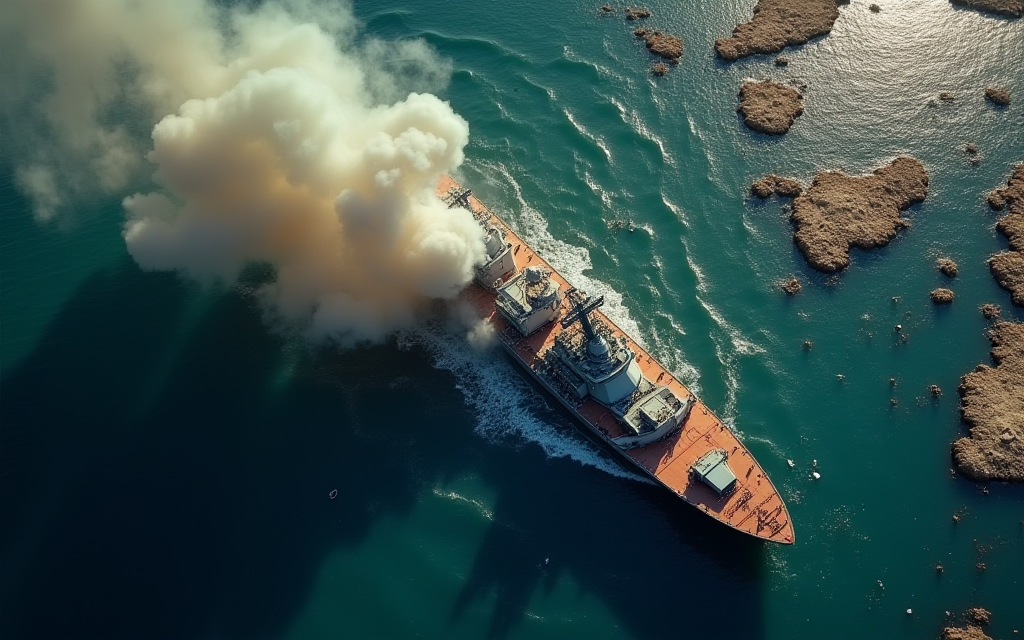
In a dramatic escalation of the conflict, Ukraine’s intelligence agency and armed forces coordinated a night-time attack on a Russian corvette, the Merkury, in Benghazi harbour, Libya. The strike, nearly 2,000 miles from Moscow, has raised serious questions about the geographical spread of the Ukraine war and the risks of opening new fronts in distant regions.
Ukrainian President Volodymyr Zelensky hailed the operation as “exemplary,” while Russia condemned it as a “dangerous escalation.” The attack underscores Ukraine’s growing capability to project power far beyond its borders, targeting Russian assets in areas previously considered safe.
Strategic Implications and International Reactions
The strike in Benghazi, a port controlled by pro-Moscow warlord Khalifa Haftar, has drawn deep concern from the United Nations mission in Libya. Libyan officials insist their country is not a party to the Russia-Ukraine war, yet the presence of Russian military assets in the region has made it a target. This operation follows a suspected Ukrainian drone attack on a Russian dry-cargo ship in the Gulf of Finland, further demonstrating Ukraine’s willingness to hit Russian interests worldwide.
The international maritime community is now grappling with the precedent set by this attack. If Ukraine can successfully strike Russian ships in a neutral harbour so far from home, where will it stop? The International Maritime Organisation (IMO) has previously condemned attacks on commercial shipping, and this incident may prompt a reevaluation of maritime security protocols in conflict zones.
Spillover Effects Across Europe and Beyond
The war’s spillover is not limited to Libya. In recent weeks, Russian projectiles landed inside Poland, a NATO member, prompting accusations of deliberate provocation. Romania and Moldova have repeatedly faced overflying Russian drones targeting Ukrainian ports, while Bulgaria and Romania have suffered maritime drone attacks in the Black Sea. These incursions have forced NATO members to scramble fighter jets and heighten vigilance along their borders.
Hybrid warfare tactics are also on the rise. Germany’s Leipzig-Halle airport, a key resupply hub for Ukraine, was targeted by explosive drones, and explosive packages have been sent across Europe. Moscow denies involvement, but the pattern suggests a coordinated campaign to destabilize Western support for Ukraine.
What This Means for the Future of the Conflict
Ukraine’s long-range drone attacks, which Zelensky calls “long-range sanctions,” have already struck targets deep inside Russia, including the daring Operation Spider’s Web that damaged strategic nuclear bombers. The strike in Libya marks a significant expansion of this strategy, signaling that Ukraine is prepared to pursue Russian assets wherever they may be.
However, this approach carries risks. It could provoke Russia to retaliate against Ukraine’s allies or escalate the conflict in unpredictable ways. As the fifth anniversary of Russia’s full-scale invasion approaches, the war shows no signs of containment. The international community must navigate a delicate balance between supporting Ukraine’s right to self-defense and preventing a wider conflagration.
For now, the message is clear: the Ukraine war is no longer confined to the battlefield in Eastern Europe. It has become a global contest with far-reaching consequences.
