

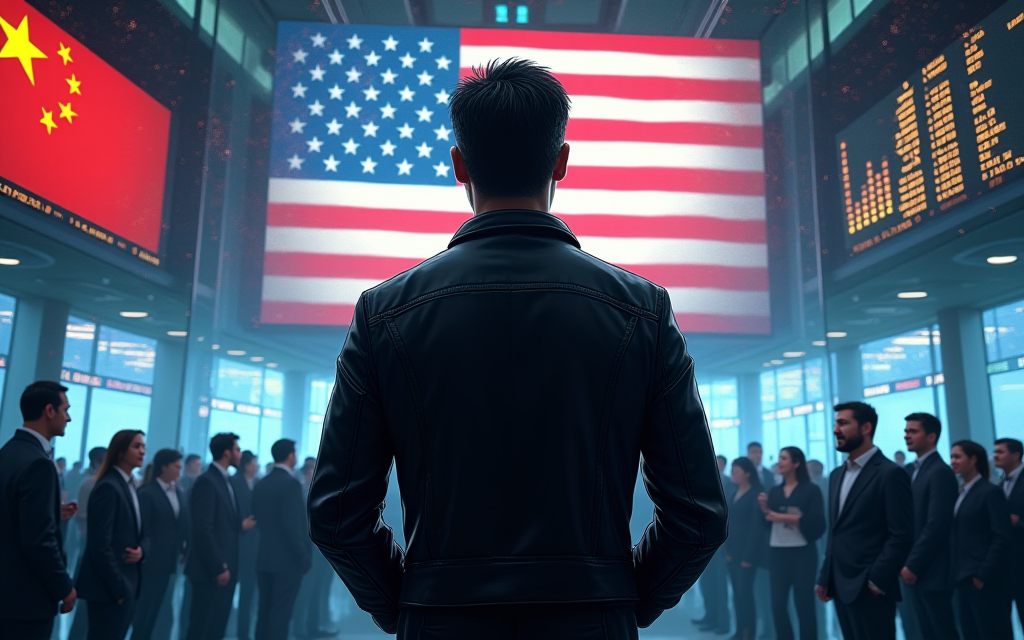
Nvidia CEO Jensen Huang’s Return Teaches Xi Jinping About Trump’s Pressure Points
Jensen Huang's reinstatement as Nvidia CEO has become a top trending topic in China, offering President Xi Jinping a window into Donald Trump's pressure points. The saga, which involved spy allegations and a White House denial, reinforces Beijing's belief that direct engagement can influence Washington. Yet new US chip restrictions and China's rare earth leverage mean the technology battle is far from over, with profound implications for global markets and trade.
Jensen Huang’s Return to Nvidia: A Geopolitical Lesson for Beijing
When Jensen Huang was reinstated as Nvidia’s CEO, the news didn’t just shock Silicon Valley—it dominated Chinese social media. On Weibo, China’s largest microblogging platform, the story became the top trending topic, with users celebrating the return of a billionaire who had openly declared his love for China during a May visit, complete with viral videos of him eating noodles and drinking milk tea. But beyond the memes and curiosity about his missing leather jacket, the event carries profound implications for how Beijing views its relationship with Washington.
For Chinese President Xi Jinping, Huang’s dramatic comeback—dubbed one of the greatest U-turns in corporate history—offers a window into the pressures and priorities of President Donald Trump. It also reinforces Beijing’s belief that direct engagement with the White House can yield tangible results, even in the sensitive realm of high technology.
Spy Allegations and the Battle for Narrative Control
The saga began with explosive allegations that one of Huang’s alleged mistresses had been recruited by China’s Ministry of State Security (MSS), the country’s equivalent of the CIA. Beijing vehemently denied the claims, dismissing them as a smear campaign orchestrated by China hawks in Washington. State media outlets like the Global Times, a Communist Party mouthpiece, labeled the controversy a “witch hunt.”
Now, with the White House and Trump himself stating that Huang poses no national security threat—despite ongoing investigations—Beijing appears to have won a narrative victory. The episode has reinforced a view among Chinese officials that Washington is split into two camps: those who favor strict export controls to protect US national security, and those like Huang who argue that such restrictions only accelerate China’s drive for technological self-sufficiency.
Direct Engagement as a Leverage Tool
The timing of Huang’s reinstatement—just days after Xi met Trump in Shenzhen last week—has not gone unnoticed in Beijing. Trump confirmed that the two leaders discussed Huang but offered no details, and China has remained silent. Yet the sequence of events suggests to Xi that face-to-face diplomacy can influence Washington’s decision-making, even on issues involving the world’s most valuable chipmaker.
Huang has repeatedly warned that US export controls will backfire, forcing Chinese firms like Huawei to develop independent alternatives while shutting American companies out of the world’s second-largest economy. His return to Nvidia’s helm, however, is no guarantee of relief for Beijing. The sale of advanced chips remains a flashpoint, especially as both sides seek a trade deal ahead of another Trump-Xi meeting expected in December.
New Chip Restrictions and China’s Rare Earth Leverage
Already, the US Bureau of Industry and Security is tightening rules to close loopholes that allow Chinese firms to access advanced Nvidia and AMD chips through cloud providers in third countries such as Singapore, Malaysia, and Thailand. These measures target not only direct exports but also Chinese companies’ ability to use computing power in overseas data centers. Beijing has yet to retaliate, but investors are watching closely for any escalation that could roil US equity markets.
Xi may also see an opportunity in Trump’s apparent anxiety over stock market stability. The president’s willingness to intervene in the HR decisions of the world’s biggest company—and his personal investment in Nvidia, now held in a trust managed by his sons—signals that he is highly sensitive to market turbulence. China has already used its dominance over rare earth metals to bring the US to the negotiating table, and if Washington restricts chip exports and Beijing retaliates, the cycle could have profound effects on American industries from automakers to defense contractors.
What Beijing has realized is that the trade tussle is no longer just about tariffs. It is now about control of critical technology and minerals, which in turn shape military influence and economic power. The Jensen Huang saga is far from over—he is set to testify before Congress next month, and a Democrat-controlled Congress will intensify pressure in January. Even some Republican lawmakers, like Arkansas Senator Tom Cotton, have demanded answers, calling the controversy “just the tip of the iceberg.” For Xi, the lesson is clear: Trump can be moved by direct engagement and market concerns, but the battle over chips and rare earths is only just beginning.
