

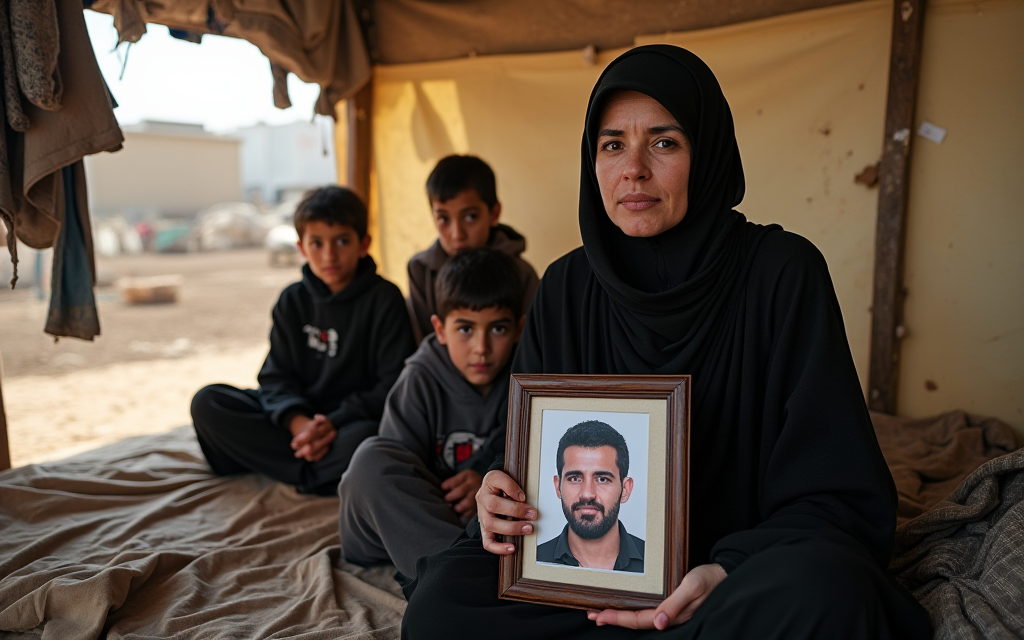
Gaza Prisoners Held Past Sentences Under Israel’s Unlawful Combatants Law
Forty-eight Palestinians from Gaza remain in Israeli custody after completing their sentences, held under Israel's Unlawful Combatants Law. Families describe years of waiting, repeated disappointment, and the toll of separation as children grow up without their fathers. Human rights groups report deteriorating conditions and a rising number of Palestinian detainees, with the UN documenting widespread torture and at least 92 deaths in custody since October 2023.
Families Demand Release as 48 Gaza Detainees Remain Behind Bars
In Gaza City, the Zughra family’s joy turned to anguish in February when they learned that Fadi Zughra, who had completed an 8.5-year sentence, was still in Israeli custody. His wife, Shmou, recounted the moment: “I was shocked, and the girls were very upset. One of my daughters even fainted.” Fadi is among 48 prisoners from Gaza who remain detained after their sentences expired, according to the Palestinian Commission of Detainees and Ex-Detainees Affairs.
Their continued detention raises serious questions about the legal grounds for holding them after their prison terms have ended. Palestinian prisoners’ organizations say Israel is using its Unlawful Combatants Law, passed in 2002, to keep Palestinians from Gaza behind bars without criminal conviction. The law allows detention of people classified as “unlawful combatants” subject to detention orders and judicial review.
Legal Loophole Keeps Detainees in Limbo
Fadi Zughra was arrested on August 15, 2016, while fishing at sea—a job he had done since childhood. He was accused of smuggling and sabotage, allegations his wife strongly rejects. “The first thing we heard was that he had been killed,” Shmou said. “After about three days, the Red Cross told us he was in prison.” Despite completing his sentence in early 2025, Fadi remains incarcerated under the Unlawful Combatants Law.
Similarly, Hisham Harara finished a nine-year sentence in December 2024 but is still held. His wife, Hanan, has been searching release lists for his name. “They tell me, ‘Mum, you keep checking the lists. We don’t want to look at them any more,'” she said, referring to her children. “But I still check. I keep hoping that perhaps this time he will be among those released.”
Hisham was arrested in December 2015 while traveling through the Beit Hanoon crossing to reach his workplace in Jenin, where he operated heavy machinery. Hanan said the allegations against him involved tunnels, despite his work clearing rubble above ground.
Prison Population Rises as Conditions Deteriorate
The cases of Fadi and Hisham are part of a wider rise in Palestinian detentions. B’Tselem reported that the Israel Prison Service held 9,187 Palestinians on security grounds at the end of June 2026, including 1,554 from Gaza. Palestinian prisoners’ institutions reported in October that more than 9,400 Palestinians were in Israeli custody, including 1,419 from Gaza classified as “unlawful combatants.”
Conditions have worsened since the October 7, 2023 attack on Israel and the ensuing war on Gaza. The United Nations and human rights organizations have documented widespread torture, including beatings, starvation, and rape. The UN Human Rights Office said in September that it had verified the deaths of at least 92 Palestinians in Israeli custody since October 2023.
The International Committee of the Red Cross has said it has been unable to visit Palestinian detainees in Israeli facilities since the war began, limiting its ability to monitor their conditions directly.
Children Grow Up Without Fathers as Families Struggle
For the families, the separation has become even harder since the war began. Shmou and her four children—Almasa and Shahd, both 16, Lana, 14, and Sakher, 11—used to visit Fadi roughly every two months. Their last visit was about six weeks before the war. Since then, they have had no news of him. Sakher was around seven months old when his father was arrested but grew attached during prison visits. “When Sakher visited Fadi, he would tell him, ‘Dad, I want to do this’ and ‘Dad, I want to do that.’ His psychological state has been very difficult,” Shmou said.
Hanan has raised her seven children alone. Their youngest daughter, Eileen, was a baby when Hisham was arrested; she is now 12. Her eldest son, Amjad, was 18 at the time and is now 28. “When Hisham was detained, I became both a mother and a father,” Hanan said.
Both women also struggle with not knowing what their husbands know about the war. Shmou said former prisoners sometimes pass messages from Fadi, telling her he is alive and wants to know if the family is safe. But she worries about reports that detainees are given false information about relatives’ deaths. “The Israelis tell him that his family has been killed, or that one of his children has been killed,” she said. “They play with his mental state and his nerves.”
During the war, Shmou and her children were displaced from western Gaza City, moving between Khan Younis and Rafah. Her brother, Mohammad, became her main support but was killed about a year and a half ago. “He was always with me,” Shmou said. “He would stay at my home and take care of things for me.”
Hanan also had to raise her seven children alone through the war and repeated displacement. Years after their arrests, both women continue to call for their husbands’ release. “We want him to be reassured that we are OK,” Hanan said. “We want him to know that we are still here.” Shmou’s wish is for Fadi to return before more of his children’s lives pass without him. “I want him to be released,” she said. “His daughters have grown up, and his son has grown up too. He is losing his youth.”
