

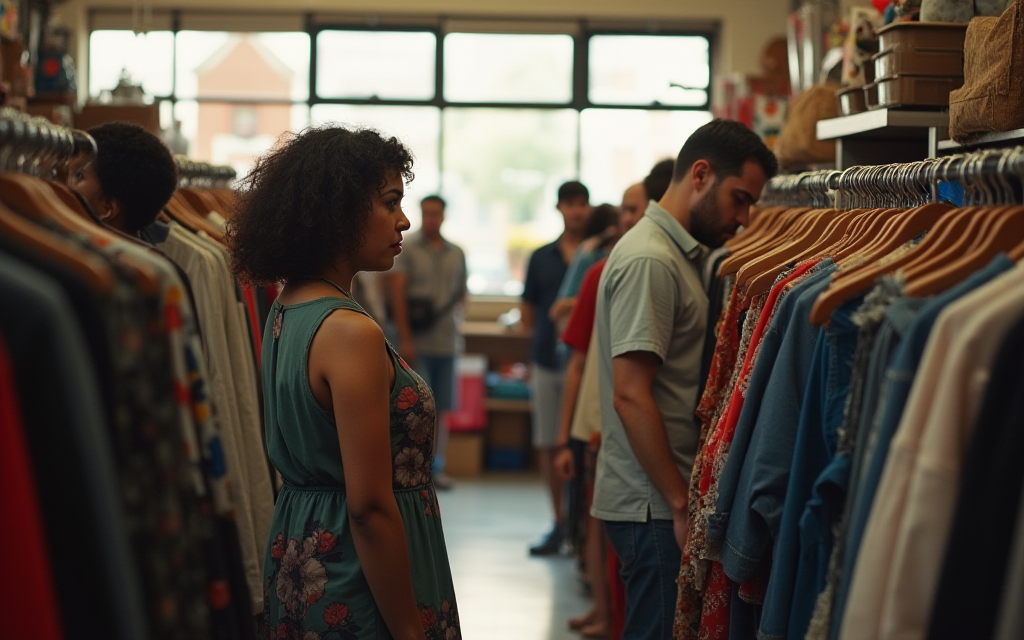
Secondhand Shopping Goes Mainstream This Holiday Season as Consumers Seek Value
Secondhand shopping is surging this holiday season as consumers seek value and unique gifts. The U.S. secondhand apparel market grew 13% in 2025, nearly four times faster than overall retail clothing, with Gen Z driving 40% of the expansion. Shoppers are turning to thrift stores for better quality, personalization, and budget-friendly gifting, and the trend is expected to continue as economic pressures persist.
Thrifting Gains Momentum as Shoppers Hunt for Unique Gifts and Better Deals
As the holiday season approaches, a growing number of consumers are turning to secondhand retail and thrifting to find gifts that offer both value and individuality. The shift is driven by high living costs, a desire for personalization, and changing shopping habits among younger generations.
According to GlobalData, the U.S. secondhand apparel market grew 13% in 2025, nearly four times faster than the overall retail clothing market. That segment is projected to reach nearly $80 billion by 2030, growing more than 7% annually on average. Generation Z accounted for 40% of that expansion, followed closely by millennials.
“I think this has been their version of the thrill of the hunt that millennials loved during the recession days,” Katherine Cullen, a global senior retail analyst at EY Parthenon, told CNBC. “It’s a way to really express an individual style, find something unique, something that really fits their own vibe and personality.”
Value and Uniqueness Drive Holiday Gifting
For many shoppers, secondhand shopping is no longer just about personal style—it’s about finding gifts that feel special. Vanessa Roberts, 37, of Los Angeles, began her holiday shopping in September and estimates that about 70% of her gifts will come from thrift stores.
“It’s been a fun little challenge, where it’s like a little scavenger hunt when I go into the thrift store,” she said. “I’m definitely thrifting for the holidays – I do it every year.”
Roberts recently found two antique children’s chairs for her nieces’ play space. She says thrifted items often offer better quality than mass-produced new products.
“It’s crazy that you can find better quality items at the thrift store right now from 20 years ago versus what you can find at stores right now,” she added.
The trend is also reflected in consumer sentiment. A October report from The Consumer Collective found that 34% of people surveyed said secondhand products offer better value than brand new ones. And according to eBay’s Recommerce Report, 70% of global consumers surveyed consider secondhand shopping important for managing their budgets.
“Consumers are looking for value, which I think is something that is making secondhand resale and re-commerce more attractive,” Cullen said.
Personalization and the ‘Thrill of the Hunt’
Beyond price, shoppers are increasingly drawn to the uniqueness of secondhand items. Alon Rotem, chief strategy officer at ThredUp, said the company’s holiday survey found that respondents valued uniqueness nearly as much as the value of a thrifted piece.
“Secondhand is where they’re finding unique items to wear,” Rotem told CNBC. “To me, that represents a pretty meaningful shift in consumer taste.”
ThredUp emphasizes that each of its products is “a snowflake”—something unique. That appeal is driving more consumers to buy preowned rather than purchasing off the rack.
“Consumer tastes have changed, and they’re much more into vintage,” Rotem added. “Uniqueness has a premium in their minds.”
Larger retailers are taking note. More brands, such as Lululemon, Patagonia, and Madewell, are dabbling in preowned offerings. eBay CEO Jamie Iannone said the interest in secondhand this holiday season is “much stronger” than last year.
“It’s becoming just a more established part of consumers’ shopping and gifting routines,” he said.
Economic Pressures and the Future of Resale
The secondhand surge coincides with an economy that has forced consumers to be more intentional about spending. In October, the consumer price index rose a seasonally adjusted 0.4%, more than anticipated. Still, holiday sales are projected to top $1 trillion for the first time, though some of that increase is boosted by inflation.
“You have a consumer who, while they’re willing to spend at the top level, they’re willing to splurge selectively,” Cullen said. “Consumers are looking for value, which I think is something that is making secondhand resale and re-commerce more attractive.”
While clothing remains the primary entry point, secondhand shopping is expanding into furniture, electronics, and books. Wall Street is also watching the trend: shares of eBay and Savers Value Village have climbed this year, while ThredUp and The RealReal have tumbled year to date.
“There’s a lot of conversation around authenticity or the best find,” Cullen said. “I think that interest and momentum, along with some of the economic factors that we’re all facing, the idea that people are looking to be frugal is going to just continue.”
