Hong Kong’s Wang Fuk Court Fire: 168 Dead After Renovation Failures
A devastating fire at Hong Kong's Wang Fuk Court killed 168 people, exposing a chain of failures including ignored complaints, disabled fire alarms, and alleged corruption in renovation contracts. Survivors recount their harrowing escapes and the loss of loved ones, as authorities face criticism and promise reforms.
Hong Kong’s Deadly Fire: A Preventable Tragedy
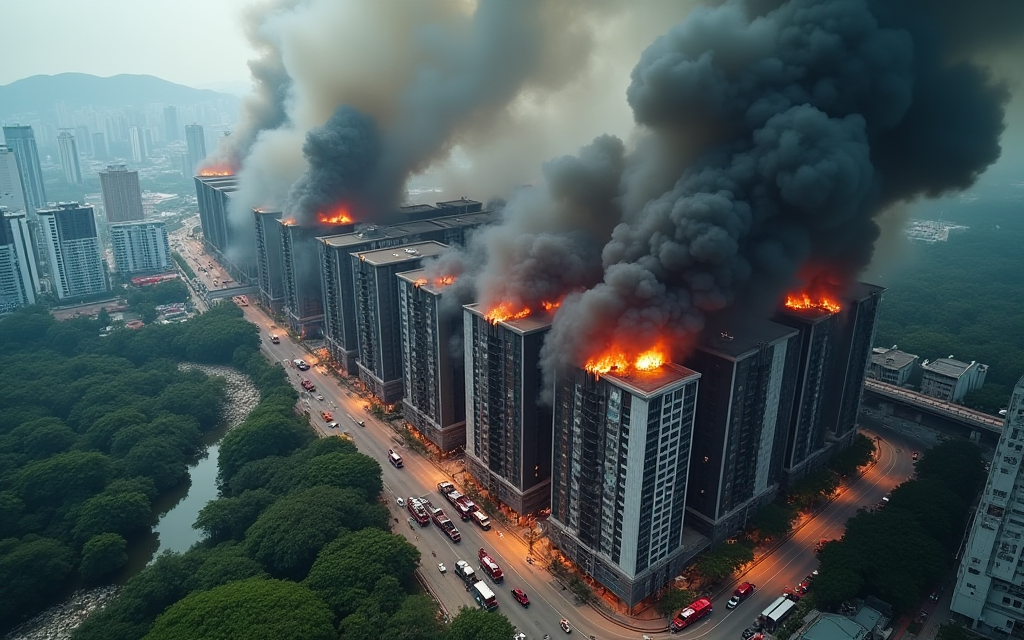
On 26 November, a fire engulfed Wang Fuk Court, an eight-block apartment complex in Hong Kong, claiming 168 lives. The blaze, which spread at an unprecedented rate of 10 metres per second, was later found to be entirely preventable, according to an independent committee report. The tragedy has been attributed to a series of human errors, fire safety failures, alleged fraud, and suspected corruption.
For Mrs Lau, a resident of 40 years, the day began like any other. She was at a dance class when she heard faint sirens. Later, calls from a friend revealed that her home was ablaze—and her wheelchair-bound husband was trapped inside. “I grabbed my things quickly and ran down without even putting my shoes on properly,” she told the BBC. By the time she arrived, the building was cordoned off. Her husband, Lau Man Kwong, 74, reassured her not to worry, as he hadn’t heard an alarm. Those were his last words to her. His body was later found in the toilet, clutching his identity card.
Renovation Woes and Safety Failures
In 2024, mandated renovations began at Wang Fuk Court, as required for all buildings over 30 years old in Hong Kong. The management committee selected Prestige Construction and Engineering (PC&E), which submitted the highest bid at HK$336 million. Residents, many over 65, bore the cost, sparking protests. Complaints soon arose about workers smoking on site, discarded cigarette butts, and windows taped over with foam boards, blocking light and air for months.
The 1,154-page report revealed that the fire was likely caused by a lit cigarette. It also found that after typhoons damaged scaffolding nets in 2025, cheaper non-fire-retardant replacements were used as a cost-saving measure. Despite nearly 140 complaints to six government departments, little was done. Crucially, a staff member of the property manager, ISS, had turned off the power supply to fire alarms in all eight buildings, so no alarms rang. ISS later said it had reviewed and reinforced its procedures.
For those who tried to escape, the emergency stairwells became death traps. Windows had been removed from some stairwells to create temporary openings for workers, allowing smoke to enter and cutting off escape routes. Dozens died in these stairwells, including Christy’s husband, who succumbed to smoke inhalation. “At the very least… his suffering was minimal,” she said, finding some solace in that.
Corruption and Bid-Rigging
The Independent Commission Against Corruption (ICAC) alleges that the management company Will Power conspired with PC&E to defraud residents. Although PC&E had breached safety requirements in previous projects, homeowners were told it had a clean record. Will Power’s director, Wong Hap-yin, and others allegedly laundered over $5 million from the tendering process. Once PC&E won the contract, Will Power’s registered inspector merely rubber-stamped documents without conducting inspections. Both companies and seven individuals face 25 charges, including manslaughter and conspiracy to defraud. Will Power has been liquidated, and PC&E could not be reached.
The report criticised authorities for failing to take ownership of fire safety issues, calling it a “vacuum.” Professor John Burns of Hong Kong University described it as the “largest governance crisis” since 2020. In the wake of the report, Hong Kong’s housing chief Winnie Ho resigned, and city leader John Lee apologised, promising reforms.
Aftermath and Recovery
Five months after the fire, Mrs Lau was allowed back into her flat for three hours to salvage belongings. The home was utterly burned out, every surface blackened. Among the rubble, she found pieces of a piggy bank her husband had filled with coins for 20 years. “The piggy bank died with him,” she said. The government has pledged $867 million to acquire affected flats, but Mrs Lau worries it won’t be enough to buy a similar home nearby.
Christy’s children are deeply affected. Her seven-year-old son now tries to comfort her, saying he is the only man in the family. Her daughter, who turned 10 on Wednesday, did not celebrate; her birthday will now commemorate her father. Christy has been diagnosed with PTSD and depression. “A seven-year-old child should not behave this way, and I feel heartbroken,” she said.
The fire has left a community shattered, with survivors grappling with loss, trauma, and the daunting task of rebuilding their lives. As investigations continue and trials loom, the residents of Wang Fuk Court seek justice and answers, hoping that such a tragedy never happens again.
