

Gaza Children Face Stunting Crisis Amid War and Blockade, UN Survey Shows 12.2% Affected
A UNICEF survey finds 12.2% of Gaza children under five are stunted as war and blockade limit food, healthcare, and treatment. Families like Nabigha's and Tala's struggle with malnutrition and growth delays, while doctors report doubled clinic visits and inaccessible hormone therapy. Nutritionists warn of long-term physical and cognitive consequences.
Gaza’s Children Suffer Growth Stunting as War and Blockade Ravage Food and Health Systems
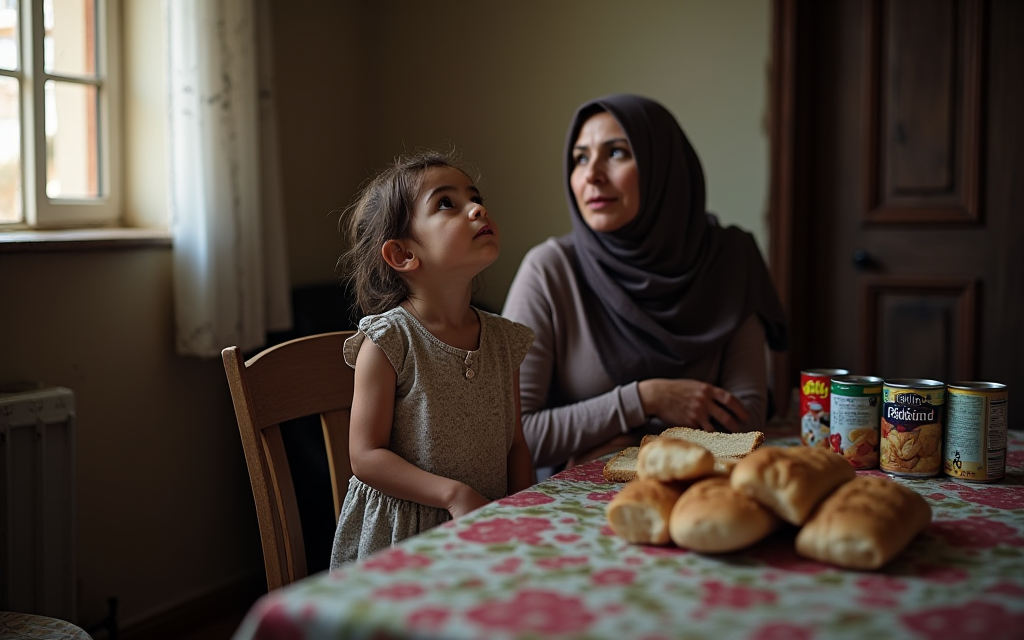
KHAN YOUNIS, Gaza — Seven-year-old Nabigha al-Zaqzouq stands just 99 centimeters tall and weighs only 10 kilograms, a fraction of what a child her age should be. Her mother, Alia, cannot answer when Nabigha asks, “Will I ever get taller?”
The family’s table holds only bread and canned food; meat, fruit, and vegetables are unaffordable. “We lived through extremely harsh days during the war, and after the ceasefire, we are living under a suffocating blockade,” Alia said. “Let them allow medicines and treatments in.”
Nabigha’s story mirrors a growing crisis across Gaza, where war, blockade, and disrupted healthcare have left thousands of children facing stunting and long-term developmental damage. A UNICEF-backed nutritional survey conducted between May 31 and June 15, 2026, in accessible areas of Gaza found that 12.2 percent of children under five are stunted, and only 22.4 percent of children aged 6-23 months receive a minimum acceptable diet.
Malnutrition Deepens as Food Quality and Quantity Deteriorate
Five-year-old Tala Zidan measures 94 centimeters, about 15-16 centimeters shorter than the average for her age. Her father, Tahrir Zidan, says her height has barely changed in two years while she has lost weight. Displaced from Khuza’a to al-Mawasi and unemployed, Tahrir relies on charity kitchens. “I have not been able to buy even one kilogram of meat, a chicken or a kilogram of fruit,” he said. “The meal I get from the community kitchen is usually finished while most of us are still hungry.”
Nutritionist Nada Abu al-Nada explains that the crisis is not only about calories but also dietary diversity. Before the war, average food availability was about 2,580 calories per person per day; now estimated consumption has fallen to roughly 1,000 calories. “This is not enough,” she said. Families have cut back on meat, chicken, fish, eggs, milk, vegetables, and fruit, relying on bread, rice, and pasta. Children need protein and micronutrients like iron, zinc, and calcium for bone and muscle development; deficiencies force the body to prioritize vital functions over growth.
Abu al-Nada notes that the first 1,000 days from conception to age two are critical, but older children are also vulnerable. Diarrhea and contaminated water further reduce nutrient absorption, worsening malnutrition.
Health System Overwhelmed, Treatment Out of Reach
At Nasser Hospital, endocrinologist Hani Sayed Zuhair has seen clinic visits for growth problems double from 15-20 before the war to 30-40 now, sometimes more. He cites cases of eight-year-olds whose bone development resembles that of four-year-olds, indicating severe skeletal delay. While malnutrition is a leading cause, hormonal disorders and chronic illnesses also play a role, and nutritional deprivation can exacerbate them.
Diagnosis and treatment are increasingly inaccessible. Growth hormone stimulation tests are unavailable in Ministry of Health laboratories, and private labs offer them only sporadically due to supply shortages. Tests cost 350-400 shekels ($106-$120), and growth hormone injections cost 80-120 shekels ($24-$36) per dose, often requiring repeated administration. Storage and follow-up are nearly impossible amid war and blockade.
Long-Term Consequences Loom as Families Struggle
Abu al-Nada warns that some children may catch up if nutrition improves early, but recovery depends on age, duration of deprivation, and other health factors. Once bone growth plates close, lost growth becomes permanent. Beyond height, deficiencies can reduce muscle mass, cause anemia, weaken immunity, and impair cognitive development—compounded by psychological stress and displacement.
For Alia al-Zaqzouq, the future remains uncertain. “We are exhausted,” she said, unable to answer her daughter’s question. Tahrir Zidan continues to struggle to secure enough food, let alone the balanced diet his children need to grow.