

Iranians Battle Severe Air Pollution Amid US War Threats
Tehran residents face year-round air pollution, forcing some to miss work and seek medical care. Hospital admissions for respiratory and heart conditions surge by up to 50% in winter. The government has imposed traffic restrictions and remote work, but public anxiety remains high as US war threats loom.
Tehran Residents Face Year-Round Pollution Crisis
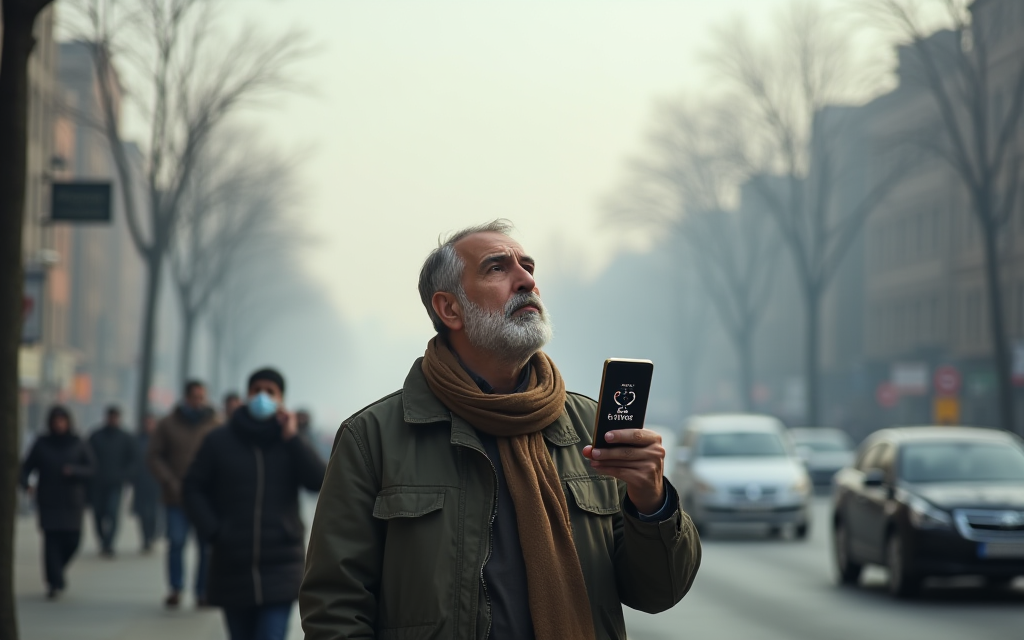
TEHRAN, Iran — For residents of Iran’s capital, the threat of American bombs is not the only danger they must contend with. Air pollution has become a year-round crisis, forcing people to check air quality apps daily and sometimes stay home from work, affecting their incomes and health.
Ghoral, 40, a Tehran resident who asked to be identified only by his first name, told Al Jazeera that headaches, shortness of breath, and blurred vision—once limited to cold seasons—are now constant. “On heavily polluted days, I try to leave the house as little as possible, which means I sometimes cannot go to work,” he said. “At the same time, air pollution increases the cost of seeing a doctor and buying medication.”
The problem extends beyond Tehran. Major cities including Mashhad, Isfahan, Shiraz, Tabriz, and Ahvaz are also grappling with dangerous air quality, according to local reports.
Temperature Inversion Worsens Winter Pollution
During the second half of the year, Iran experiences a phenomenon known as temperature inversion, where a layer of warm air traps cooler air and pollutants near the ground. This leads to prolonged periods of polluted air, particularly in winter.
The Meteorological Organization issues “yellow weather warnings” on days with high pollution levels, prompting schools to cancel outdoor activities. When pollution approaches “orange warning” levels—generally an air quality index above 140—additional restrictions may follow, including remote work, odd-even license plate traffic schemes, school closures, and online university classes.
Hossein, 36, who lives and works in central Tehran, said air pollution “has become life itself.” He tries to spend weekends in nearby cities with better air quality.
Health System Under Strain as Hospital Admissions Surge
Dr. Hadi Yazdani, who works at a medical center in Isfahan, told Al Jazeera that hospital visits for chronic asthma and other respiratory conditions rise by as much as 50 percent in winter, according to Ministry of Health figures. Eye and skin problems also become more common.
“Children and older people are particularly vulnerable,” Yazdani said. “They may develop new illnesses or experience a worsening of existing conditions.” He added that reduced air circulation also increases the prevalence of respiratory infections like influenza and COVID-19.
In response, the Emergency Medical Services Organization has deployed specially equipped buses in public squares in major cities to provide basic treatment for pollution-related conditions such as shortness of breath and chest pain. The buses aim to reduce ambulance demand and serve as a first point of contact for patients.
This year, the Ministry of Education has delegated decisions about school closures due to air pollution to local authorities, amid concerns that a renewed war with the United States could force schools to close anyway.
Government Efforts Fall Short as Public Anxiety Grows
Iran’s Department of Environment has focused on tackling human-made pollution sources. Ahmad Taheri, head of the National Center for Air and Climate Change, said the department is pressuring car manufacturers to meet higher standards, improving fuel quality, and reducing gas flaring at refineries.
However, public confidence remains low. Advertisements for vitamins and fresh food products marketed as protective against pollution effects have become increasingly common, but Dr. Yazdani said there is little substantial research showing vitamins can reduce health effects. He believes advertisers are capitalizing on public anxiety.
The World Health Organization estimates that 99 percent of the global population lives in places where air quality falls below recommended levels. For Iranians, that statistic offers little comfort as they struggle with the dual threats of pollution and geopolitical tensions.