

Israel Fast-Tracks Data Centers in Bid to Become AI Superpower
Israel is fast-tracking data center construction to become a global AI superpower, with the $1.5 billion Ofek Data Center set to open in 2029. The plan faces energy challenges and could shift Europe's reliance on foreign computing infrastructure.
Israel Accelerates AI Infrastructure Development
Israel is cutting red tape and fast-tracking data center construction to position itself as a key hub in the global AI ecosystem, as the United States and China vie for dominance. Prime Minister Benjamin Netanyahu has vowed to turn Israel into a “global AI superpower” within five years, citing national security and economic imperatives.
National Plan and Key Projects
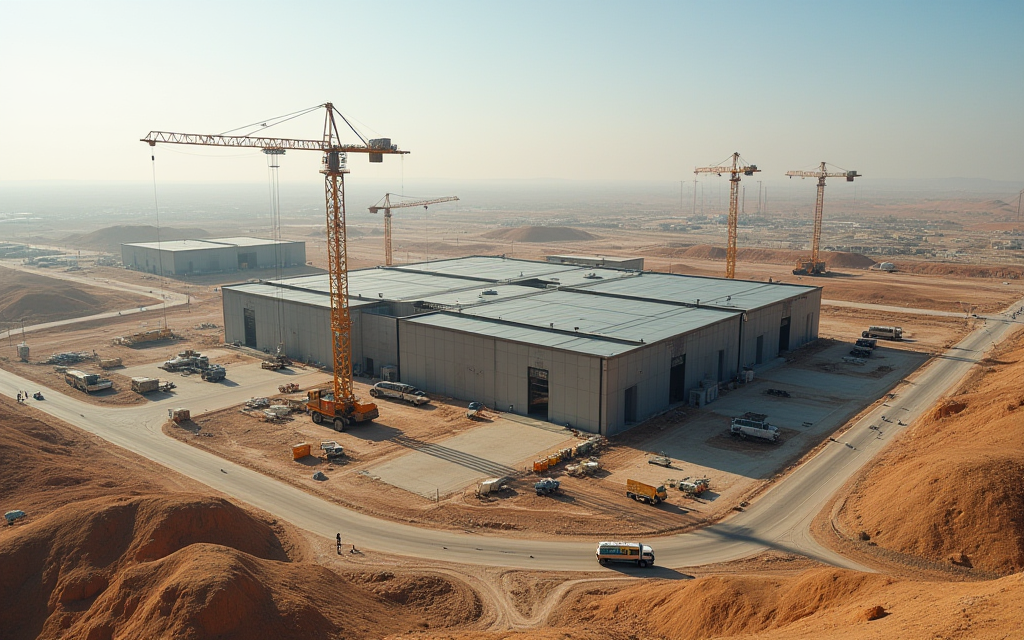
In June, the government announced a sweeping national plan to accelerate AI development. A centerpiece is the Ofek Data Center, set to become Israel’s largest data-processing facility upon completion in the second half of 2029 north of the port of Ashdod. Financed by a consortium including US-based Serverfarm and the Israel Infrastructure Fund, the project is expected to cost $1.5 billion initially, with an additional $5 billion planned for future upgrades. The facility will connect directly to European markets via an underwater fiber-optic cable and integrate Nvidia data center GPUs, launching with 130MW capacity and expanding to 200MW.
Israel currently has 67 data centers, according to Data Center Map. In February, the government classified AI data centers as national infrastructure to bypass local regulations, but the rapid expansion hit a bottleneck last month when the Israeli Electrical Authority capped new data center capacity at 200MW due to high grid demand.
Energy Challenges and Geopolitical Implications
Electricity availability is the largest operating expense for modern data centers and a key factor in determining how quickly new facilities can be built. Energy Minister Eli Cohen has stressed the need to develop nuclear energy and use natural gas from offshore fields. The Ofek Data Center will be directly powered by an 850MW gas-fired power station adjacent to Ashdod’s port.
Analysts say the rationale for building data centers is more geopolitical and strategic than commercial. “For a country with strategic AI ambitions, a domestic data-center footprint is less about immediate returns and more about owning a chokepoint in the next industrial phase,” said Mark Esposito, a public policy scholar at Harvard University’s Berkman Klein Center. “They are the territorial anchor of AI power.”
Localizing AI infrastructure allows governments to insulate part of the AI value chain from foreign disruption and supply bottlenecks. “Stable local inferencing is going to become an important support of local business, grid and military advantage,” said Mark Muro, senior fellow at the Brookings Institution.
Europe’s Conundrum and Strategic Leverage
As Israel fast-tracks data centers, Europe lags behind due to power grid bottlenecks, slow permitting, and public backlash. The US hosts roughly 51 percent of the world’s data centers. Shifting computing workloads to the US or other cheaper or idle data centers outside the EU—including potentially Israel’s Ofek—allows for flexibility when local servers are busy or electricity consumption is high. However, confining data to EU borders comes at a price premium of 30 percent or more but ensures data falls under European privacy laws.
“For politically and security-sensitive applications, you don’t want foreign powers to listen into your communications and computations,” said Bertin Martens, a senior fellow at the Bruegel think tank in Brussels. “Hence, the need for domestic data centers for sensitive applications.”
Simone Vannuccini, a professor at the University Cote d’Azur, noted that relying on Israel or another foreign power for computing power opens up “new fronts” in geopolitics. “Maybe we will be less prone to criticising something, and that’s indeed potentially the risk,” he said. While Israel does not currently possess significant leverage, its weight increases when taken cumulatively with the US. “The US have a big weapon in their hands,” Vannuccini concluded. “Israel also has a weapon in their hand, but it’s slightly smaller.”