

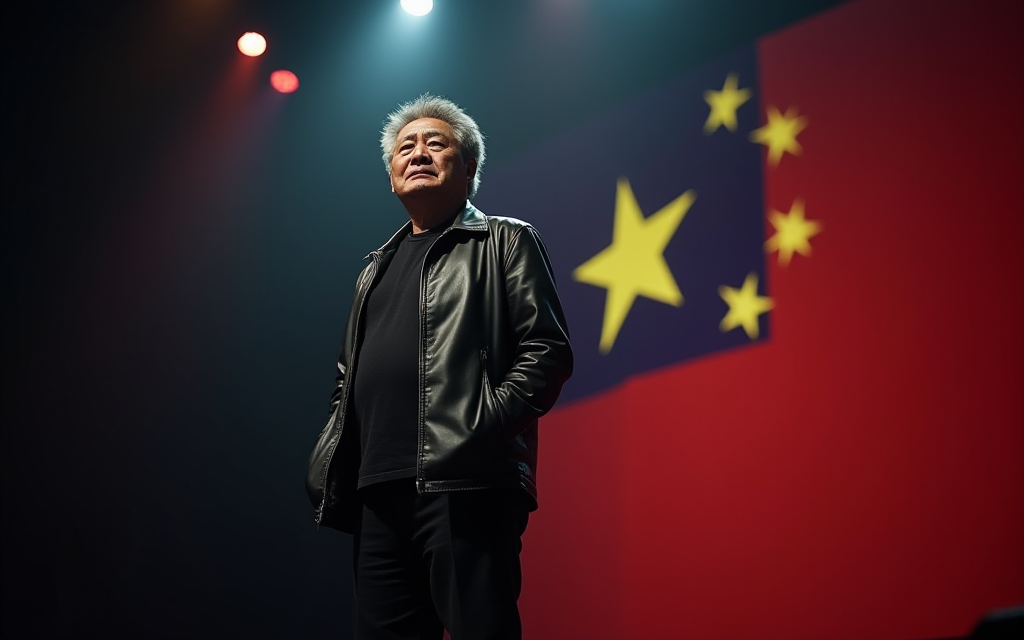
Nvidia Scandal Threatens US-China AI Tech Talks Ahead of Trump-Xi Summit
A scandal involving former Nvidia CEO Jensen Huang and alleged Chinese intelligence ties threatens to derail US-China AI tech negotiations ahead of the Trump-Xi summit in Shenzhen. The controversy has reignited debates over chip exports, with new restrictions on Chinese firms and Beijing warning of economic coercion. Both sides seek stability, but the affair risks deepening mutual suspicion and triggering retaliation over rare earth minerals.
Nvidia Scandal Threatens US-China AI Tech Talks Ahead of Trump-Xi Summit
As US President Donald Trump and Chinese President Xi Jinping prepare for a high-stakes summit in Shenzhen this week, a scandal involving former Nvidia CEO Jensen Huang is casting a shadow over delicate negotiations. The allegations that Huang may have been entangled with a Chinese intelligence operative have reignited debates in Washington over exporting advanced AI chips to China, potentially derailing efforts to stabilize the fragile US-China relationship.
The Jensen Huang Affair: A New Flashpoint
Jensen Huang, one of the most influential figures in the AI industry, stepped down from Nvidia amid claims that his affair with Chinese businesswoman Alice Huang may have been exploited by Beijing’s Ministry of State Security. While the allegations remain unproven, they have intensified scrutiny of the Trump administration’s approach to chip exports. Democrats, poised to control Congress in January, argue that the administration has been too lenient toward Nvidia, jeopardizing national security.
Beijing has dismissed the spy claims as a “smear against China” and warned against fabricating espionage narratives to justify technological blockades. However, the controversy has already prompted new export restrictions on Chinese firms accessing advanced US chips via third countries like Malaysia, Thailand, and Brazil—moves that Beijing decries as “economic coercion.”
Impact on US-China Tech Relations
The scandal comes at a critical juncture. Just last year, the Trump administration permitted sales of Nvidia’s advanced H200 chips to China, a rare easing of restrictions that signaled a willingness to cooperate. But the new allegations could strengthen voices in Washington advocating for stricter controls, threatening to reverse that opening.
Chinese officials fear the scandal could be used as a pretext to further limit China’s access to cutting-edge American technology, undermining its AI ambitions. The timing is particularly sensitive, as the two leaders seek to stabilize relations after a damaging tariff war and ahead of the expiration of the current trade truce in January.
Analysts draw parallels to the 2023 spy balloon incident, which derailed diplomatic efforts and plunged relations into a deep freeze. State media outlet Global Times questioned whether the Nvidia story is being pushed by forces seeking confrontation, asking, “Is someone behind the scenes pushing an agenda and stirring up confrontation?”
The Upcoming Trump-Xi Summit: High Stakes in Shenzhen
Despite the tensions, both Trump and Xi have strong incentives to keep dialogue alive. China’s economy remains under pressure, and Xi needs trade to flow; Trump, in his final two years, seeks foreign policy wins and may need Xi’s help in ending the Middle East war. The summit, carefully choreographed by Beijing in Shenzhen—a showcase of China’s tech prowess—aims to highlight cooperation even as competition intensifies.
However, the Nvidia scandal threatens to overshadow trade and investment discussions. Washington’s tighter chip restrictions have also given Beijing options for retaliation, notably its dominance in rare earth minerals essential for everything from electric vehicles to military equipment. Analysts warn that technological restrictions could trigger a cycle of retaliation, shifting US-China relations from engagement back toward mutual suspicion.
As the two leaders meet, the world watches to see whether the Nvidia affair will become a footnote in diplomacy or a catalyst for a new era of techno-nationalism.
