

Arizona Snowbowl: The Surreal Ski Resort Near America’s Hottest City
Discover the Arizona Snowbowl, a surreal ski resort just 150 miles from Phoenix, America's hottest city. Set atop a dormant volcano on Mount Humphreys, it offers 777 skiable acres, 61 runs, and stunning views of the Grand Canyon and Sedona's red rocks. With a history dating back to 1915, this unlikely destination combines alpine skiing with desert landscapes, though it faces challenges from rising temperatures and controversies over artificial snow.
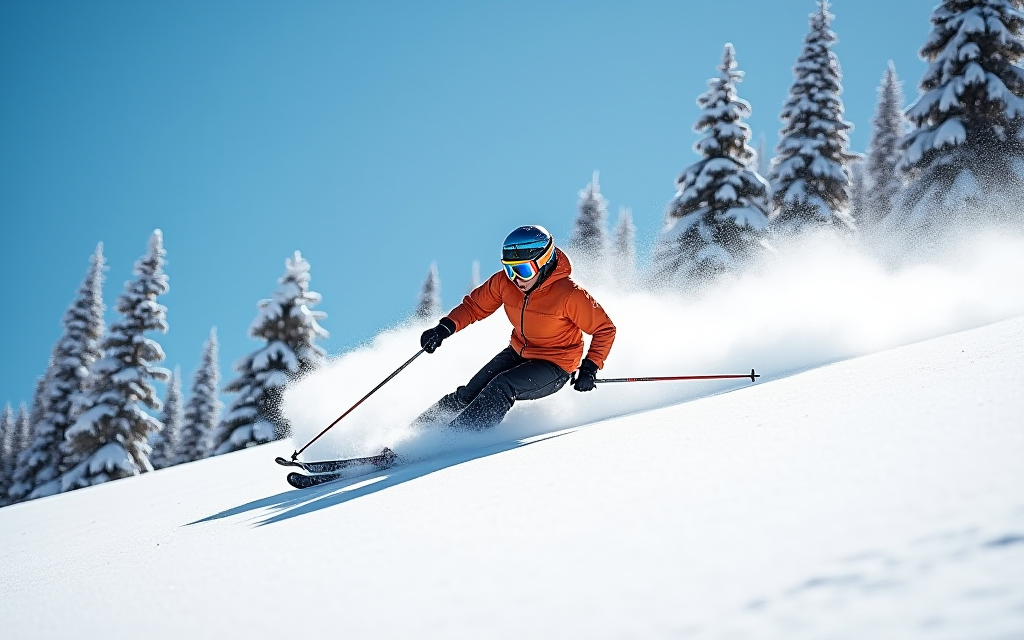
Just 150 miles north of Phoenix, where summer temperatures routinely soar past 100F (38C), lies one of the most unexpected ski destinations in the United States. The Arizona Snowbowl, perched atop a dormant volcano on Mount Humphreys, offers a winter wonderland that seems worlds away from the scorching desert below. On a clear day, skiers can gaze north to the Grand Canyon and south to the red rocks of Sedona, all while carving down slopes in the only alpine tundra region of an otherwise arid state.
An Unlikely Ski Destination with a Century of History
The Snowbowl’s story began in 1915 when two Norwegian brothers, Ole and Peter Solberg, introduced skiing to northern Arizona. Having grown up skiing in Norway, they ascended a nearby hill with homemade wooden skis and carved down in front of the entire town of Flagstaff. Initially seen as a practical mode of winter transport, the sport gradually caught on. In 1933, the area held its first winter carnival on the San Francisco Peaks, and ski clubs soon formed across the Southwest.
By 1938, the US Forest Service had carved a road up Mount Humphreys, built a rustic log cabin lodge, and added a rope-tow powered by a car engine. The Arizona Snowbowl officially opened—years before more famous destinations like Vail, Aspen, or Breckenridge. Today, it has grown into a resort with 777 skiable acres, 61 runs, rental shops, restaurants, and a ski school, yet it remains one of the country’s oldest continuously operating ski areas.
A Surreal Setting: Skiing on a Volcano
What makes the Snowbowl truly unique is its location. “Driving from the Phoenix valley area to the Arizona Snowbowl is like travelling from Mexico to Canada in two hours,” says Phoenix resident and Snowbowl regular Karen Malis-Clark. The resort sits at 11,500ft (3,505m) on Mount Humphreys, Arizona’s highest point, where an icy gale greets skiers as they push off the powdered slopes. The contrast is stark: to the south, the famous red rocks of Sedona, where over 100 Westerns have been filmed; to the north, the Grand Canyon.
“What makes the Snowbowl so different to other ski resorts around the US is that we are in such a unique location,” says Garrett Michael Okun, who lives a 30-minute drive away. “You have a backdrop that resembles Colorado, Utah or Canada but you’re in the middle of Arizona, all on really fun solid terrain.” Krystan Lauher, development director of the Flagstaff Ski & Snowboard Team, adds, “You can be skiing on top of Mount Humphreys in the morning and be in the high desert riding mountain bikes by the afternoon.”
Challenges and Controversies in a Warming State
Operating a ski resort in a state better known for its deserts comes with challenges, especially as temperatures rise. During the 2001-2002 season, the resort’s lifts operated for only four days. Yet the Snowbowl’s high-altitude location typically brings substantial snowfall—260 inches (660cm) annually. In 2025, it stayed open for a record-breaking 185 days, ending in early June. “The high altitude and the way the Snowbowl is shaped plays a huge part in maintaining the snow,” says Sam Burns, head of snowmaking operations. “Because it’s shaped like a bowl, the weather is held in the area easier.”
Despite this, roughly 65% of trails now use artificial snow to ensure the resort stays open from November through May. This reliance has sparked controversy: more than a dozen Native American tribes consider the San Francisco Peaks sacred, and tribal members say the use of reclaimed wastewater for snowmaking disrupts their spiritual connection to the mountain. Six tribes have sued the US Forest Service, though courts have ruled against their claims, and regulators maintain the filtered wastewater is safe.
A Special Place for Those Who Carve Its Slopes
Despite being one of the oldest US ski resorts, the Snowbowl remains little-known beyond Arizona, but holds a special place for its regulars. “I’ve been working and playing there for over 50 years,” says instructor Lynda Fleischer. “I got married there and I am still teaching in season 28. It’s my home, my playground, my church, my mountain.” Okun adds, “I have ridden in Japan, Canada and all over the United States in the past 27 years, but most of my best days snowboarding has been at the Snowbowl. Living so close when we get a big snow means that there often are less than 50 people on the entire mountain … It’s a truly incredible experience.”
For visitors like British exchange student Joel Olsson-Gisleskog, the Snowbowl completely changed his perspective on Arizona. “When I first got told I would be living in Arizona, all I could think of was arid landscapes and desert terrain,” he says. “Now, leaving the state, it’s the mountain ranges and snow-covered sunsets that have left an imprint on my mind.”
