

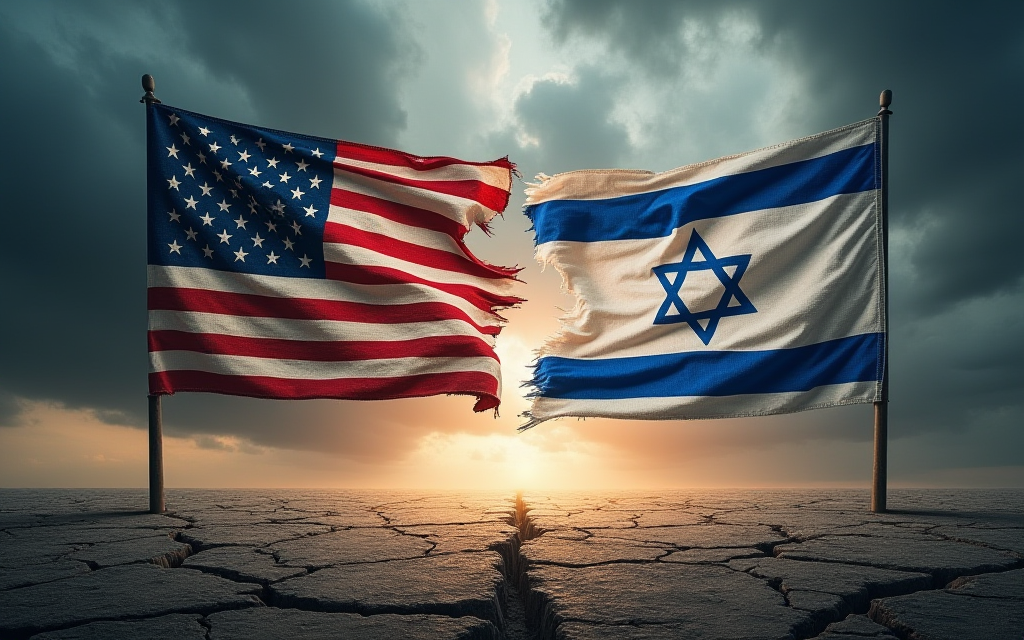
Israel’s ‘Eighth Front’: Why Its Influence War in the US Is Failing
Israel's massive spending on public relations and lobbying in the US is failing to stem a dramatic collapse in American support, especially among young people. Despite over $1 billion in influence campaigns and record military aid, polling shows a generational shift driven by the Gaza war and shifting strategic priorities. Critics argue that no amount of 'hasbara' can overcome the damage done by Israeli policies, as even Republican support erodes. The midterms saw pro-Israel candidates lose and critics win, signaling a deep and lasting realignment in US public opinion.
Israel’s Influence Campaign Faces Mounting Setbacks
Despite a massive and escalating financial push to win American hearts and minds, Israel’s public relations war in the United States appears to be floundering. According to recent filings with the US Department of Justice under the Foreign Agent Registration Act (FARA), US influencing firm Starboard was contracted by Israeli firm LDRS Group LLC—which openly declares it acts on behalf of the State of Israel—to conduct “strategic communications and public relations services in the United States to promote the interests of the State of Israel.” This latest contract, filed on October 28, underscores a sustained effort that has seen over $1 billion spent on direct funding for pro-Israel public opinion programs since October 2023, according to estimates from the Quincy Institute for Responsible Statecraft.
That figure is separate from the political fundraising and lobbying efforts of domestic groups like the American Israel Public Affairs Committee (AIPAC), which spent an estimated $84 million in the recent midterms—a sum widely viewed as largely wasted after nearly two-thirds of its supported candidates lost. Despite near-unconditional US military and diplomatic support, including at least $25.5 billion in appropriations and $21.7 billion in military aid since 2023, public opinion is shifting sharply against Israel, particularly among young Americans and even segments of the Republican right.
Polling Data Reveals a Generational Shift
Pollster Shibley Telhami, director of the University of Maryland’s Critical Issues Poll, describes the change as “paradigmatic, generational, and lasting.” He argues that Israeli public relations campaigns are “swimming against the tide” and can even be counterproductive. “When they are visibly connected to Israel, they are even toxic, achieving the opposite results, as we have seen in the midterm elections,” Telhami said. The erosion of support is most pronounced among Republicans, especially the Evangelical right, though younger members of that constituency are also less swayed by expensive campaigns.
Israeli Prime Minister Benjamin Netanyahu has attributed the loss of US public support to unspecified foreign states’ manipulation of social media, labeling it an “eighth front” in Israel’s ongoing wars. Critics, however, point to the genocidal war on Gaza—which has killed more than 70,000 people, including about 20,000 children, over three years—as the primary driver of global outrage. In March, Israel quadrupled its public diplomacy budget to $730 million, much of it earmarked for US social media and outreach. In November, it brought over 250 US officials, journalists, influencers, and community leaders to tour sites associated with the October 7 attack, aiming to cement relations with future leaders.
Netanyahu’s ‘Eighth Front’ Strategy Under Fire
Former Israeli ambassador and consul general in New York, Alon Pinkas, is blunt in his assessment: “Quadrupling the hasbara spend just means they’re more stupid than I thought they were and I already thought they were pretty stupid.” He argues that changing the conversation requires changing policy, not spending. “So far, they haven’t let any foreign media into Gaza. Can you imagine what happens when they do? No amount of spending on their social media is going to mitigate what international journalists find there.”
Pinkas also notes that Israel’s strategic relevance to the US had been waning even before the Gaza war. Washington has achieved energy security, the Soviet threat is gone, China has emerged as a critical priority, and both the public and politicians are weary of forever wars—including the current US-Israel conflict with Iran that shows no signs of ending. “Add to that a resentful and angry president in the White House, and you have some idea of the job [potential incoming prime minister Gadi] Eisenkot or whoever has ahead of them: One that no amount of hasbara is really going to help.”
Long-Term Damage and the Road Ahead
The midterm elections saw several of Israel’s most vocal critics elected to Congress, and the prospect of renewed war with Iran—initiated by two deeply unpopular leaders—is unlikely to win hearts and minds. Aaron David Miller, former State Department Middle East negotiator and now a senior fellow at the Carnegie Endowment, says the three pillars of US support for Israel—public, congressional, and executive—are at an all-time low. “It’s not just that we’ve seen the US engage in talks over Israel’s advice with Hamas, Yemen’s Houthi rebels and zeroing out aid [in] US weapons, but we’ve also seen a US president talk of his Israeli counterpart in extraordinary terms, and allowing highly critical phone calls of him discussing him to be leaked,” Miller said.
However, he cautions that this does not signal a permanent rupture. “A new Israeli government following different policies will take a good part of the tension out of public perceptions and Congressional angst.” Still, the trajectory is clear: Israel’s influence war in the US is failing, and no amount of spending may be able to reverse the damage done by its policies on the ground.
- $1 billion+ spent on pro-Israel public opinion programs since October 2023 (Quincy Institute estimate).
- $84 million spent by AIPAC and affiliates in the midterms, with most backed candidates losing.
- $730 million allocated to Israel’s public diplomacy budget in March, quadrupling previous levels.
- 70,000+ Palestinians killed in Gaza over three years, including about 20,000 children.
