

Russian Warships Off Libya: Ukraine’s Drone Attack and Its Implications
Ukraine's drone attack on a Russian warship off Libya's coast has killed at least 10 crew members and heightened fears of the war spilling over. The strike targeted the Merkury in Benghazi, a hub for Russia's military operations in Africa. Libya condemned the attack, while Ukraine justified it as targeting legitimate military assets. The incident underscores Ukraine's growing reach and Russia's vulnerability far from the front lines, raising questions about Moscow's presence in Libya and the broader implications for the conflict.
Ukraine’s Drone Strike on Russian Warship Near Libya
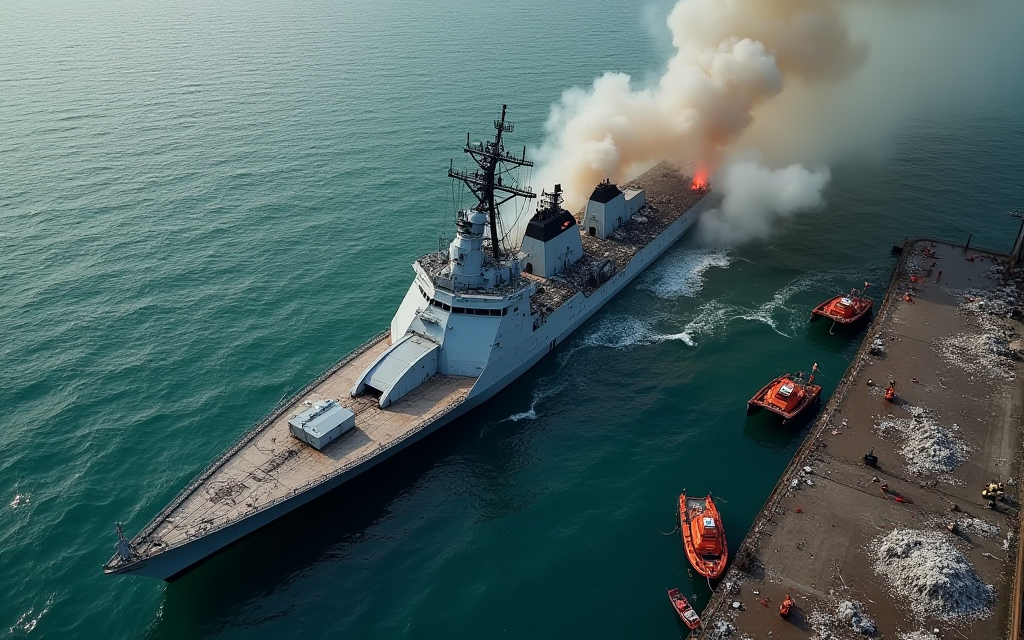
In a significant escalation of the Russia-Ukraine war, Ukrainian drones struck a Russian warship off the coast of Libya on Sunday, marking a bold operation far from the front lines. The attack targeted the Merkury, one of Moscow’s newest corvettes, as it docked in Benghazi to refuel and resupply. According to local authorities, the strike resulted in the deaths of at least 10 Libyan and Russian crew members.
President Volodymyr Zelenskyy confirmed that Ukraine’s intelligence service, the SBU, carried out the operation using seven drones. The attack also destroyed a Russian Ka-27 combat helicopter and hit a second vessel, the cargo ship Angara, which Zelenskyy claimed was transporting weapons. Satellite images showed the Merkury largely capsized, though Libyan officials described it as heavily damaged rather than sunk.
Libya’s internationally recognised government in Tripoli condemned the attack, stating that the country would not be drawn into the Russia-Ukraine war and that its sovereignty is non-negotiable. The strike has raised fears that the conflict is spilling over into new regions.
Why Russia Has a Military Presence in Libya
Russia’s ties with Libya’s eastern-based government, led by Khalifa Haftar, have deepened in recent years. Haftar’s Libyan National Army (LNA) controls much of eastern Libya, and Moscow has used the region as a logistical hub for its military operations across Africa, including in Sudan and the Sahel.
Following the fall of Bashar al-Assad’s regime in Syria, Russia shifted focus to Libya as a potential alternative for its military infrastructure. Russia is believed to have planned and funded projects at multiple Haftar-controlled bases, including Al-Jufra, Al-Khadim, and Tamanhint. An estimated 1,800 Russian troops, including Africa Corps personnel, are currently based in Libya.
However, Moscow has not yet secured a naval port in the southern Mediterranean. Analysts suggest that Libya’s eastern authorities are reluctant to grant port access, fearing it would damage improving ties with the US, Turkey, and European partners. The attack on the Merkury underscores the vulnerability of Russia’s position in the region.
Implications for Russia and the Broader Conflict
Ukraine’s strike on the Merkury demonstrates its growing capability to target Russian assets far from the battlefield. Zelenskyy has called this strategy “long-range sanctions,” aiming to disrupt Russia’s military logistics and shadow fleet, which Moscow uses to evade Western oil sanctions.
The attack coincided with another suspected Ukrainian drone strike on the Russia-bound cargo ship Sparta II in the Baltic Sea, near Finland. Finnish authorities blamed Kyiv, while Moscow condemned the act as “terrorism.” These operations highlight Ukraine’s expanding reach and its willingness to challenge Russia’s military presence in strategic regions.
For Russia, the loss of a modern warship in a distant port is a significant blow. It not only exposes the vulnerability of its overseas bases but also complicates its efforts to project power in Africa and the Mediterranean. The Kremlin has warned of a “dangerous trend,” but it remains to be seen how Moscow will respond to these provocations.
As the war continues, Ukraine’s long-range strikes are likely to shape the conflict’s trajectory, forcing Russia to divert resources to protect its assets abroad. The international community watches closely, concerned about the potential for further escalation and the risk of drawing other nations into the fray.
