

NASA Calls on Amateur Astronomers to Catch Elusive Kilonova Events
NASA is recruiting amateur astronomers to help detect kilonovae, rare cosmic explosions from neutron star collisions. These events forge heavy elements like gold and platinum. Citizen scientists can contribute by monitoring alerts and using backyard telescopes to capture these fleeting phenomena, aiding in multi-messenger astronomy and understanding the universe's chemical evolution.
NASA Invites Citizen Scientists to Hunt for Kilonovae
NASA is calling on amateur astronomers and citizen scientists to join the hunt for one of the universe’s most elusive phenomena: kilonovae. These rare cosmic explosions occur when two neutron stars collide, producing a brilliant burst of light and forging heavy elements like gold and platinum. The agency’s new citizen science initiative aims to leverage the growing network of backyard telescopes to catch these fleeting events.
Kilonovae are incredibly rare and fade quickly, making them difficult to study. By engaging amateur astronomers, NASA hopes to increase the chances of capturing these events early, when they are brightest. The data collected could help scientists better understand the physics of neutron star mergers and the origin of heavy elements in the universe.
What Is a Kilonova and Why Should We Care?
A kilonova is a transient astronomical event that occurs when two neutron stars or a neutron star and a black hole merge. The collision sends out gravitational waves and a short gamma-ray burst, followed by a visible light show. The term ‘kilonova’ refers to the fact that the explosion can be up to a thousand times brighter than a classical nova.
These events are crucial for understanding the universe’s chemical evolution. The extreme conditions during a merger allow for rapid neutron capture, creating elements heavier than iron, such as gold, silver, and uranium. Without kilonovae, these elements would be far less abundant in the cosmos.
- Rare and fleeting: Only a handful of kilonovae have been observed, and they fade within days.
- Element factories: They produce many of the heavy elements found on Earth and in our bodies.
- Multi-messenger astronomy: Combining gravitational wave and electromagnetic observations provides a complete picture.
How Amateur Astronomers Can Get Involved
NASA’s citizen science programs, such as Backyard Worlds: Planet 9 and Zooniverse projects, have already shown the power of public participation. For kilonova hunting, amateurs can join networks like the American Association of Variable Star Observers (AAVSO) or use platforms like SkyHub to receive alerts and contribute data.
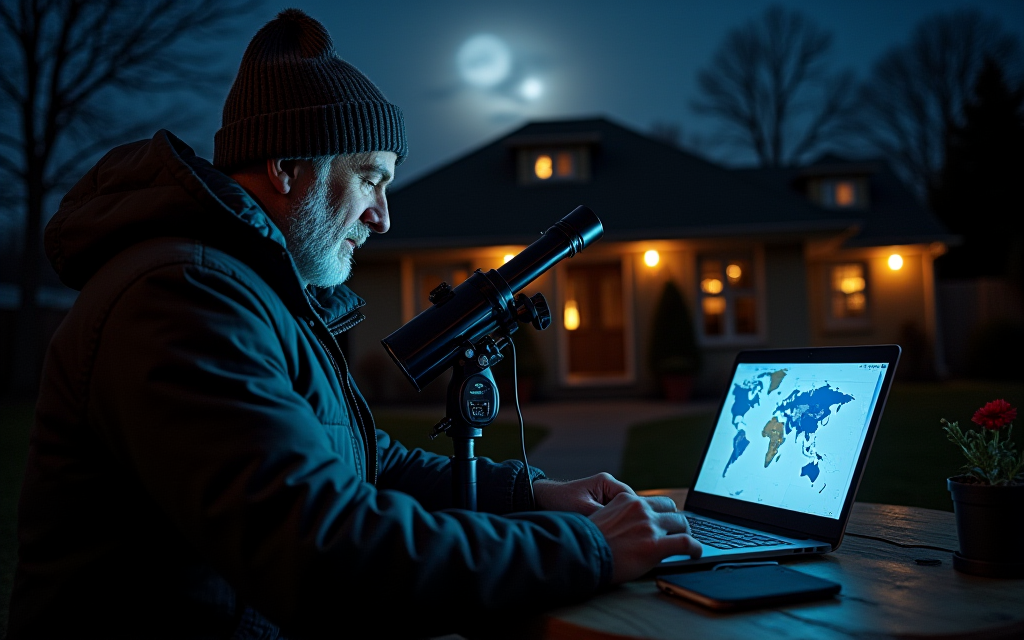
To participate, you’ll need a telescope with a CCD camera and a willingness to observe on short notice. When a gravitational wave event is detected, alerts are sent out, and amateur astronomers can quickly point their telescopes to the target region and monitor for a new source. The data is then shared with professional astronomers for analysis.
NASA emphasizes that even small telescopes can contribute valuable observations. The key is rapid response and consistent monitoring. Workshops and online tutorials are available to help beginners get started.
The Future of Citizen Science in Astronomy
With the launch of next-generation observatories like the Rubin Observatory and space-based gravitational wave detectors, the number of kilonova detections is expected to rise. Citizen scientists will play a vital role in follow-up observations, ensuring that no transient event is missed.
NASA’s initiative not only advances science but also fosters a sense of community and discovery among amateur astronomers. As one participant put it, “You never know when you might catch a glimpse of the universe’s most spectacular fireworks.”
For more information on how to join the hunt, visit NASA’s citizen science page.
