

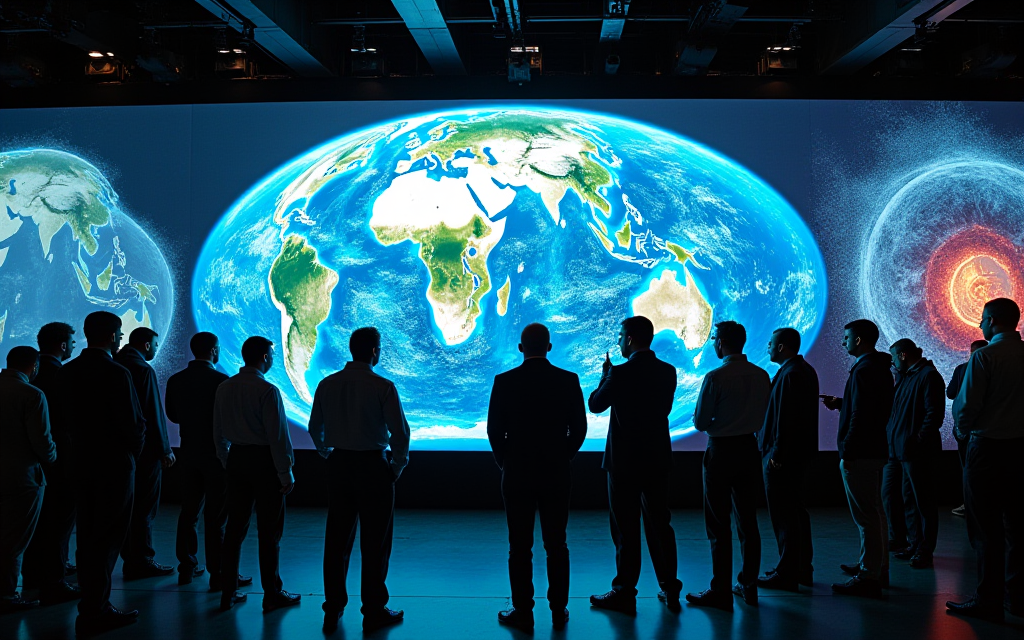
NASA’s AGU Hyperwall: A Visual Journey Through Earth Science
NASA's AGU Hyperwall returns with a stunning lineup of Earth science visualizations. Explore climate change, extreme weather, ocean health, and more through immersive displays and expert presentations. The full schedule is now available.
NASA’s AGU Hyperwall: A Visual Journey Through Earth Science
The American Geophysical Union (AGU) Fall Meeting is one of the largest gatherings of Earth and space scientists in the world. At the 2026 meeting, NASA will once again host its iconic Hyperwall, a massive video wall that showcases stunning visualizations of Earth science data. The Hyperwall schedule, now available on NASA’s Science website, offers a glimpse into the cutting-edge research and breathtaking imagery that will be on display.
What is the Hyperwall?
The Hyperwall is a 4×4 grid of high-definition screens that together create a seamless, ultra-high-resolution display. It serves as a dynamic canvas for scientists to present complex data in visually engaging ways. From climate models to satellite imagery, the Hyperwall brings Earth science to life, allowing viewers to explore our planet in unprecedented detail.
At AGU, the Hyperwall is not just a static display; it’s a focal point for presentations, discussions, and interactions. Scientists from various NASA centers and partner institutions will take the stage to narrate visualizations, answer questions, and share the latest findings. The schedule is packed with sessions covering a wide range of topics, including climate change, natural hazards, oceanography, and atmospheric science.
Highlights from the 2026 Schedule
The 2026 AGU Hyperwall schedule features a diverse lineup of presentations. Some highlights include:
- Global Climate Insights: New visualizations from NASA’s fleet of Earth-observing satellites reveal trends in temperature, precipitation, and ice cover. Scientists will discuss the implications of these changes for communities around the world.
- Extreme Weather Events: Using data from missions like GPM and CYGNSS, researchers will showcase how hurricanes, droughts, and floods are tracked and predicted. The Hyperwall will display near-real-time imagery of recent events.
- Ocean Health: From phytoplankton blooms to ocean currents, the Hyperwall will highlight the vital role of the oceans in regulating climate and supporting life. Presentations will cover topics such as ocean acidification and sea level rise.
- Earth’s Dynamic Surface: Visualizations of land cover change, wildfires, and volcanic activity will demonstrate how natural and human-induced processes shape our planet. The Hyperwall will also feature data from the upcoming NISAR mission.
- Engaging the Public: In addition to scientific sessions, the Hyperwall will host events for students and the general public, emphasizing the importance of Earth science and the beauty of our home planet.
The full schedule is available on NASA’s website, allowing attendees to plan their visit and catch their favorite topics. For those unable to attend in person, many presentations will be streamed online, and visualizations will be shared on NASA’s social media channels.
The Impact of the Hyperwall
The Hyperwall has become a beloved tradition at AGU, offering a unique platform for science communication. By combining data with artistry, it helps bridge the gap between complex research and public understanding. Whether you’re a scientist, a student, or simply a curious observer, the Hyperwall provides an immersive experience that inspires awe and appreciation for our planet.
As the 2026 AGU meeting approaches, the excitement is building. The Hyperwall schedule promises a week of discovery, insight, and visual splendor. Be sure to check out the full schedule and join NASA in exploring the wonders of Earth science.
