

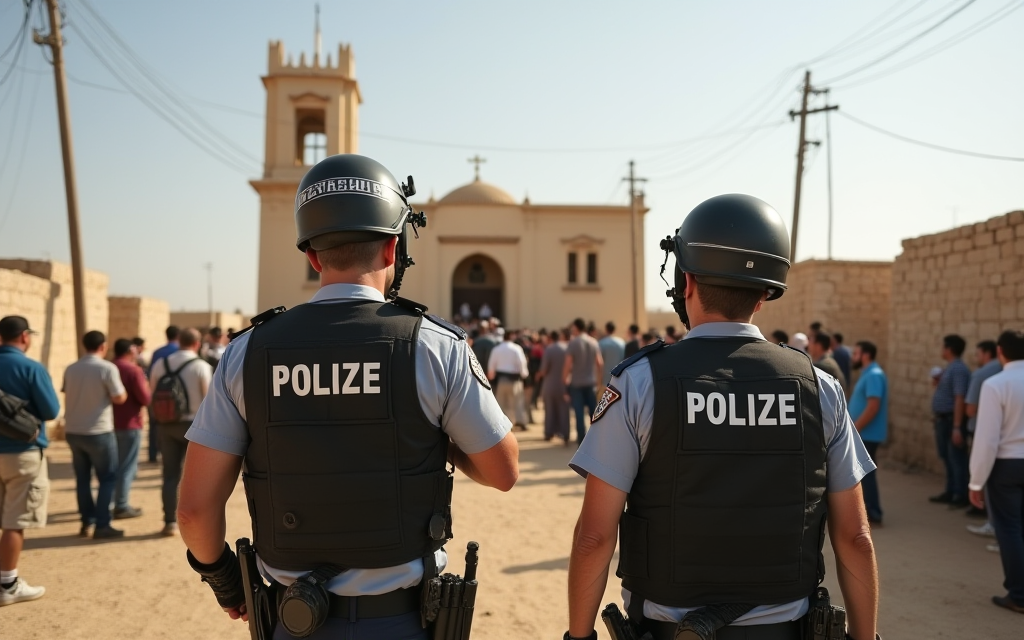
Israel’s Ben-Gvir Accused of Seeking ‘Religious War’ Over Mosque Loudspeaker Raids
Israeli police have confiscated loudspeakers from two mosques in southern Israel, prompting accusations that National Security Minister Itamar Ben-Gvir is seeking to ignite a religious war. Parliamentarian Ahmad Tibi condemned the raids, which are part of a pattern of seizures and a legislative push to restrict the call to prayer. Local residents and activists dispute police claims of noise violations and accuse authorities of acting without court orders. The incidents have raised concerns about religious freedom and incitement against Palestinian citizens.
Israeli Police Confiscate Mosque Loudspeakers Amid Rising Tensions
Israeli police have confiscated loudspeakers from two mosques in southern Israel, prompting accusations that National Security Minister Itamar Ben-Gvir is attempting to “ignite a religious war.” The raids, which took place in the Bedouin town of Hura and the nearby town of Tel al-Saba (Tel Sheva), are the latest in a series of actions targeting the Islamic call to prayer.
Parliamentarian Ahmad Tibi, a leader of the Ta’al Party, told Al Jazeera that Ben-Gvir, who oversees the police, was “exploiting the atmosphere of war” by ordering the removals. The police claimed they had received repeated noise complaints about both mosques, but critics argue the seizures are part of a broader campaign to suppress Palestinian religious expression.
Pattern of Seizures and Legislative Push
The confiscations in Hura and Tel al-Saba are not isolated incidents. In April, authorities removed loudspeakers from a mosque in the unrecognized Bedouin village of Bir al-Hammam, and in June from a mosque in Majd al-Krum in the Galilee. Several muezzins have been summoned for questioning, and mosques have been warned of fines.
According to the Palestinian monitoring group Mo’ta, Israeli authorities invoked noise regulations against mosques, imams, or muezzins in at least 38 cases in 2026 across Arab and mixed Arab-Jewish communities in Israel. The group also reported attacks on 50 mosques in the occupied West Bank, including 13 cases of arson, and said the call to prayer at Hebron’s Ibrahimi Mosque had been prevented 1,009 times since the start of the year.
On the legislative front, Israel’s Knesset voted 50 to 36 in a preliminary reading in July for a bill that would prohibit mosques from using loudspeakers to broadcast the call to prayer without government permission. The bill, sponsored by Zvika Fogel of Ben-Gvir’s far-right Jewish Power party, did not become law, but Jewish Power announced on Monday that it would bring a new version for a parliamentary vote on Wednesday.
Local Residents and Activists Push Back
Ibrahim al-Asam, a resident of Tel al-Saba and activist, disputed the police account, writing on social media that the speaker at al-Dawa Mosque was not loud. He said officers damaged the mosque during the raid and took the recorder connected to its security cameras.
Atiya al-Asam, who heads the regional council representing Bedouin villages in the Negev that Israel does not recognize, called the seizure “an assault on people’s faith, on Islam and Muslims.” He said police had acted without a court order and demanded the speakers be returned. “The mosque is far away and doesn’t bother anyone,” he added.
Critics, including Palestinian citizens of Israel and Israeli opposition leaders, have linked inflammatory comments by caretaker Prime Minister Benjamin Netanyahu and other right-wing politicians to recent attacks targeting a mosque and an Arab city in Israel. Tibi accused Netanyahu of leading a campaign of incitement against Palestinian citizens.
International Concern and Legal Questions
The seizures have raised questions about religious freedom and the rule of law in Israel. Police in Hura claimed officers checked the volume at the mosque and found it exceeded the legal limit, but residents say the action was taken without a court order. The repeated use of noise regulations against mosques has been criticized as a pretext for targeting religious minorities.
With the new bill set to be voted on Wednesday, tensions are likely to remain high. The international community has yet to respond to the latest developments, but human rights groups have consistently warned that such measures undermine freedom of religion and could further inflame tensions in the region.
