

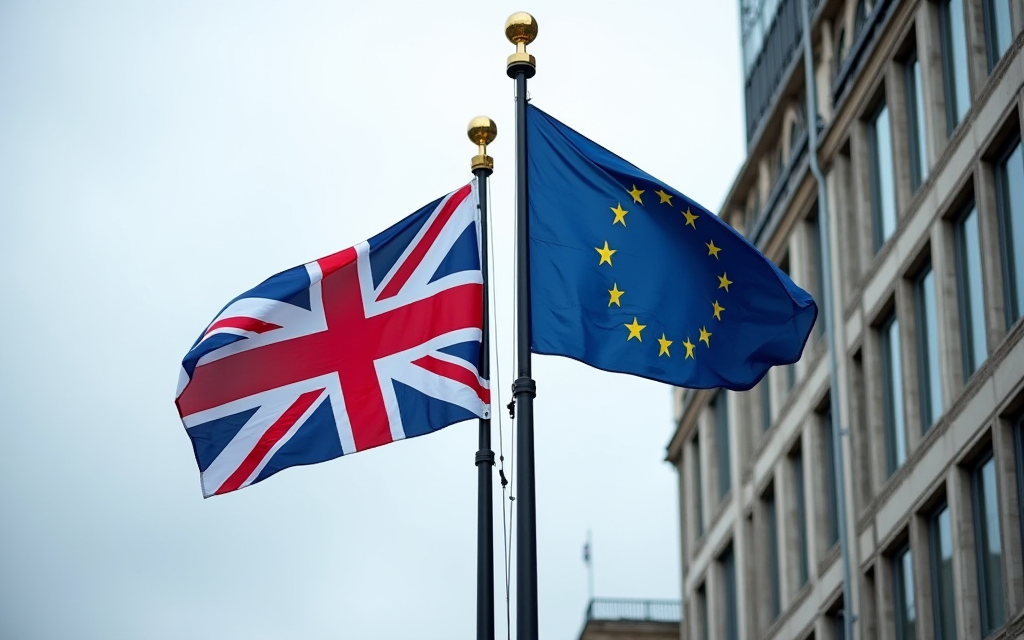
After Brexit: Is Britain Quietly Inching Back Toward the EU?
Ten years after Brexit, Britain and the EU have struck a new deal to bring their economies closer. Prime Minister Andy Burnham says Brexit 'has not worked' but rules out rejoining in this parliament. Economic pressures and Trump's tariffs are driving pragmatism, but critics question his mandate. The move marks a significant thaw in relations, though the ultimate question of how close Britain should get to the EU remains unresolved.
A Decade After Brexit, a New Chapter in UK-EU Relations
Ten years after Britain voted to leave the European Union, the political and economic landscape has shifted dramatically. London and Brussels have struck a new deal aimed at bringing their economies closer together, signaling a pragmatic reset in a relationship long defined by acrimony. The agreement, which focuses on reducing trade friction and enhancing regulatory cooperation, marks the most significant rapprochement since the 2016 referendum.
At the heart of this shift is Prime Minister Andy Burnham, who has publicly acknowledged that Brexit “has not worked” and expressed a personal desire for Britain to rejoin the EU within his lifetime. However, Burnham has been careful to temper expectations, insisting that reentry is not on the table for this parliament and reaffirming Labour’s red lines on the single market, the customs union, and free movement.
Economic Pressures Drive Pragmatism
The move toward closer ties is driven less by ideology than by economic necessity. Since leaving the EU, Britain has grappled with reduced trade volumes, labor shortages, and sluggish investment. The COVID-19 pandemic and the war in Ukraine compounded these challenges, but economists widely agree that Brexit has eroded the UK’s growth potential.
Meanwhile, external factors are reshaping the calculus. The return of Donald Trump to the White House and his aggressive use of tariffs have reminded British policymakers of the value of a stable, rules-based trading relationship with their closest neighbors. The EU, for its part, sees benefits in a more cooperative Britain as it navigates its own economic and security challenges.
Political Resistance and the Mandate Question
Despite the warming relations, the path back to full EU membership remains politically fraught. Critics accuse Burnham of lacking a mandate to reopen the Brexit debate, pointing to the 2016 referendum result and the 2019 general election, which delivered a strong Conservative majority on a promise to “get Brexit done.” They argue that any move toward closer integration should be put to voters in a fresh referendum.
Burnham’s response is simple: it is up to the voters. His strategy appears to be one of incrementalism—securing economic wins first, building public confidence, and leaving the door open for a future generation of leaders to pursue deeper integration. For now, the government is focused on making the new deal work, reducing border checks, and aligning regulations where it benefits British businesses.
What the New Deal Means for Britain and the EU
The newly struck agreement includes provisions for mutual recognition of professional qualifications, smoother data flows, and a framework for cooperation on energy and climate policy. While it falls short of single market access, it represents a meaningful step toward reducing the frictions that have hampered trade since Brexit.
For the EU, the deal offers a chance to demonstrate that constructive engagement with a non-member is possible, potentially serving as a model for future relationships with other neighboring countries. For Britain, it is a lifeline for businesses struggling with red tape and a signal that the government is serious about economic growth.
Yet the ultimate question—how close should Britain get to the EU?—remains unanswered. The new deal is a pragmatic compromise, but it is unlikely to satisfy hardline Brexiteers or ardent Remainers. What it does suggest is that the conversation has shifted from whether to engage with Europe to how best to do so.
Looking Ahead: A Gradual Thaw
As Britain and the EU implement their new agreement, both sides will be watching closely for signs of success or failure. For Burnham, the political stakes are high: he must deliver tangible economic benefits without alienating voters who still cherish the idea of sovereignty. For the EU, the challenge is to maintain unity while accommodating a member state that left and now seeks a different kind of relationship.
One thing is clear: the debate over Brexit is far from over. It has simply entered a new phase—one defined by pragmatism, economic necessity, and a cautious willingness to reconsider old certainties. Whether that leads to a full reunion or a lasting, arm’s-length partnership remains to be seen.
