

Thanksgiving Through Native Eyes: National Day of Mourning in Plymouth
While many Americans celebrate Thanksgiving, Indigenous communities in Plymouth, Massachusetts, held their annual National Day of Mourning to protest colonization and honor ancestors. The event, now in its 56th year, highlighted ongoing struggles for land rights, missing and murdered Indigenous women, and climate justice. Organizers emphasized that Thanksgiving is a day of resistance and resilience for Native peoples.
Thanksgiving Through Native Eyes: National Day of Mourning in Plymouth
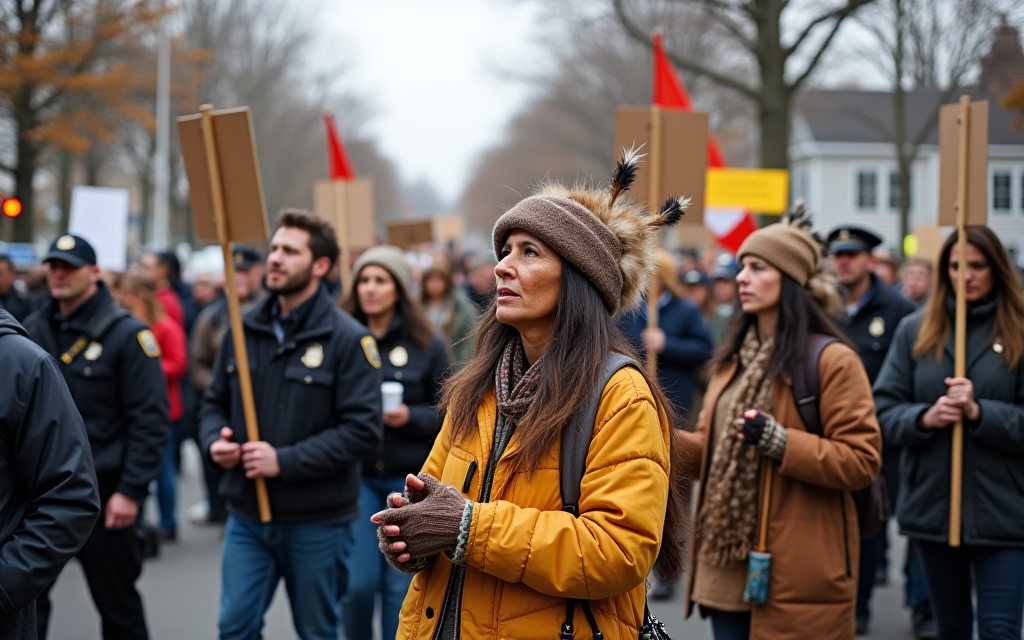
PLYMOUTH, Mass. — As millions of Americans gathered around tables to celebrate Thanksgiving on Thursday, a different scene unfolded in Plymouth, Massachusetts, the site of the original 1621 feast. Indigenous people and their allies assembled for the annual National Day of Mourning, a solemn protest against centuries of colonization, land dispossession, and violence.
The event, now in its 56th year, was organized by the United American Indians of New England (UAINE) and drew hundreds of participants from tribes across the region. They marched through the streets of Plymouth, held a rally, and observed a moment of silence for ancestors who suffered under European settlement.
A Counter-Narrative to the Traditional Holiday
For many Native Americans, Thanksgiving is not a celebration of unity but a reminder of genocide and broken treaties. The National Day of Mourning, held each year on the fourth Thursday of November, offers a platform to educate the public about the true history of colonization.
“We are not here to mourn the myth of Thanksgiving,” said Kisha James, a member of the Aquinnah Wampanoag tribe and an organizer with UAINE. “We are here to honor our ancestors who resisted and survived, and to continue the fight for our lands, our cultures, and our rights.”
Speakers at the event highlighted ongoing struggles, including the crisis of missing and murdered Indigenous women, the fight for clean water and land rights, and the impact of climate change on tribal communities.
Historical Context and Ongoing Struggles
The National Day of Mourning was first held in 1970, when Wampanoag leader Wamsutta Frank James was invited to speak at a Thanksgiving dinner but was asked to remove references to the mistreatment of Native Americans from his speech. He refused and instead organized a protest.
Since then, the event has become a tradition, drawing attention to issues such as the Dakota Access Pipeline, the Indian Child Welfare Act, and the epidemic of violence against Indigenous women.
“Thanksgiving is a day of mourning for us, but it’s also a day of resistance and resilience,” said James. “We are still here, and we will continue to fight for our future.”
Voices from the Crowd
Participants came from various backgrounds. Some were tribal members, while others were non-Native allies seeking to learn and show solidarity.
“I grew up celebrating Thanksgiving without thinking about the other side,” said Sarah Thompson, a resident of Boston who attended the event for the first time. “Hearing these stories today has been eye-opening. It’s important to acknowledge the truth.”
For many Native attendees, the day was also a time for community and healing. Traditional songs and dances were performed, and a potluck meal was shared after the rally.
“This is our way of reclaiming our history and our identity,” said James. “We are not just mourning; we are celebrating our survival.”