

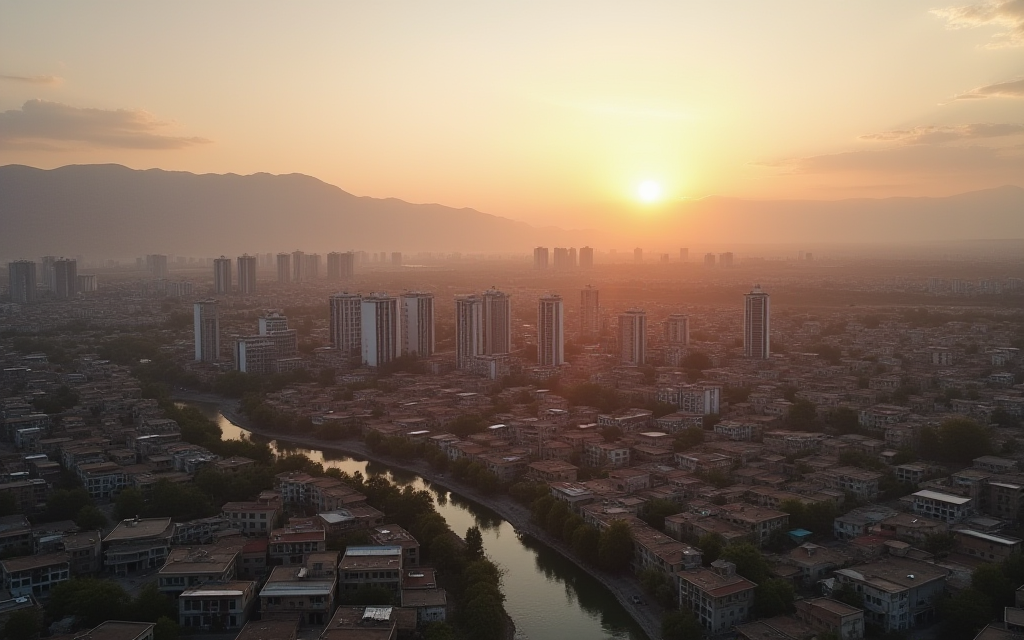
Osh Redevelopment Stirs Old Wounds in Kyrgyzstan’s Ethnic Cauldron
Osh, Kyrgyzstan's second-largest city, is undergoing a major regeneration programme that has demolished hundreds of homes, including those of ethnic Uzbeks, and raised concerns over the UNESCO-listed Sulaiman-Too mountain. Residents report inadequate compensation and fear the erasure of the city's historic character, as old ethnic wounds resurface.
Osh, Kyrgyzstan — A City in Transition
Kyrgyzstan’s second-largest city, Osh, is undergoing a sweeping regeneration programme that has demolished hundreds of homes, reopened ethnic wounds, and raised concerns over the future of a UNESCO World Heritage site. The fast-paced modernisation, which includes new IT hubs, apartments, schools, and transport projects, has left many residents fearing displacement and the erasure of the city’s historic character.
Osh, home to about 470,000 people—roughly 40 percent ethnic Uzbek—lies just 5km from the Uzbek border. The city has a fraught history of inter-communal violence, most recently in 2010 when more than 400 people were killed and thousands of homes destroyed, mostly ethnic Uzbeks. The current demolitions have revived memories of those dark chapters.
Demolitions and Displacement
Several hundred homes have been torn down to make way for new infrastructure. Among those affected is 84-year-old Mogamed Kambarow, an ethnic Uzbek whose home was partially destroyed in March when authorities widened Alisher Navoi Street. “They sent bulldozers, pulled down the walls and left,” Kambarow said. He received no compensation and now lives in the remaining portion of his house.
According to Interbilim, a local legal aid organisation, more than 750 households have been affected by the latest demolitions, including many Kyrgyz families. The group’s report reveals that 65 percent of households first learned their homes would be demolished when city workers painted the word “snos” (demolition) on their walls. Some received letters ordering them to leave within three days.
“It isn’t only Uzbek property that is damaged,” said Gulgaky Mamasalieva, head of Interbilim. She noted that while some families were relocated to new flats, many have not received proper documentation, leaving them unable to register their new addresses or access healthcare and other services. Some families have even been asked to pay the government the difference between the value of their old homes and their new flats.
UNESCO Site Under Pressure
The redevelopment also threatens Sulaiman-Too, a sacred mountain and UNESCO World Heritage site since 2009. The mountain, which attracts about 370,000 visitors annually, is a key source of tourism income. A $12m renovation project funded by the World Bank is underway to improve footpaths, lighting, and parking.
However, the mountain’s buffer zone, covering 4,788 hectares, includes Navoi Street and restricts development. City officials argue these restrictions hinder Osh’s growth. Former mayor Jenishbek Toktorboev, nicknamed “Demolition Uncle” for ordering the destruction of the old Jayma Bazaar, sought to release protected land for new projects and even proposed removing one of the mountain’s three cemeteries to build a leisure park. He was dismissed in February by President Sadyr Japarov.
The new mayor, Janar Akaev, has continued to propose ambitious developments, including a cable car to the mountain’s summit and removing the site from the UNESCO list—a proposal rejected by the culture ministry. “This is the most complete example of a sacred mountain in Central Asia,” said Hairullo Ibaydullaev, deputy director of the National Historical and Archaeological Museum Complex Sulayman.
Economic and Social Fallout
Osh’s debts total up to 3 billion soms ($34m), according to Kyrgyz media, though city authorities dispute that figure, saying this year’s budget is 5.2 billion soms ($57m). Officials did not respond to questions regarding the backlash over the development plans.
Residents like 73-year-old retired pilot Abduraim Amanbaev, whose family home has been destroyed three times—first during Soviet modernisation in the 1960s, again during the 2010 violence, and now—express exhaustion. “People are tired,” he said. Half of his house was demolished, and he has received no compensation.
Interbilim is prepared to help residents take legal action, but so far no one has been willing to sue. The organisation stresses that compensation should have been agreed upon before demolition, with disputes resolved in court. Instead, many families received only guarantee papers signed electronically by the vice-mayor, without detailed compensation packages.
As Osh continues its march toward modernity, the scars of the past and the anxieties of the present remain raw, leaving many to wonder whether the city’s rich cultural tapestry can survive the bulldozers.