

Ukraine’s ‘Operation Bear Trap’ Liberates 200 Sq Km in Kharkiv as Russian Casualties Hit Record
Ukrainian forces have liberated 200 square kilometers and 14 settlements in the northern Kharkiv region as part of "Operation Bear Trap," a new offensive that preempted a Russian encirclement. The operation comes as Russian casualties hit record highs and US negotiators push Ukraine to accept land-for-peace deals. Despite battlefield gains, Ukraine faces continued Russian air strikes and power outages.
Ukraine Launches ‘Operation Bear Trap’ in Kharkiv, Liberating 200 Sq Km
KYIV, Ukraine — Ukrainian forces have liberated approximately 200 square kilometers (77 square miles) and 14 settlements in the northern Kharkiv region as part of a new operation dubbed “Operation Bear Trap,” the Ukrainian military announced on November 20. The operation, the fourth of its kind this year, aimed to clear Russian troops from occupied territory and preempt an encirclement of Ukrainian forces near the town of Velykyi Burluk.
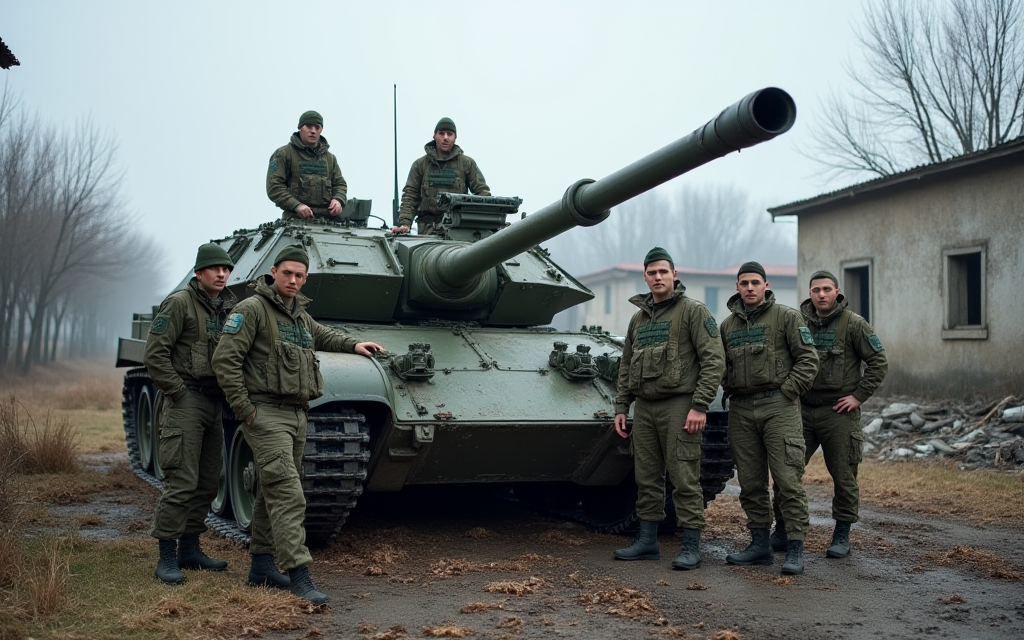
According to Ukrainian commanders, the operation relied on deceptive maneuvers and secrecy to attack Russian forces from multiple directions while concealing the main axis of advance. Ukrainian troops used a captured Russian T-80 tank and an Abrams M-1 tank to assault the border town of Vilhuvatka, creating the impression that the main blow would land there. They then struck Russian reinforcements from the rear as they arrived and used drones to remotely mine Russian resupply routes.
The Ukrainian command said Operation Bear Trap is ongoing and has so far succeeded in liberating the territory, though Russian troops continue to occupy at least four border villages in Kharkiv, including Vovchansk. Russia’s plan to seize almost 500 square kilometers (193 square miles) in the region has been foiled, according to Ukrainian officials.
Russian Casualties Reach Record Highs as Ukraine Strikes Deep Inside Russia
As fighting continues, Russian casualties have reached record levels. Ukraine’s military reported that Russia’s total casualties rose to a record 432,519 on November 24. The next day, a new monthly record of 55,629 was set for November, with five days still remaining in the month.
Despite these losses, Russia continues to assault Ukrainian positions. Ukraine’s General Staff said its forces in Donetsk were engaged in active defense, stopping attempted assaults and destroying vehicles. Retired Ukrainian colonel Konstantyn Mashovets, who analyzes the front on his Telegram channel, said Kyiv’s forces had also advanced in southern Zaporizhia, clearing Russian infiltrators from the northern bank of the Solona River near Novopavlivka.
Ukraine has also intensified strikes on Russian military and energy infrastructure. On November 21, Ukrainian forces struck the Sparta II, a Russian logistics vessel en route from St. Petersburg to Kaliningrad. The next day, two Ukrainian naval drones struck and sank the Russian corvette Merkury near the Libyan port of Benghazi, an attack that has caused tensions between Italy and Ukraine. Another Russian logistics ship, the Angara, was struck in the Mediterranean on the same day.
On November 25, Ukrainian forces attacked the Savasleyka airfield, damaging a MiG-31 and two Sukhoi-24 bombers used to launch Khinzal missiles. Ukraine also struck the Kaleykino pumping station on the Druzhba oil pipeline on November 20 and again on November 23, reportedly destroying three 50,000-tonne oil tanks. Additionally, strikes hit the Novoshakhtinsk, Permnefteorgsintez, Kuibishevsk, and Sizran refineries, all key to supplying the Russian military. The furthest of these was 3,000 kilometers (1,800 miles) from unoccupied Ukraine.
Ukraine’s strikes on Russian refineries have lowered Russia’s refining capacity by an estimated one-third and caused fuel shortages, according to Ukrainian military intelligence. Over the three months ending October 22, Russia imported almost a million tonnes of refined fuels, including 128,000 tonnes of diesel.
US Pushes Unfavorable Compromises as Zelenskyy Rejects Land-for-Peace Deals
Despite Ukraine’s battlefield achievements, US mediation efforts have remained unchanged. US negotiators presented two proposals to Ukraine, both involving an exchange of land for peace, according to The Wall Street Journal. In one proposal, Ukraine would cede the “fortress belt” of cities in Donetsk and receive full NATO membership. However, Ukrainian President Volodymyr Zelenskyy has rejected the idea of retreating from that well-defended position.
Russian official Dmitry Medvedev reiterated on November 20 that Ukraine’s potential NATO membership was a key reason for the war and suggested partitioning Ukraine, proposing that Lviv could be handed to Poland as part of a deal. Ukraine’s Defense Ministry responded, saying “the enemy has not abandoned its goal of destroying Ukrainian statehood.”
US negotiator Jared Kushner told a Berlin news conference that Russia had accepted a watered-down version of the US proposal—the second option outlined by the WSJ—of creating NATO-style security guarantees for Ukraine in return for freezing the front line. “We have been able to convince the Russians of this concept that any security guarantees for Ukraine would be based on Article 5,” Kushner said. “President Trump is open to it, but obviously it has to be in America’s interest.”
Kushner explained on social media that it would be in the US interest if “broader security arrangements made it highly unlikely that the guarantee would ever be invoked. This is why security guarantees for Ukraine cannot be finalized in isolation from post-war European security architecture.”
It appeared, therefore, that Europe would have to assume the burden of a future defense of Ukraine, something Russia has also rejected because it refuses to accept European forces on Ukrainian soil. Those NATO-style guarantees would have to be offered from the safety of NATO soil, rendering them less effective.
Zelenskyy told journalists he did not trust a deal between Trump and Russian President Vladimir Putin, whom Trump referred to as “my friend” on November 19. He told Bloomberg that the US and Russia were effectively in cahoots to bully Ukraine. “It’s very unfortunate when, during discussions about how to end the war, Starshield either malfunctions or has limitations, and not only are there fewer missiles for Patriot systems, but there are also other issues that prevent deliveries,” he said. “Politically, it looks as if the US is moving in the same direction as what Putin wants: to force Ukraine into unfavorable compromises.”
European leaders have also expressed concern over Russia’s escalating aggression. German Chancellor Friedrich Merz told parliament that “Russia wants more than Ukraine. Russia is escalating in the Baltic. Russia is escalating in Poland. Russia is escalating on the Black Sea. Russia is escalating in space, and Russia is escalating massively here in our own country.” Merz was referring to two Russian missiles and a Russian drone that crashed in an area of Poland on November 20, where a multinational force of more than 5,000 personnel from Britain, France, Belgium, Estonia, Spain, the Netherlands, Lithuania, Germany, Poland, and Sweden was conducting its first military exercise.
As winter approaches, Ukraine continues to struggle to defend its skies, with nationwide power outages making life miserable for civilians. Russian strikes on Ukraine have caused power outages in five regions, and on November 26, a Russian air attack on Kharkiv killed at least one person and destroyed a house.