

NASA’s DART Mission Reveals New Crater on Asteroid Dimorphos
New images from NASA's DART mission show a newly formed crater on asteroid Dimorphos, offering insights into planetary defense. The impact successfully altered the asteroid's orbit, proving kinetic impact is a viable strategy for deflecting hazardous asteroids.
NASA’s DART Mission Reveals New Crater on Asteroid Dimorphos
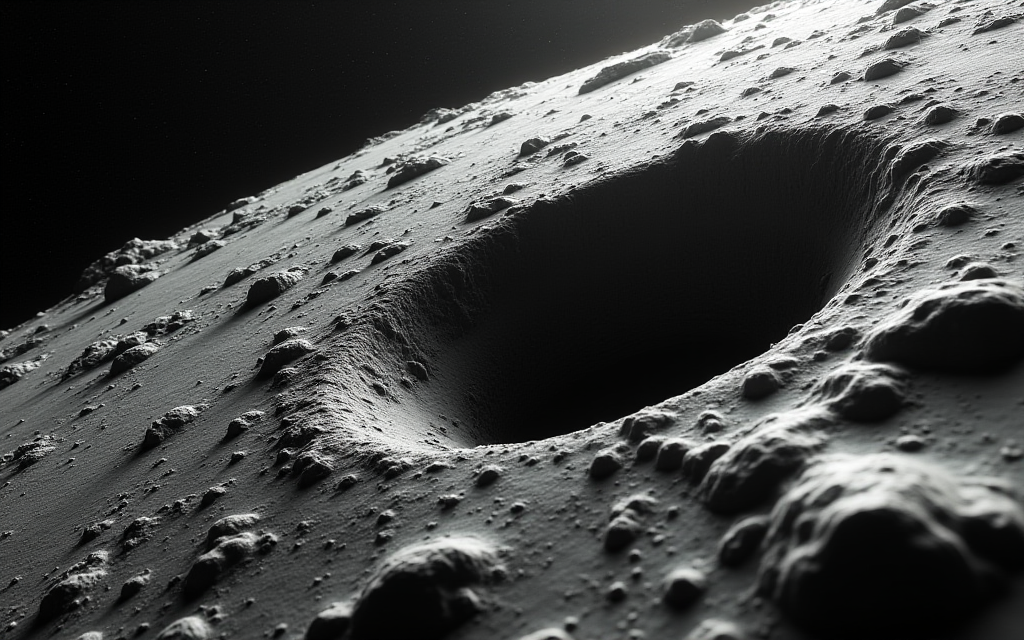
Washington, D.C. — New images from NASA’s Double Asteroid Redirection Test (DART) mission have revealed a freshly formed crater on the asteroid Dimorphos, providing scientists with valuable data on planetary defense techniques. The images, captured by the Italian Space Agency’s Light Italian CubeSat for Imaging of Asteroids (LICIACube), show a significant impact site created when the DART spacecraft intentionally collided with the asteroid on September 26, 2022.
Impact and Observations
The DART spacecraft, roughly the size of a vending machine, struck Dimorphos at approximately 14,000 miles per hour (22,530 kilometers per hour). The impact was designed to test whether a spacecraft could alter an asteroid’s trajectory through kinetic impact. According to NASA, the collision successfully changed the asteroid’s orbital period around its larger companion, Didymos, by about 32 minutes—far exceeding the initial goal of 73 seconds.
The newly released images, taken by LICIACube as it flew past the asteroid about three minutes after impact, show a crater estimated to be about 50 meters (164 feet) in diameter. The crater’s formation and the ejected material, or ejecta, are being analyzed to understand the asteroid’s surface properties and the effectiveness of the kinetic impact method.
Implications for Planetary Defense
Scientists believe the DART mission’s success demonstrates that kinetic impact is a viable strategy for deflecting potentially hazardous asteroids. The data gathered will help refine models for future planetary defense missions. “The DART mission has provided us with a wealth of information about asteroid composition and impact dynamics,” said Dr. Nancy Chabot, DART coordination lead at the Johns Hopkins Applied Physics Laboratory. “The new crater images are crucial for validating our models and improving our ability to protect Earth from asteroid threats.”
The European Space Agency’s Hera mission, scheduled to launch in 2024, will further investigate the aftermath of the DART impact, including detailed measurements of the crater and the asteroid’s mass.
Future Research and Collaboration
The DART mission is a testament to international collaboration, with contributions from NASA, the Italian Space Agency, and other partners. The images from LICIACube represent a significant achievement in asteroid imaging and will be studied for years to come. Researchers are particularly interested in the crater’s morphology and the distribution of ejecta, which can reveal insights into the asteroid’s internal structure and material strength.
As planetary defense remains a global priority, the lessons learned from DART will inform future missions and strategies. The success of the mission underscores the importance of continued investment in space science and technology to safeguard our planet.