

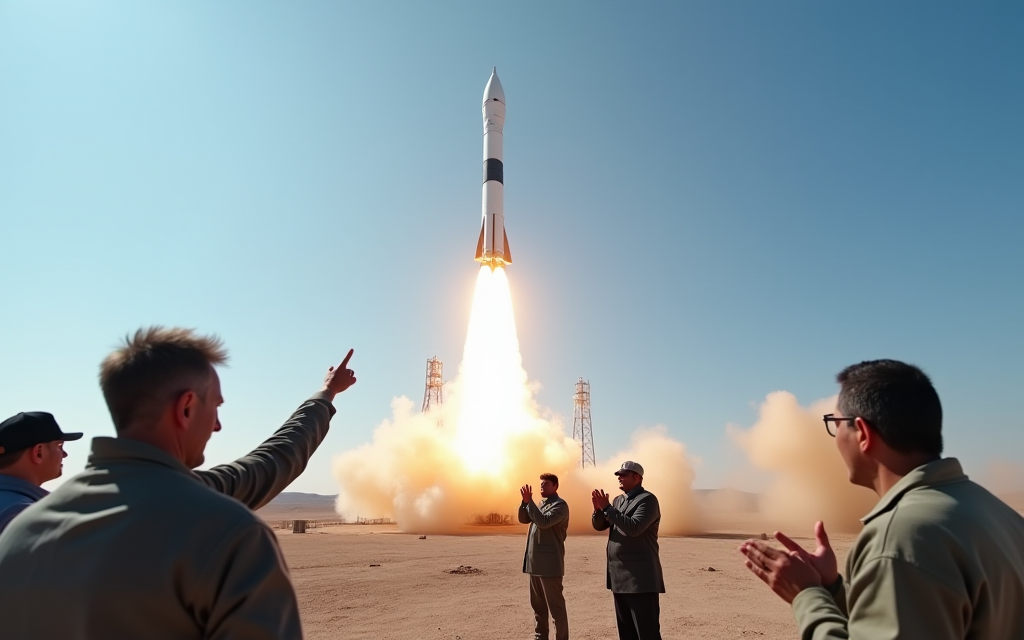
Pakistani Astronaut Muhammad Zeeshan Ali Launches to Tiangong Space Station Aboard Chinese Rocket
Pakistani astronaut Muhammad Zeeshan Ali launched aboard a Chinese rocket to the Tiangong space station, marking a historic milestone in China-Pakistan space cooperation. During his six-month mission, Ali will conduct experiments in biotechnology and materials science, while inspiring students back home. The launch underscores China's growing role in space collaboration and Pakistan's ambitions in space exploration.
Historic Launch Strengthens China-Pakistan Space Ties
In a landmark moment for Pakistan’s space ambitions, astronaut Muhammad Zeeshan Ali lifted off aboard a Chinese rocket on Wednesday, bound for China’s Tiangong space station. The launch, broadcast live from the Jiuquan Satellite Launch Center, marks a significant deepening of space cooperation between Islamabad and Beijing.
Under a bilateral agreement signed last year, Ali will spend six months aboard the orbital outpost, conducting a series of scientific experiments in biotechnology and materials science. His mission is seen as a major step forward for Pakistan’s nascent space program and a testament to the growing strategic partnership between the two nations.
A Mission of Scientific Discovery
During his stay on Tiangong, Ali will collaborate with Chinese taikonauts on research projects aimed at developing new pharmaceuticals and advanced materials. The experiments are expected to yield insights into how microgravity affects biological processes and material properties.
- Biotechnology: Ali will study protein crystallization and cell behavior in space, which could lead to breakthroughs in drug development.
- Materials Science: He will test the durability of novel alloys and composites under extreme space conditions, with potential applications in aerospace and manufacturing.
- Educational Outreach: The astronaut will also engage with Pakistani students through live video links, inspiring the next generation of scientists and engineers.
“This mission is not just about Pakistan’s presence in space; it’s about building capacity and fostering innovation,” said a spokesperson for Pakistan’s Space and Upper Atmosphere Research Commission (SUPARCO). “We are grateful to China for this opportunity and look forward to many more collaborative endeavors.”
Deepening China-Pakistan Space Cooperation
The launch is the latest milestone in a series of joint space initiatives between China and Pakistan. In 2018, Pakistan’s first indigenous satellite, PakTES-1A, was launched from China, and the two countries have since worked together on remote sensing and communication satellites.
China’s Tiangong space station, which became fully operational in 2022, is open to international astronauts and has already hosted crews from several countries. The inclusion of a Pakistani astronaut underscores Beijing’s push to position Tiangong as a platform for global scientific collaboration, particularly among developing nations.
Analysts note that the mission also carries symbolic weight, showcasing China’s growing influence in space and its willingness to share technology with allies. For Pakistan, it represents a leap forward in its quest to establish a foothold in the space domain.
National Pride and Future Aspirations
Across Pakistan, the launch was met with widespread excitement and national pride. Crowds gathered in major cities to watch the live broadcast, waving flags and cheering as the rocket soared into the sky. Prime Minister Shehbaz Sharif congratulated the nation and the astronaut, calling Ali a “hero who has made us all proud.”
Ali, a former air force pilot, was selected from thousands of applicants for the mission. He underwent rigorous training in China for over a year, including simulations of spacewalks and emergency procedures. His journey from the skies over Pakistan to the cosmos has inspired many young Pakistanis to dream big.
As the world watches, Ali’s mission is poised to open new avenues for scientific research and international cooperation, proving that even in the vastness of space, partnerships can bring nations closer together.
