

Paul Whitehouse Urges UK PM to Save Windermere’s Arctic Charr from Extinction
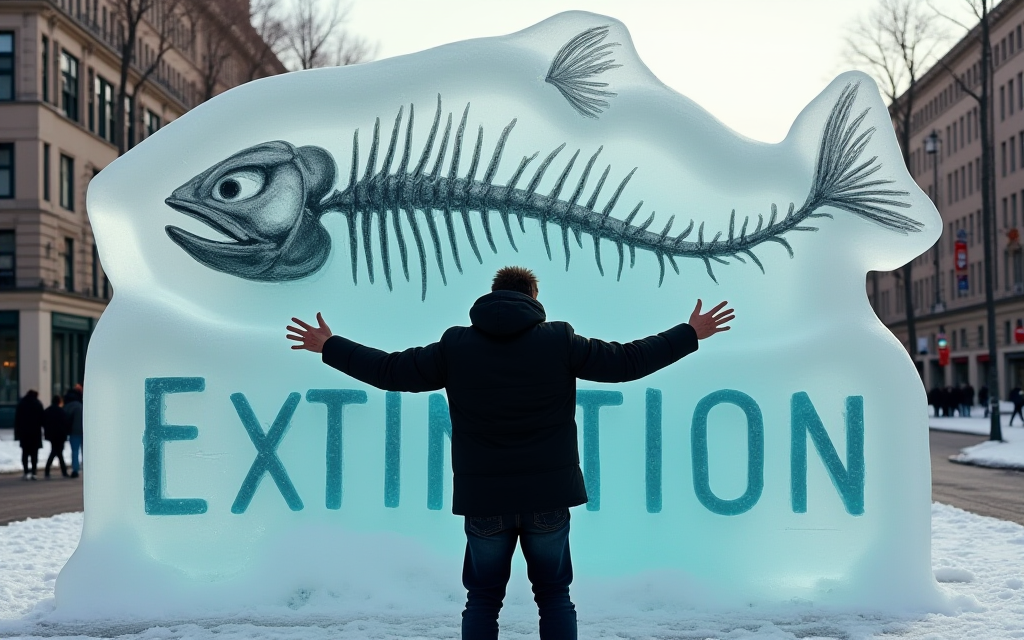
Comedian Paul Whitehouse has urged UK Prime Minister Andy Burnham to save the Arctic charr in Windermere from extinction. Whitehouse and campaigner Matt Staniek unveiled an ice sculpture outside the PM's office to highlight the fish's plight, caused by sewage pollution, invasive species, and rising temperatures. New research from the Freshwater Biological Association warns the species faces extinction without urgent action. Campaigners are calling for a £3.7 billion scheme to improve sewage treatment. The government says it is already taking steps to reduce pollution.
Comedian and Campaigners Demand Action as Ancient Fish Faces Extinction
MANCHESTER, England — Comedian and television presenter Paul Whitehouse has called on Prime Minister Andy Burnham to take urgent action to save the Arctic charr, a fish species that has inhabited Windermere, England’s largest lake, since the end of the last Ice Age. Whitehouse, known for the BBC series Mortimer & Whitehouse: Gone Fishing, warned that the loss of the species would be “a crime” and blamed sewage pollution, invasive species, and rising temperatures for the fish’s decline.
The intervention came as Whitehouse joined environmental campaigner Matt Staniek to unveil a 1.3-meter (5-foot-6-inch) ice sculpture outside the prime minister’s office in Manchester on Thursday. The sculpture, depicting Burnham, was designed to highlight the plight of the Arctic charr and to pressure the government to expedite a £3.7 billion scheme that includes a large tunnel to carry sewage to a new treatment works.
Scientific Evidence Points to Critical Decline
New research from the Freshwater Biological Association (FBA) has found that Arctic charr in Windermere are in serious decline and face extinction without urgent action. The fish, which is genetically distinct from Arctic charr in other regional lakes, lives in four separate populations in Windermere that spawn at different times and locations and do not interbreed.
According to the FBA, the quality of spawning habitat has “declined markedly” since 2017, with increasing levels of silt and algae. Invasive species such as ruffe, roach, and bream are also on the rise, competing with the charr for food and habitat. Dr Louise Lavictoire, the FBA’s head of science, said the research “has shown very clearly that we are at risk of losing Arctic charr from Windermere completely.”
“The species is facing multiple pressures and research gives us the evidence, data and sense of urgency to take collective action to protect this ancient fish species before it’s too late,” Lavictoire added. The research was funded by Natural England, the Environment Agency, and the Lake District National Park Authority (LDNPA).
Campaigners Call for Infrastructure Investment
Matt Staniek, the environmental campaigner behind the Save Windermere campaign, is urging the prime minister to speed up the £3.7 billion scheme drawn up by the Only Rainwater In Windermere coalition. The coalition includes United Utilities, the Environment Agency, the LDNPA, the Love Windermere partnership, Save Windermere, and Westmorland and Furness Council.
Whitehouse said the “spawning grounds for this beautiful species are covered in algal sludge that is a direct result of sewage pollution.” He added: “This government needs to act now.” The comedian has been a vocal advocate for the lake, using his platform to raise awareness about the environmental threats facing Windermere.
United Utilities, which manages infrastructure around the lake, said protecting the area was a “priority” and that £200 million is being invested over the next four years to reduce spills from storm overflows and improve wastewater treatment. A Defra spokesperson said the government is already acting to reduce sewage discharges, including deploying 33 additional Environment Agency specialists in the region, increasing inspections, and giving the local community a greater say in decision-making through regional water councils.
Arctic Charr: A Living Link to the Ice Age
The Arctic charr is a cold-water fish that has survived in Windermere for more than 10,000 years. It is considered a “living link to the end of the last Ice Age” and is genetically unique. The fish typically has a greyish body with an orange underbelly and is adapted to the deep, cold waters of the lake.
Natural England’s Dave Ottewell described Arctic charr as “remarkable fish” and emphasized their evolutionary significance. Tim Duckmanton, team leader for strategy and environment at the LDNPA, said that “thanks to data collected, we now have a better understanding of threats to the species.”
The unveiling of the ice sculpture is the latest in a series of protests and campaigns aimed at drawing attention to the pollution crisis in Windermere. The lake has long been a popular tourist destination, but campaigners say it is under increasing pressure from sewage discharges, agricultural runoff, and climate change.
As the ice sculpture melted outside the prime minister’s office, Whitehouse and Staniek hoped their message would resonate with policymakers. The government has pledged to strengthen regulation and enforcement through a new Water Bill, but campaigners argue that faster action is needed to prevent the extinction of one of England’s most ancient fish species.