

Snooker’s Mental Health Crisis: Why the Sport’s Biggest Stars Are Speaking Out
Mark Allen's emotional interview has highlighted the mental health challenges in snooker. Players like Ronnie O'Sullivan and Mark Selby have spoken about their struggles, and the sport's governing body is working to provide support. But some believe more needs to be done, including on-site professionals at tournaments. The isolation of solo practice and the pressure of one-on-one competition make snooker uniquely demanding.
Snooker’s Silent Struggle: Mental Health in the Spotlight
Snooker, often seen as a game of precision and nerves, is facing a mental health reckoning. In October, world number 11 Mark Allen gave a raw interview on TNT Sports, saying he was in a “bad place” and “just trying to survive” after a first-round defeat at the Northern Ireland Open. His comments have reignited a conversation about the unique psychological demands of the sport and the support available to players.
Allen, who reached the World Championship semi-finals in May, had spent 10 weeks in a mental health clinic before discharging himself to play in Belfast. He has since said his future is “looking brighter” but admitted he is “definitely stuck in a major low right now.” His openness has prompted fellow professionals to share their own experiences, highlighting a broader issue within snooker.
The Weight of Isolation and Individual Pressure
Snooker is one of the most individualistic sports, where players spend countless hours alone in practice rooms and face their opponents one-on-one under the spotlight. The nature of the game means players have no teammate to share the burden and no physical outlet for frustration.
“At least in golf you have your own ball. You don’t have to worry about anyone else,” 1997 world champion Ken Doherty told BBC Sport. “In snooker, when you’re sitting in your chair and your opponent is at the table, you can do nothing. Only sit and bear it. That is the toughest part about our sport and mentally that is quite difficult for people to comprehend.”
Gary Wilson, the world number 28, described the sport as “very lonely” and “mentally destructive.” He said: “You’re practising in a club and you could be in there on your own for six, seven, eight hours a day in a dark room, with just a snooker light on. It can get unhealthy mentally in itself, but it’s what you’ve got to do.”
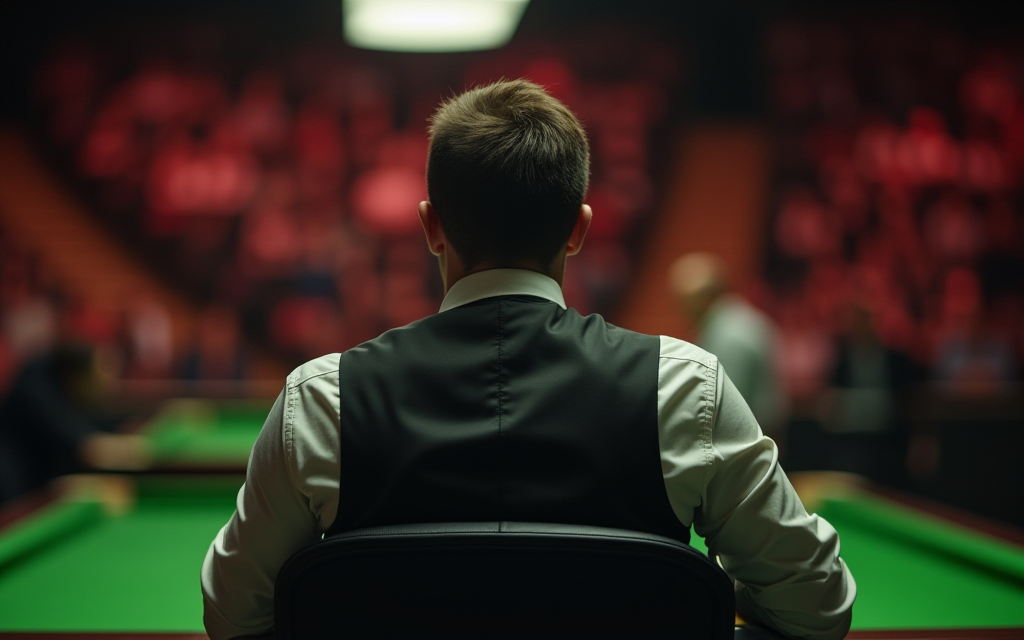
Dr Paul Gaffney, a psychologist who has worked with Allen, likened the tournament environment to a “colosseum” where players are scrutinized by thousands. “There are people looking down at you, and you can absolutely thrive, or be beaten in front of the world stage,” he said.
Existing Support and Calls for More
Since 2021, the World Professional Billiards and Snooker Association (WPBSA) has partnered with Sporting Chance, a charity founded by former footballer Tony Adams, to provide mental health support. The service offers a confidential 24/7 helpline and free counselling sessions—over 180 have been delivered so far.
However, some players, including Ronnie O’Sullivan and Mark Selby, have called for mental health professionals to be present on-site at tournaments. “I think players would have a lot more inclination to use somebody physically there at tournaments,” Wilson said. “I don’t know how feasible that is.”
Doherty, who sits on the WPBSA players’ board, believes the remote service is the best solution. “Players don’t necessarily want to go and speak to someone at a tournament,” he said. “We thought about having someone on hand, but then we thought, we don’t think anyone would use it. This is a free service. Nobody has to know.”
WPBSA chairman Jason Ferguson acknowledged the highs and lows of the sport and emphasized the need to continually promote the available services. “The highs are very high and the lows are very low,” he said. “If there’s anything we can work on, it’s continually getting the message out to other players to say those services are there.”
The Need for Emotional Release
Snooker’s genteel reputation often clashes with the raw emotions players experience. In 2021, Wilson was fined £250 for thumping the cue ball into a red after a missed pot, an outburst he attributed to depression. He argues that players should be allowed to vent. “You’re expected to keep your emotions completely in check at all times,” he said. “Now that’s just not sport. When you look at any other sport that you play… you’ve got to be able to vent.”
Ferguson responded by saying that while passion is welcomed, snooker is fundamentally a sport of “great etiquette.”
As Allen prepares for the UK Championship, his courage in speaking out has shone a light on the mental health challenges faced by snooker players. Dr Gaffney praised Allen’s integrity: “The brilliant thing about what he’s done—his courage, his integrity, his class in the last few weeks—is there will be people watching snooker who wouldn’t have been watching snooker before, because Mark Allen is playing.”