

U.S. Airlines Abandon International First Class for Mega Business-Class Cabins
American Airlines’ last international first-class flight signals the end of an era for U.S. carriers. Delta and United have already phased out first class, replacing it with expanded business-class cabins featuring suites, sliding doors, and premium amenities. Airlines are betting on mass luxury as travelers pay more for comfort, while segmenting business class into basic and premium tiers. First class remains alive globally with carriers like Singapore Airlines and British Airways, but U.S. airlines are focused on maximizing revenue through larger business cabins and new premium economy offerings.
The End of an Era: U.S. Airlines Drop International First Class
American Airlines’ final international first-class flight landed this week, marking the end of a more than six-decade era for U.S. carriers. The last flight, departing Sydney, featured the airline’s eight-suite first-class section—a configuration that will soon be replaced by a massive business-class cabin with room for 70 passengers. Delta Air Lines and United Airlines had already phased out their long-haul first-class offerings, leaving American as the last holdout.
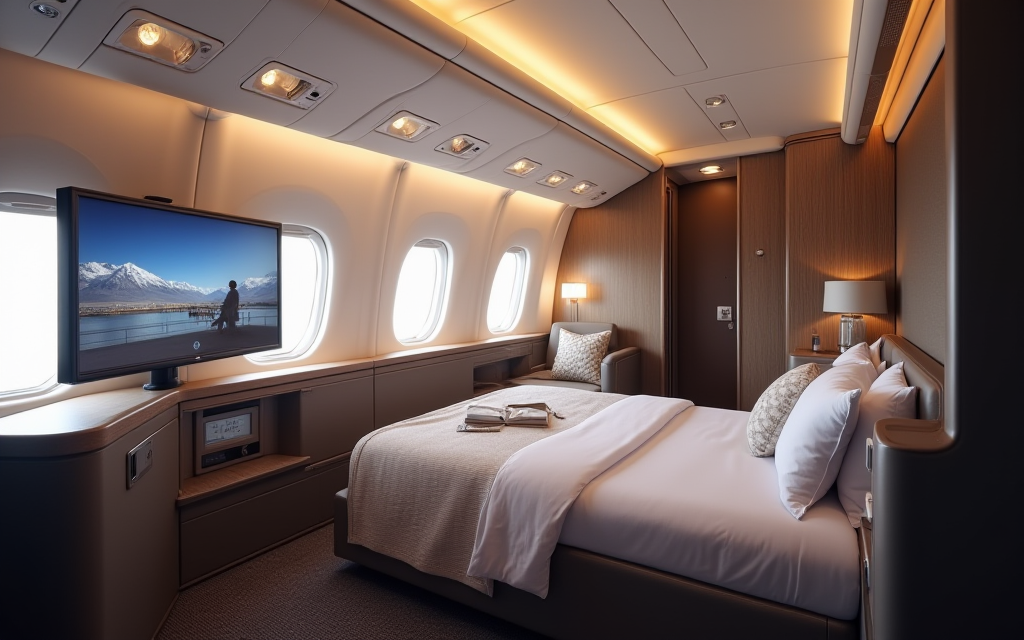
While some travelers may mourn the loss of the ultra-exclusive cabin, many won’t notice the difference. Airlines have invested heavily in business class, introducing suites with sliding doors, larger entertainment screens, improved bedding, and modern amenities like wireless charging. These upgrades blur the line between what was once first class and today’s premium business products.
The Business-Class Boom: Mass Luxury Takes Flight
The shift reflects a broader strategy: airlines are betting on “mass luxury.” Consumers have shown a willingness to pay more for comfort, boosting revenue as costs for fuel, labor, and airport fees rise. Business class has evolved from small, recliner-seat cabins to lie-flat suites that dominate the premium cabin experience.
“When you’ve got individual pods in biz class, and you’ve got a comfortable enough seat and bedding and decent wine, for a lot of people this is good enough,” said Henry Harteveldt, founder of Atmosphere Research Group and a former airline executive. The over-the-top dining of early first class—think seat-side carving of chateaubriand—was a form of entertainment before personal screens and Wi-Fi, but passengers still enjoy eating on board. “People say they want to sleep but then they stay up and they eat every morsel,” Harteveldt added.
The price gap between first and business remains significant, but it’s narrowing in terms of experience. A one-way Los Angeles-to-London flight on American this week cost $12,994 in business class versus $15,669 in first class. Yet the differences often come down to small touches: olives with warm nuts, a soup course, a warm dessert, or a memory foam lumbar pillow.
American’s New Flagship Suites and the Future of Premium Travel
American’s new business-class cabin on its Boeing 777-300ERs will feature 70 suites—the most of any U.S. airline. Previously, the aircraft had eight first-class suites and 52 business-class pods. The airline is also evaluating increasing the number of suites on its smaller Boeing 787-8 Dreamliners from 20 to the 30s. “You don’t have enough seats to make the seat cost competitive,” said Nat Pieper, American’s chief commercial officer. “So what you need to do to make that airplane work is it’s got to be a yield play. You need more business-class seats.”
Beyond larger cabins, airlines are segmenting business class into different tiers. United and Delta recently introduced basic business-class fares that restrict seat selection and lounge access. Some seats within business class are roomier, such as American’s Flagship Suite Preferred and United’s Polaris Studio. United’s Polaris Studio even includes a companion ottoman with a seatbelt, allowing a fellow passenger to visit during the flight. “I don’t think we found the limit on segmentation,” United CFO Mike Leskinen told CNBC. “We have a few things on the drawing board. We’re not done.”
Meanwhile, premium economy has emerged as a middle ground, offering recliner seats, footrests, meals on real plates, and larger screens—features that were once the hallmark of domestic first class. American will continue offering a lie-flat first class on its Airbus A321T subfleet for domestic cross-country flights until early 2027, after which that too will disappear.
First Class Persists Globally, While U.S. Carriers Pivot
Although U.S. carriers are moving away from the first-class designation, the product is far from dead globally. Singapore Airlines, Lufthansa, British Airways, and Air France have all unveiled updated first-class cabins and service enhancements. British Airways plans to build a record 106-suite business class on its Airbus A380s while also upgrading its first class. Smaller U.S. airlines like JetBlue, Frontier, and Allegiant are introducing domestic or short-haul first-class seats, targeting travelers who want a taste of luxury at a lower price point.
For U.S. airlines, the focus is clear: more business-class seats, more segmentation, and more revenue. The retirement of international first class marks the end of an era, but it also signals the rise of a new one—where mass luxury and premium economy redefine how we fly.
