

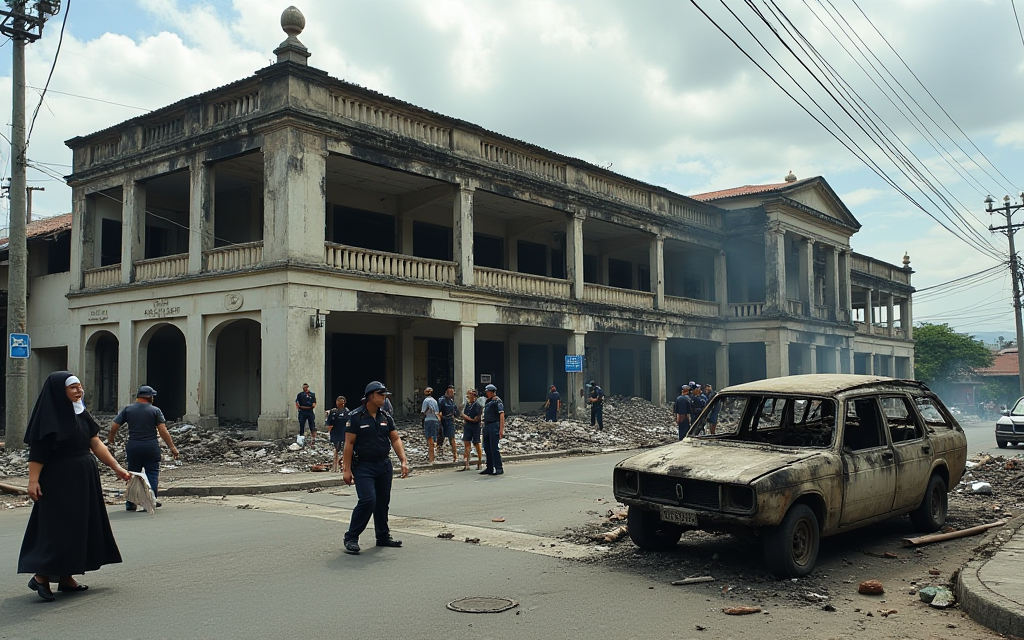
Colombian President Blames Ex-FARC Rebels for Villavicencio Car Bombing That Injured 23
Colombian President Abelardo de la Espriella has blamed ex-FARC rebels for a car bomb attack on a government building in Villavicencio that injured at least 23 people. The president accused EMC commander Antonio Medina of retaliation for government offensives. The attack occurred on the eve of the 10-year anniversary of the 2016 peace deal, highlighting rising risks to civilians under the new hardline security strategy.
Car Bomb Rocks Villavicencio, Injures 23
A powerful car bomb attack targeted a state government building in Villavicencio, Colombia, late Monday night, injuring at least 23 people and causing extensive damage to the Meta governor’s office and surrounding structures. President Abelardo de la Espriella, visiting the scene on Tuesday, blamed dissident rebels from the Central General Staff (EMC) for the attack, specifically accusing commander Antonio Medina of orchestrating it in retaliation for government offensives in the province.
“The bandit Antonio Medina from the [FARC] dissidents is to blame, and we’re going to go after him and make him pay with blood,” de la Espriella told reporters. The blast occurred on the eve of the 10-year anniversary of the 2016 peace deal with the FARC, underscoring the fragile security situation in the region.
Government Offensive and Rebel Retaliation
The attack comes amid a heightened military campaign by the new far-right government against armed groups. In recent months, the administration has bombed EMC camps and targeted senior commanders, including the killing of alias El Churco, an EMC commander, confirmed just a day before the bombing. The government has suspended peace negotiations initiated under the previous administration and adopted a hardline security strategy focused on military force.
President de la Espriella suggested the bombing was a desperate response to the government’s successes. “The narco-terrorists are running wild, launching desperate attacks, because they know we are defeating them and that their end is near,” he wrote on X. However, experts warn that such heavy-handed tactics may increase risks to civilians. “As the government increases pressure, armed and criminal groups are trying to raise the cost of doing that for the government by exerting pain, instilling fear and causing direct harm against communities and against the civilian population,” said Elizabeth Dickinson, deputy director for Latin America at the International Crisis Group.
Historical FARC Heartland and Ongoing Conflict
Meta province, where Villavicencio is located, was a historical stronghold of the FARC, which officially demobilized after the 2016 peace deal. However, dissident factions that refused to disarm or returned to war have expanded their control over the region, which serves as a key access point to coca plantations, gold mining, and drug smuggling routes in the Amazon Basin. The EMC, led by the elusive Ivan Mordisco, is considered the most powerful dissident group. The government has offered a bounty of 5 billion pesos (about $1.4 million) for Mordisco’s capture or killing.
Initial investigations indicate the vehicle used in the attack was loaded with 80 to 100 kilograms of pentolite, a high explosive commonly used in military warheads and civilian mining. The bombing highlights the growing challenges faced by the Colombian government as it seeks to combat criminal organizations while protecting civilians.
