

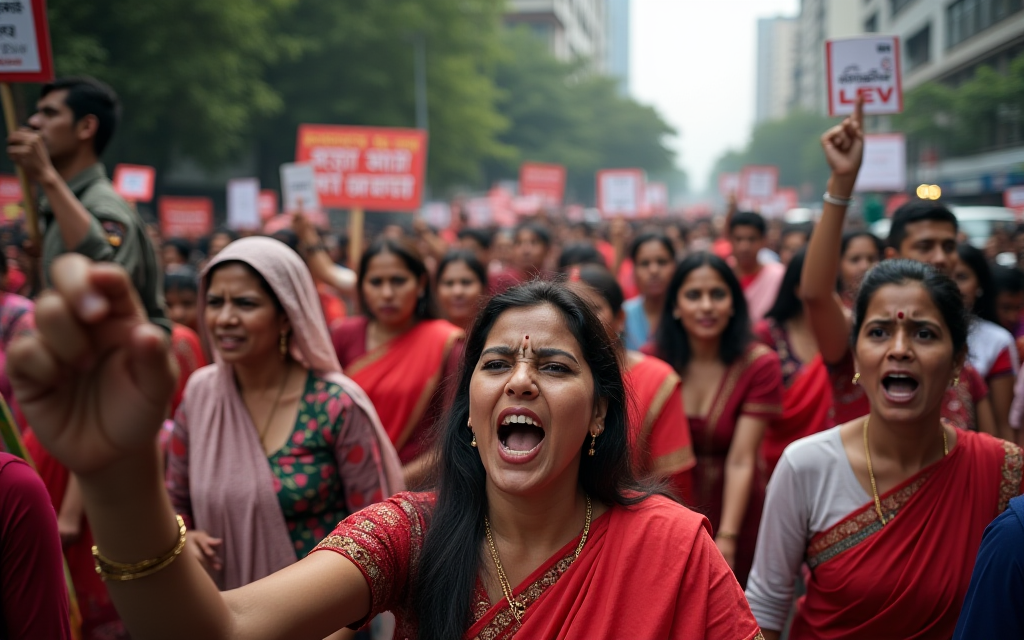
Bangladesh Garment Workers Secure 36% Pay Raise After Weeks of Protests
Garment workers in Bangladesh have secured a 36% pay raise after weeks of protests that cost the industry an estimated $428 million. The minimum wage will rise from 12,500 taka ($100) to 17,500 taka ($136) monthly, effective in December. The offer, however, falls short of the 30,000 taka demanded by protesters, leaving uncertainty over whether workers will accept it. The garment sector is crucial to Bangladesh's economy, employing four million people and generating $38 billion in annual exports.
Bangladesh Garment Workers Win 36% Pay Raise After Protests
After months of demonstrations that disrupted the nation’s economy, garment workers in Bangladesh have been offered a 36 percent increase in their minimum wage. The government-appointed wage board announced on Wednesday that the majority of its members agreed to raise the sector’s minimum monthly wage from 12,500 taka ($100) to 17,500 taka ($136).
The protests, which began in late October, saw workers clash with police and block highways, demanding better pay to cope with rising living costs. The unrest is estimated to have cost the industry hundreds of millions of dollars in lost production and cancelled orders.
Details of the Wage Increase
The new wage will take effect in December, with workers receiving the increased amount in January. This revision comes after three years, instead of the usual five-year cycle, reflecting the pressure exerted by the protests.
Babul Akhter, the labour representative on the wage board, told reporters, “Although we are not completely satisfied, the outcome is not entirely bad either.” He urged workers to return to their factories, emphasizing that the increase is a step forward.
However, the offered amount falls short of the 30,000 taka ($240) that protesters had demanded. It remains uncertain whether workers will accept the offer, as many have expressed that even the new wage barely covers basic needs.
Economic Impact and Industry Significance
Bangladesh’s garment sector is the backbone of the country’s economy, earning roughly $38 billion annually and accounting for four-fifths of exports. It employs four million people, predominantly women from rural areas. The industry has been a key driver of development, but it has also faced criticism over poor working conditions and safety standards, highlighted by tragedies such as the 2013 Rana Plaza collapse that killed 1,134 people.
The Bangladesh Garment Manufacturers and Exporters Association (BGMEA) reported that the protests have cost the industry an estimated $428 million in losses, with orders worth $254 million diverted to other countries. The wage increase is seen as a necessary concession to restore stability and protect the country’s reputation as the world’s second-largest garment exporter after China.
As the industry moves forward, the focus will be on whether the pay rise will quell unrest and address the long-standing grievances of workers who form the backbone of Bangladesh’s export success.
