

Spain Election Debate: Housing Crisis Dominates Final Showdown as Sánchez Faces Defeat
Spain's final election debate focused on the housing crisis, with Prime Minister Pedro Sánchez facing likely defeat. Opposition leader Alberto Núñez Feijóo promised to build a million homes, while the far-right Vox party could enter government for the first time since the Franco era. Voters cite soaring rents and immigration as key concerns ahead of Sunday's vote.
Spain’s Final Election Debate Centers on Housing Crisis
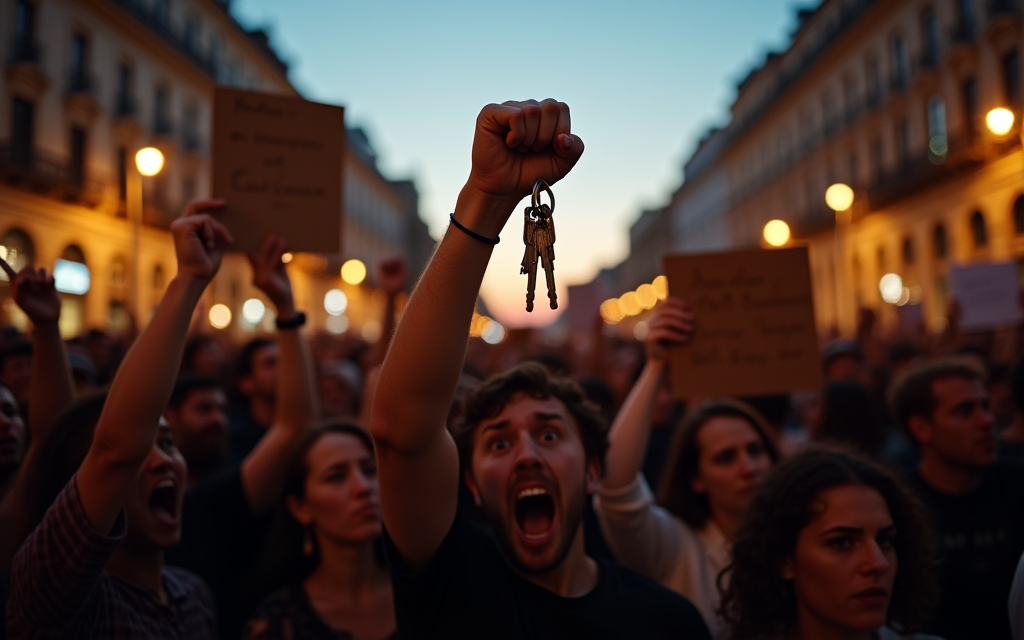
In a heated final televised debate on Thursday night, Spain’s main party leaders made their last appeals to voters ahead of Sunday’s general election, with the nation’s escalating housing crisis taking center stage. The debate underscored widespread frustration over soaring rents and property prices, symbolized by the now-ubiquitous jangling of keys at protests across the country.
Prime Minister Pedro Sánchez, a Socialist seeking a third term after eight years in office, is trailing in opinion polls. The conservative People’s Party (PP), led by Alberto Núñez Feijóo, is projected to win the most seats but will likely need the support of the far-right Vox party to form a government—a first in Spain’s post-Franco democratic era.
Housing: The Defining Issue
The housing crisis has emerged as the dominant issue of the campaign, with ordinary Spaniards struggling to afford homes. In Valencia, Spain’s third-largest city, rents have skyrocketed by 78% between 2020 and 2025, according to a study by the city’s Polytechnic University. Nationally, the statistics office INE reports similar trends.
“We want to live together but we look at the prices of property and it’s impossible,” said 25-year-old Nuria Cifuentes, a sports journalist who still lives with her family because she and her boyfriend cannot afford rent. “Half of what we earn would go on rent of more than 1,000 euros a month,” added her boyfriend, 26-year-old Miguel Martínez.
The crisis gained national attention in September when 87-year-old Maricarmen Abascal was evicted from her Madrid home after her rent tripled; she died in hospital shortly afterward. Her death sparked widespread protests, with demonstrators jangling keys—a symbol of the struggle to secure affordable housing.
During the debate, Feijóo promised to build one million new homes and cut taxes for under-40s buying their first property, while scrapping the Socialists’ housing law. Sánchez defended his recent emergency measures to cap rents and protect tenants, but critics say he has had eight years to address the problem. Vox leader Santiago Abascal claimed only his party truly cares about those most in need, proposing to prioritize Spaniards over foreigners for social housing.
Immigration and Far-Right Surge
Immigration, identified as the third most important issue for voters, has also inflamed the campaign. Vox advocates deporting foreign criminals and implementing a “remigration” policy for legal residents who “do not contribute to Spain.” The party’s hardline stance resonates with some voters, particularly among first-time voters, with polls suggesting Vox could become their top choice.
“First of all, it’s immigration. It’s bad in Spain today – that’s why I’m going further to the right,” said 30-year-old Daniel, who is unemployed and plans to vote for Vox for the first time. “The left helps those who don’t work, but we need people who work and contribute.”
Sánchez has argued that foreign workers are essential to Spain’s economic growth and announced plans to give legal status to half a million undocumented migrants. However, his immigration policies have drawn criticism from 22 of Spain’s 26 EU partners.
Economic Discontent and Political Uncertainty
Despite Spain’s GDP growing faster than Germany, France, and Italy, wages have failed to keep pace with rising prices, fueling discontent with Sánchez’s government. The cost of living is the second most important issue for voters.
Sánchez has made a flurry of spending promises in the final days, including public sector wage increases, higher pensions, and discounted transport. But some voters view these as too little, too late. “The Socialist party have been in power for eight years and now suddenly, during the election campaign, they are passing a lot of progressive laws – which I agree with – but isn’t that hypocritical?” said 20-year-old student María García. “I don’t really have a choice but to vote for them, but come on – you had eight years to do all this!”
With polls indicating a tight race, the outcome remains uncertain. Sánchez, a seasoned political survivor, faces an uphill battle to secure a majority. Even if his party wins the most votes, he has no obvious path to form a government. The election could mark a historic shift to the right, with Vox potentially entering the national government for the first time since Spain’s return to democracy.
As Spaniards head to the ballot box on Sunday, the jangling of keys will echo as a stark reminder of the challenges that lie ahead for whoever forms the next government.