

China’s Rise Silences Dissent as Exiles Face Pressure and Shrinking Support
Exiled activists say China's economic rise and soft power are drowning out their voices, as Beijing offers family reunions and money in exchange for information and pro-party narratives. The tactics are weakening diaspora networks and international pressure, with protests shrinking and trust eroding within communities.
Exiled Activists Say China’s Economic Might Drowns Out Their Voices
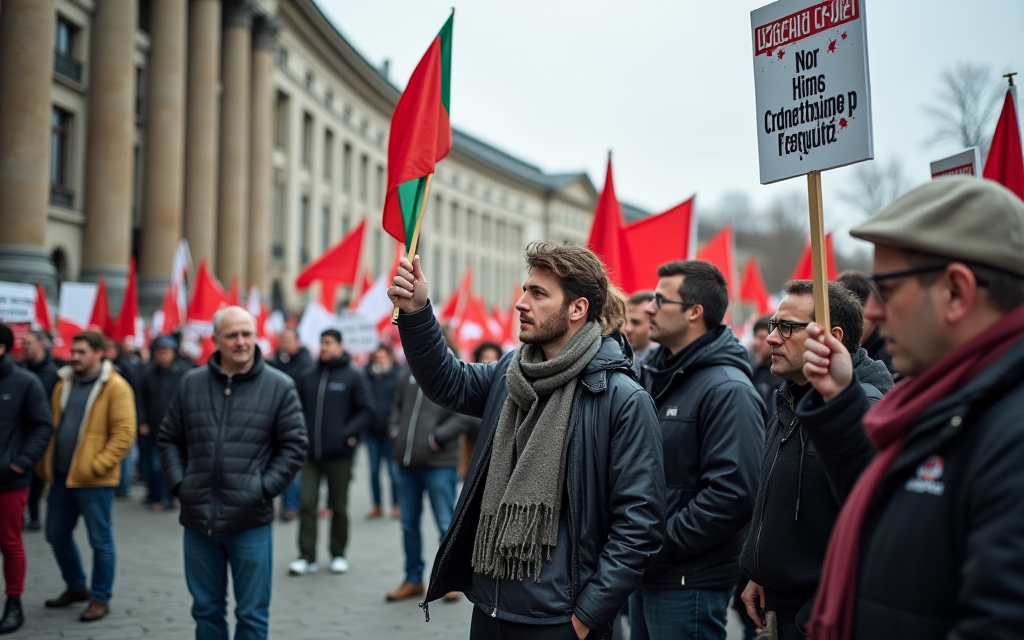
BERLIN — For Uyghur activist Dolkun Isa, who has lived in exile in Germany for nearly three decades, the shrinking crowds at protests are a stark measure of how far his cause has slipped from the world’s attention. “Back in 2018, we could easily get thousands of people out in the streets to protest against China’s human rights violations. Nowadays, we have trouble finding even 500,” he said.
That year, reports emerged that China had detained up to a million Uyghurs and other Muslims in internment camps in Xinjiang. Beijing denied the allegations, saying the camps were for “re-education” to counter separatism. But an international outcry followed, with Western governments imposing sanctions and trade bans. “It was a time when we felt the world was finally listening,” said Isa, former president of the World Uyghur Congress. “But today, we find ourselves competing against economic interests and geopolitical calculations.”
Beijing’s Soft Power and Carrot-and-Stick Tactics
Few corners of the world remain untouched by China’s rise. Its electric vehicles, solar panels, AI models and cultural exports like Labubu dolls have boosted its soft power, drowning out voices that say their fight against the Communist Party cannot compete with the country’s gleaming skylines and advanced exports.
Buoyed by its successes, Beijing is swapping the “stick” for the “carrot,” according to Uyghur journalist Arslan Hidayat. Activists told the BBC that Beijing has been offering family reunions, money and promises of safety in return for information about their networks and promotion of pro-party narratives. The Chinese embassy in the UK dismissed claims that activists would be asked to spy on fellow exiles, saying that facilitating family visits is a “normal part” of consular services.
China’s economic muscle has earned it respect abroad and reshaped foreign policy, said Ian Johnson, a Pulitzer Prize-winning journalist. “At the same time, Western governments have become much more inwardly focused and populist, pushing human rights down their lists of priorities.” China’s human rights record was not mentioned in any of the three summits between Xi Jinping and Donald Trump this year.
Family Visits: A Lifeline or a Trap?
These family visits often happen in large groups and are well documented on China’s official platforms. In Turkey, which hosts tens of thousands of Muslim minorities from Xinjiang, Chinese Consul-General Wei Xiaodong was photographed sending off some 30 participants from Istanbul in January. The consulate’s WeChat post expressed hope that the diaspora returning to Xinjiang would experience the region’s development and promote it upon return.
Beijing has repackaged Xinjiang into a traveller’s haven, with over 300 million domestic and international tourist visits last year, more than double the number in 2018. The post concluded with a clip showing loved ones hugging and presenting bouquets at Urumqi airport.
But the selection process for these trips is opaque. Alim, a Uyghur exiled in Turkey, said a friend was rejected due to a past relationship with a Kazakh man active in lobbying for detained parents. “The ‘ideal participant’ is someone influential enough to amplify China’s messages, yet not associated with anything too political,” Alim said.
When Mehmut, a Uyghur businessman, was invited on a family visit in October 2024, he hoped to re-establish business links. Instead, he found his interactions “superficial” and marked by fear and self-censorship. “It was not like officials were actively monitoring me, but there was a great dose of fear in my conversations,” he said.
Erosion of Trust Within Diaspora Communities
These visits not only serve Beijing’s narrative but also drive a wedge within communities, activists say. Abduweli Ayup, a Uyghur linguist in Norway, has observed former activists going off the grid after returning. “Some have deleted their social media accounts and cut off contact with us,” he said. “Others appear suspicious of us.”
Karma Rinchen, information secretary in the Tibetan government-in-exile in Dharamshala, said the selective nature of visits “creates confusion within the diaspora.” “They get sidelined when they return… Very sadly, our suspicions that some of them are feeding information back to the Chinese authorities have turned out to be true.”
In July, Tibetan activist Lobga Rangzen died after setting himself on fire outside the UN headquarters in New York to protest China’s new “ethnic unity law,” which requires minorities to learn Mandarin. The UN called it “absolutely tragic,” but attention quickly faded. “His death was an appeal to the international community,” said Tenzin Dorjee of the Tibet Action Institute, “but much of the world is reluctant to criticise China because of the power it wields.”
As Beijing’s leverage grows, the cost of confrontation rises, leaving dissidents struggling to be heard. “Many among us have been separated from our families for generations and are eager to set foot on Tibet soil,” Rinchen said. “This is exactly the kind of desperation that China exploits.”