

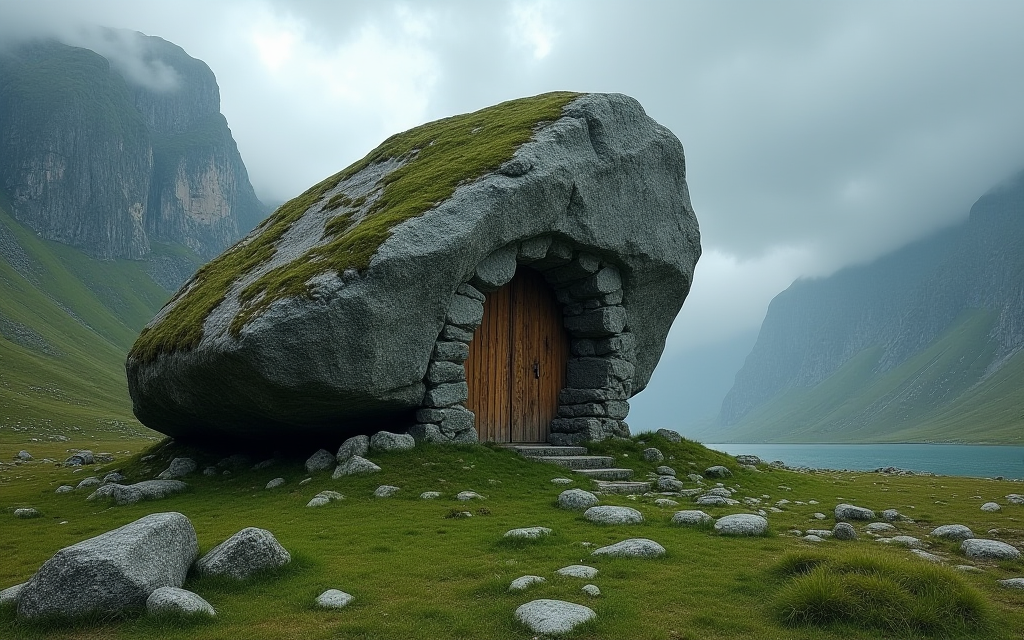
Switzerland’s Off-Grid Bavona Valley: Ancient Stone Shelters Known as Splüi
The Bavona Valley in Switzerland, home to just 11 people, is dotted with hundreds of ancient rock shelters called splüi. Carved from fallen boulders, these unique structures have served as cellars, barns and refuges for centuries. With most hamlets off the electricity grid, the valley offers a glimpse into a vanishing way of life. Visitors can hike the Transhumance Trail and stay in traditional stone houses, experiencing the ingenuity and resilience of Alpine communities.
Deep in the Swiss Alps, the Bavona Valley is a place where time seems to stand still. Home to just 11 full-time residents, this steep-sided canyon in the canton of Ticino is dotted with hundreds of ancient rock shelters called splüi – a unique form of architecture found nowhere else in Switzerland. These structures, carved from massive fallen boulders, tell a story of human ingenuity and survival in one of the Alps’ most dangerous landscapes.
A Landscape Shaped by Survival
The Bavona Valley is barely 12km long and a few hundred metres wide at its narrowest, yet it contains 12 stone hamlets, 11 of which are off the electricity grid. The valley’s terrain is so rugged that only 1.5% of the land is suitable for cultivation. Giant boulders, fallen from the cliffs over millennia, litter the valley floor. Rather than clearing them, generations of inhabitants adapted them – hollowing out layers, adding wooden doors and dry-stone walls – to create refuges for people and animals.
“Traditional barns are a common feature of the Alpine landscape,” says guide Tanya Harvey Ciampi. “But the ancient splüi are found only here.” Around 405 examples have been recorded across the wider Maggia Valley region, with the oldest dating to the Middle Ages. They served as cellars, cheese stores, haylofts and even smokehouses for drying chestnuts. One was used as a wolf trap; another housed a loom.
Off-Grid Living and Seasonal Rhythms
From the 16th century onwards, the valley was largely abandoned due to floods, landslides and rockfalls. Those who remained practised transhumance, moving livestock between seasonal pastures. When hydroelectric plants were built in the 1950s, 11 of the 12 hamlets voted against being connected to mains electricity – a decision that has preserved the valley’s archaic character.
Today, most families spend only the summer here, storing goods in the splüi and leaving before the harsh winter sets in. Only 11 full-time residents remain, including Roberto Pedrazzini and his wife Nadia, who live year-round in the hamlet of Sonlerto. “Traditionally, by December, we had to leave before the snows came,” Pedrazzini says. “Now that the road is cleared regularly, we can stay.”
Visitors can experience this off-grid lifestyle by renting one of the traditional rustici – two-storey stone houses – many of which lack electricity and rely on wood-burning stoves. The valley is accessible by bus from Locarno, and the Transhumance Trail, a 13.8km hiking route, passes many splüi and alpine pastures.
Preserving a Unique Heritage
The splüi are more than just shelters; they are a testament to human adaptability. “When life gives you big rocks, you make a splüi,” Harvey Ciampi quips. Some remain in use, like the splüi del forno in Mondada, which houses a bread oven. Others have been converted into raised vegetable gardens, planted atop fallen boulders.
As tourism grows, the challenge is to balance visitor access with preservation. Many splüi are locked because locals still use them for storage. “Those that are open can be visited as long as we tread carefully,” Harvey Ciampi advises. For now, the Bavona Valley remains a living museum of Alpine resilience – a place where the past is not just remembered but lived.
