

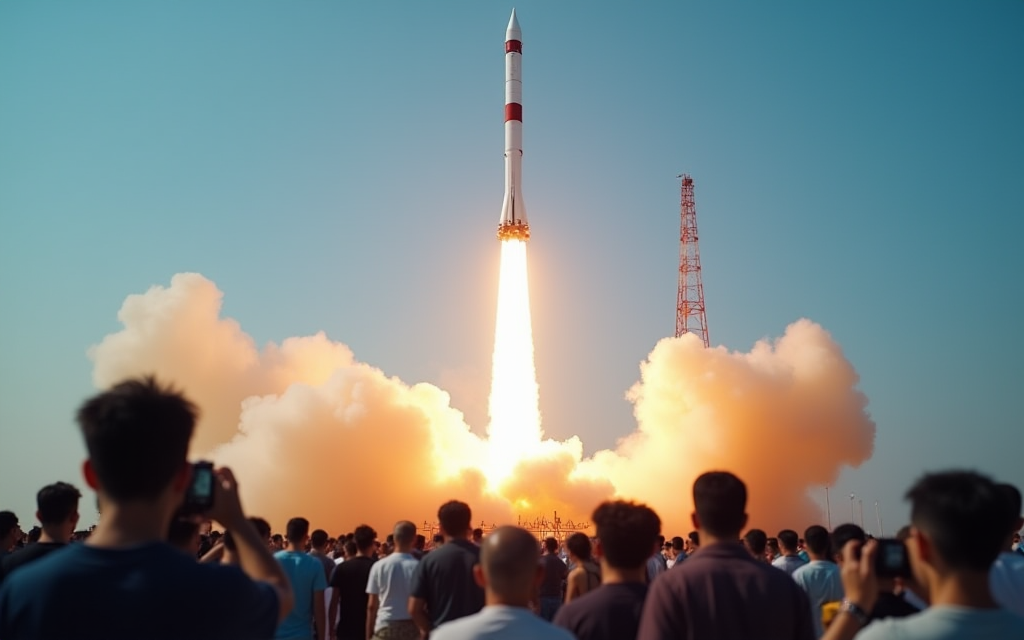
China’s Shenzhou-24 Mission Launches with First Pakistani Astronaut to Tiangong Station
China launched the Shenzhou-24 mission on Wednesday, carrying three astronauts to its Tiangong space station. Among them is Muhammad Zeeshan Ali, the first Pakistani astronaut to board the station. The mission, expected to last several days, underscores China's growing space diplomacy and its deepening partnership with Pakistan. The crew will conduct scientific experiments and technology demonstrations, marking a new chapter in international space cooperation.
Historic Liftoff: China’s Shenzhou-24 Carries First Pakistani Astronaut to Space Station
In a landmark moment for international space cooperation, China successfully launched the Shenzhou-24 space mission on Wednesday, sending three astronauts to its Tiangong space station. Among the crew is Muhammad Zeeshan Ali, who has become the first foreign national to board the Chinese space station. The mission marks a significant step in China’s growing role in global space exploration and its deepening ties with Pakistan.
A New Chapter in Space Diplomacy
The launch, which took place under clear skies, was broadcast live and captured the attention of millions. The Shenzhou-24 spacecraft lifted off atop a Long March rocket, carrying Commander Liu Yang, Flight Engineer Wang Yaping, and Pakistan’s Muhammad Zeeshan Ali. This mission not only highlights China’s advanced space capabilities but also underscores the strengthening partnership between China and Pakistan in science and technology.
Muhammad Zeeshan Ali, a former air force pilot, expressed his honor at representing Pakistan in space. His presence aboard Tiangong symbolizes a new era of inclusivity in space exploration, where nations collaborate beyond traditional alliances.
Mission Objectives and Scientific Endeavors
During their several-day stay aboard the Tiangong space station, the crew will conduct a series of scientific experiments and technology demonstrations. These include studies on microgravity’s effects on the human body, material science research, and Earth observation. The mission also aims to test new life support systems and robotic arms, further preparing the station for future international missions.
The inclusion of a Pakistani astronaut is seen as a testament to China’s commitment to sharing space technology and opportunities with developing nations. It also aligns with China’s broader vision of building a community with a shared future for mankind, extending it to the cosmos.
Global Reactions and Future Implications
The launch has drawn congratulations from around the world, with Pakistan’s Prime Minister praising the mission as a source of national pride. International space agencies have also acknowledged the significance of the event, noting that it opens new avenues for multilateral cooperation in space.
As China continues to expand its space program, including plans for a lunar research station and Mars exploration, partnerships like this are likely to become more common. The Shenzhou-24 mission not only elevates China’s standing in the global space community but also sets a precedent for inclusive and collaborative space exploration.
- Key Facts: Shenzhou-24 launched on Wednesday with three astronauts, including Pakistan’s first astronaut to Tiangong.
- Mission Duration: Several days aboard the space station.
- Significance: First foreign national on Tiangong, highlighting China-Pakistan cooperation.
