

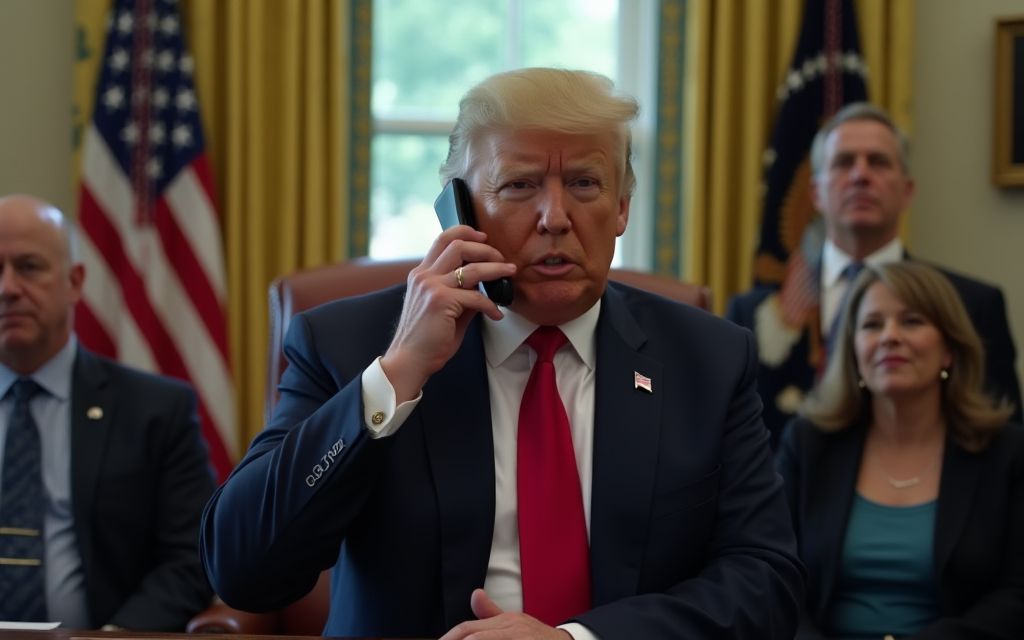
Trump Claims US Holds ‘Close to 50%’ of World’s Oil in Call to Gulf Troops
President Donald Trump claimed the US has 'close to 50%' of the world's oil during a call with troops in the Gulf, asserting the US doesn't need Middle East oil and maintains a presence to protect Israel and other allies. The figure appears to overstate US reserves, which are about 2-3% of the global total, though the US is the world's largest oil producer. The White House did not immediately comment on the claim.
Trump Boasts of US Oil Dominance in Call to Deployed Soldiers
WASHINGTON — President Donald Trump said the United States possesses “close to 50 percent” of the world’s oil during a phone call with American troops deployed to the Gulf on Thursday, according to a video released by Al Jazeera. The remark came as Trump asserted that the US does not “need Middle East oil” and that its military presence in the region is intended to protect “Israel and other countries.”
The call, which was not independently verified by the White House, was shared on social media by Al Jazeera’s NewsFeed. It was not immediately clear which specific units or locations the president was addressing, nor whether the figure referred to proven reserves, production, or another metric.
Context of the Claim
Trump’s assertion, if taken as a reference to global oil reserves, would be a significant overstatement. According to the US Energy Information Administration (EIA), the United States held about 44 billion barrels of proven crude oil reserves as of the end of 2023, roughly 2-3 percent of the world total. The US is, however, the world’s largest crude oil producer, accounting for about 13-14 percent of global output in recent years, according to EIA data.
The president’s comments come amid heightened tensions in the Middle East, including the ongoing US-Israel war on Iran, which has raised concerns about global oil supply routes. Trump has previously claimed that the US no longer needs Middle Eastern oil due to domestic production growth, though the US continues to import crude oil from various sources, including the Middle East, to meet domestic refining needs.
Reaction and Implications
The White House did not immediately respond to a request for comment on the specific figure cited by Trump. Energy analysts noted that such claims can influence market perceptions and diplomatic messaging, even if they are not statistically accurate.
During the call, Trump also reiterated that US forces were maintaining a presence in the Gulf to protect allies, particularly Israel. The US maintains several military bases in the region, including in Qatar, Bahrain, and Kuwait, and has deployed additional assets amid regional tensions.
The video of the call was published by Al Jazeera on November 27, 2026, and quickly circulated on social media. It was not clear whether the call was recorded with the president’s consent or how the video was obtained.
