

New Zealand Coalition Loses Majority by One Seat, Eyes Opportunity Party
New Zealand's ruling coalition has fallen one seat short of a parliamentary majority after official election results, forcing the National Party to negotiate with the centrist Opportunity Party to stay in power. Prime Minister Christopher Luxon acknowledged challenging talks ahead. The election was shaped by economic malaise and voter disillusionment, with record numbers of Kiwis leaving the country.
New Zealand’s Ruling Coalition Falls Short of Majority
WELLINGTON, New Zealand — New Zealand’s ruling coalition has fallen one seat short of a parliamentary majority after official election results were released Friday, forcing the incumbent National Party to seek support from the centrist Opportunity Party to remain in power.
The National Party, led by Prime Minister Christopher Luxon, secured 40 of 130 seats, while its coalition partners ACT and New Zealand First won 13 and 12 seats respectively, according to the official tally. The results come after special votes—cast by overseas voters and those outside their electorate on election day—eroded the coalition’s preliminary lead.
Negotiations Begin as Parties Weigh Options
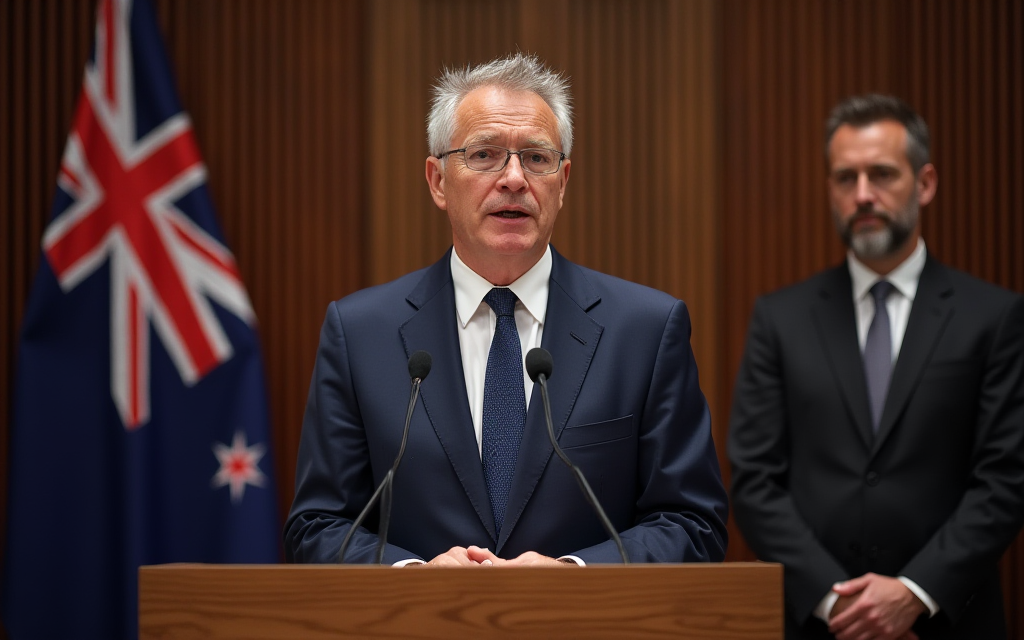
Luxon acknowledged that negotiations “may be challenging” and will take time. “Kiwis won’t thank us for rushing to an agreement that falls apart or for sending them back to the polls,” he told reporters in Wellington.
The centre-left Labour Party, led by Chris Hipkins, secured 36 seats, while the Green Party took 17 and Te Pāti Māori won five. Even with Opportunity’s support, a Labour-led government would not have enough seats, official results show.
Opportunity leader Qiulae Wong said her party will negotiate with National but that all options remain on the table. “There are seven parties in Parliament and everyone is responsible for making sure we do everything we can to deliver a stable government for New Zealand. It’s not just up to us,” she said.
Economic Malaise and Voter Disillusionment Shape Election
The election campaign was dominated by a sluggish economy, rising living costs, and widespread voter disillusionment. National campaigned on lower taxes, cheaper energy, more renewable generation, and a greater focus on defence. Labour promised to cut healthcare, public transport, and fuel costs, and increase government support for social housing.
Many voters expressed frustration over spiralling costs of living and high unemployment, with declining faith in political leadership. A survey by the Helen Clark Foundation found that more than half of New Zealanders no longer see the country as a land of opportunity. Record numbers of Kiwis are leaving the country, many moving to Australia.
New Zealand’s mixed-member proportional voting system means most governments are coalitions. Each voter makes two choices: one for their constituency representative and one for a political party. If the ruling bloc cannot reach a deal with Opportunity, the country may have to return to the polls.
