

Saudi Jazan Refinery Attack Kills Nepali Worker, Disrupts Operations
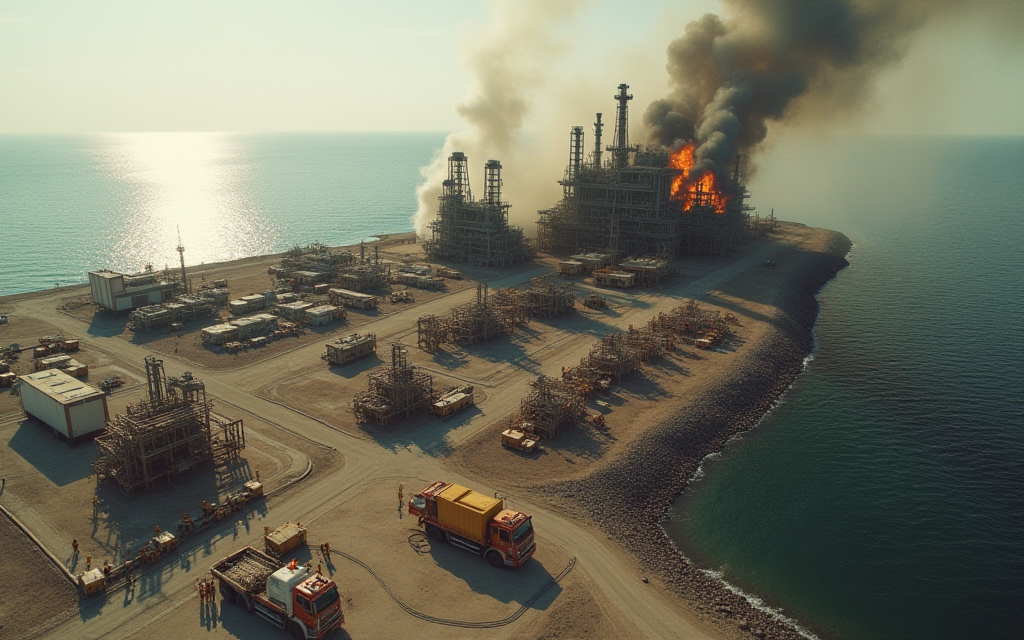
An aerial projectile hit Saudi Arabia's Jazan oil refinery on Thursday, killing a Nepali worker and injuring several others, the Saudi Energy Ministry said. The attack sparked a fire and temporarily halted operations at the 400,000-barrel-per-day facility. The Saudi-led coalition blamed the Houthis and vowed retaliation, while claiming to have destroyed a Houthi missile launch platform in Yemen. The strike is the latest in a series of Houthi attacks on Saudi oil infrastructure amid escalating conflict.
Saudi Jazan Refinery Attack Kills Nepali Worker, Disrupts Operations
JAZAN, Saudi Arabia — An aerial projectile struck an oil refinery in Saudi Arabia’s Red Sea city of Jazan on Thursday, killing a Nepali worker and injuring several others, the Saudi Ministry of Energy said. The attack sparked a fire and temporarily halted some operations at the facility, which is designed to process up to 400,000 barrels of crude oil per day.
The ministry did not identify who carried out the strike, but the Saudi-led military coalition fighting Yemen’s Houthis said the Iranian-backed group had attacked the refinery. The coalition condemned the strike and vowed a firm military response.
Casualties and Damage
The worker who died was a Nepali national, while the injured were of various nationalities, according to the ministry. Emergency personnel and specialized technical teams arrived at the site to assess the damage and verify the safety of the facilities. The refinery, located near the Yemeni border, is a key part of Saudi Arabia’s oil infrastructure.
The attack came a day after the Houthis claimed strikes on Ras Tanura, the kingdom’s largest refinery and a major crude export hub, as well as the Red Sea ports of Jeddah and Jazan. The escalating hostilities between the two sides have raised concerns about regional stability and global oil supplies.
Military Response and Ongoing Conflict
Coalition spokesman Turki al-Maliki posted on X that “targeting civilians and civilian infrastructure would be met with a firm military response.” Later on Thursday, the coalition claimed its forces had destroyed a Houthi ballistic missile launch platform in Yemen’s Hodeidah governorate used to stage the attack on the Jazan refinery. There was no immediate statement from the Houthis regarding the strike.
On the ground in Yemen, Saudi-backed government forces claimed they had carried out 767 strikes on Houthi positions on Thursday. Forces spokesman Majed Abdullah al-Nuzaili said the strikes had “neutralized” 117 Houthi fighters and destroyed 87 vehicles and combat assets. He added that government forces continued to confront Houthi formations on front lines in northern and western Marib governorate, as well as in the governorates of al-Jawf, Taiz, Lahj, Shabwah and Hajjah.
Earlier on Thursday, a series of air strikes targeted Yemen’s Houthi-held capital, Sanaa, according to media affiliated with the armed group, also known as Ansar Allah. Houthi forces also targeted Habib al-Sarm and al-Hujalla, as well as al-Aqroud in al-Masrakh district.
Humanitarian Impact and Regional Fallout
The Houthis, who control the most populous areas of Yemen, have launched missiles and drones at Saudi airports, oil facilities, and office buildings since the country’s civil war reignited in July, a spillover from the US-Iran war. The attacks have previously temporarily disrupted some of Aramco’s operations and caused the cancellation of most international flights to Riyadh. They also forced Saudi Arabia to postpone or cancel major international events, including football’s AFC Asian Cup and the flagship FII investment conference.
The fighting has exacerbated dire humanitarian conditions for Yemeni civilians. The World Health Organization reported that as of Monday, 2,361 people had been killed and 10,982 injured since fighting in Yemen escalated in August. More than 360,000 people have been forced to flee their homes since the start of August, according to the UN.