

Ukraine Proposes Black Sea Ceasefire to Protect Grain Exports as Putin Expands Navy
Ukraine has proposed a Black Sea ceasefire to safeguard its grain exports amid escalating attacks on shipping, as Russia seeks to include oil transportation in the deal. The proposal comes as President Putin inaugurated a new nuclear submarine equipped with hypersonic missiles. Ukrainian President Zelenskyy criticized US President Trump for calling Putin a 'friend,' urging stronger pressure on Moscow. Previous ceasefire attempts have failed, and international efforts to secure a limited truce continue.
Ukraine Proposes Black Sea Ceasefire
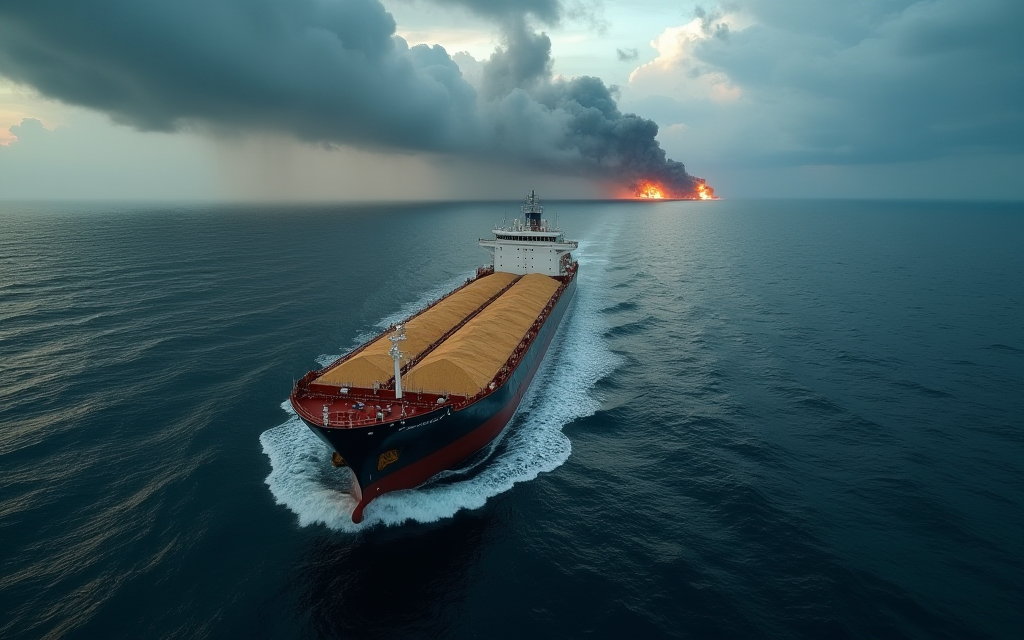
KYIV, Ukraine — Ukraine has proposed a ceasefire in the Black Sea to protect its grain exports amid escalating attacks on shipping and port infrastructure, Foreign Minister Andrii Sybiha announced Friday at the “Food from Ukraine” conference.
“We are now awaiting a response from Russia. All of our proposals have been conveyed,” Sybiha said, adding that Kyiv is ready to restore freedom of navigation and ensure uninterrupted agricultural exports.
The proposal comes as Moscow seeks to include oil transportation in the ceasefire deal, a demand Ukraine rejects, saying it belongs in a broader energy ceasefire. Sybiha accused Russia of repeatedly putting forward “unrealistic demands” in response to Kyiv’s proposals, according to Suspilne, Ukraine’s national broadcaster.
Putin Expands Russia’s Navy
On the same day, Russian President Vladimir Putin attended a flag-raising ceremony for a new nuclear-powered submarine, which Moscow claims is the first equipped with Russia’s Zircon hypersonic missile. Putin expressed confidence that plans to build a powerful naval force would be implemented on time and in full, Russian news agencies reported.
The ceremony underscores Moscow’s continued military buildup despite international efforts to secure a ceasefire. The Zircon missile, capable of striking land and sea targets at hypersonic speeds, is part of Russia’s strategy to enhance its naval capabilities.
Background: Previous Ceasefire Attempts
Ukraine and Russia are both major agricultural exporters, and attacks on vessels and port infrastructure have disrupted shipments transiting through the Black Sea. A previous UN- and Turkiye-brokered agreement allowed Ukrainian grain exports to resume following Russia’s full-scale invasion in February 2022. However, Moscow withdrew from the arrangement in July 2023, prompting Kyiv to establish an alternative maritime export corridor.
In August, Reuters reported that Ukraine had conveyed an earlier proposal through a third party for both sides to halt attacks on civilian targets in the Black Sea. At the time, Ukrainian grain exports had fallen 76 percent year-on-year, as shipowners avoided ports in the Odesa region following repeated Russian strikes.
International efforts to secure a limited ceasefire have since gained traction. On October 31, US Secretary of State Marco Rubio said Washington was reviewing proposals from Turkiye and India to facilitate uninterrupted grain and energy shipments.
Zelenskyy Criticizes Trump’s Approach
The diplomatic impasse also comes as Ukrainian President Volodymyr Zelenskyy voiced frustration with US President Donald Trump’s approach to Moscow. In an interview with the BBC on Friday, Zelenskyy criticized Trump for describing Russian President Vladimir Putin as “my friend” following their meeting in China last week.
“It’s strange. He is an aggressor and a killer. He can’t be a friend. Just cannot be,” Zelenskyy said.
He also criticized Washington for what he described as excessive neutrality in its dealings with Moscow, arguing that the US should use its influence to pressure Russia into meaningful negotiations. “When you try to be very neutral with the aggressor … it means you support victims and you support also aggressor. It’s not right,” he said.
After talks in Florida on Wednesday, NATO Secretary-General Mark Rutte called on Russia to avoid actions that could expand the war and urged a peaceful resolution as soon as possible. Rutte stressed that any eventual peace agreement or long-term ceasefire must include security guarantees for Ukraine.