

Friselle: Italy’s Centuries-Old Bread That Can Last a Year and Feed You in a Crisis
Friselle, a twice-baked bread ring from Puglia, Italy, can last up to a year when stored properly. As governments urge emergency food stockpiling, this centuries-old staple offers a lesson in durability and versatility. Soaked in water and topped with fresh ingredients, it transforms into a quick, flavorful meal. Once considered poor man's food, friselle now enjoy gourmet status, with modern twists like deconstructed versions and alternative grains.
In the sun-drenched region of Puglia, Italy, a humble bread ring known as friselle has been a staple for centuries, prized for its remarkable shelf life and versatility. As governments worldwide urge households to stockpile non-perishable foods for emergencies, this twice-baked bread offers a time-tested solution.
What Are Friselle and Why Do They Last So Long?
Friselle are ring-shaped breads made from durum wheat (or increasingly barley, spelt, or multigrain), traditionally shaped by hand and twice-baked to remove nearly all moisture. This process, combined with careful storage in airtight containers away from light and humidity, allows them to last up to a year without spoiling.
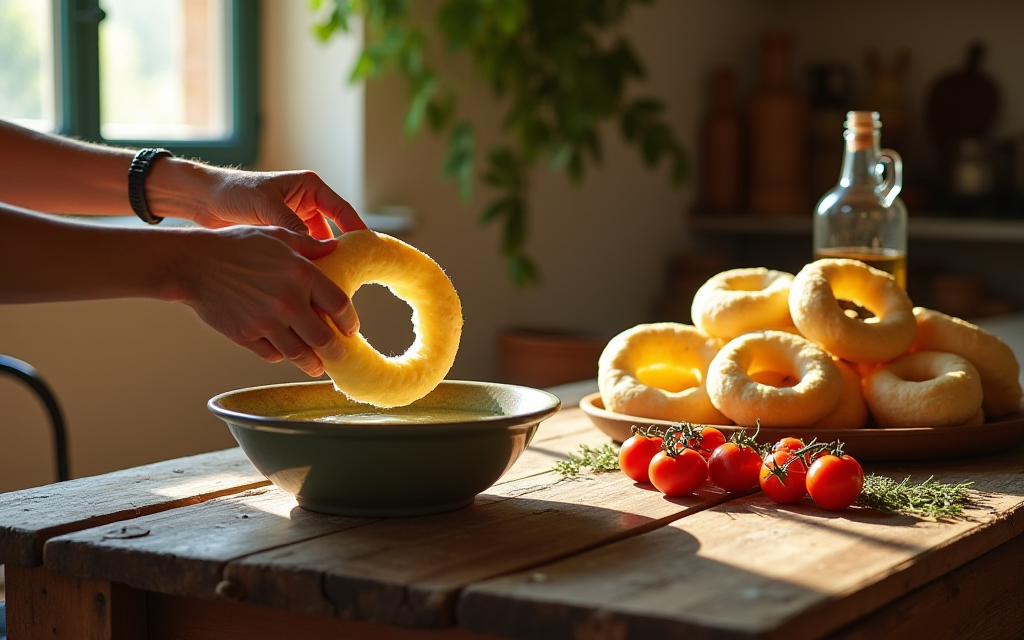
The bread’s hardness means it must be soaked in water before eating—a ritual called la sponzatura—which softens the crust while preserving a satisfying crunch. Once softened, friselle are topped with fresh tomatoes, olive oil, oregano, and other local ingredients, creating a quick and flavorful meal.
A History of Survival and Travel
According to food historian Flavia Giordano, the tradition of twice-baked bread dates back nearly 2,000 years. Pliny the Elder described panis nauticus, a sailors’ bread, in the 1st century CE. Friselle became essential for seafarers, crusaders, and pilgrims traveling through Puglian ports toward the Holy Land.
In the 1960s, barley friselle were considered poor people’s food, but today they are sought after for their health benefits and robust flavor. Bakeries in Puglia still produce friselle using traditional methods, often with sourdough starter for added flavor.
From Humble Staple to Gourmet Favorite
While friselle remain a daily staple in Puglian households, they have also inspired modern interpretations. Chef Francesco Paladino of La Putea in Lecce creates a “deconstructed friselle” by breaking the bread, mixing it with passata, and topping it with fresh tomatoes, prosciutto, and artichokes. Smaller friselline are thinner and lighter, requiring no soaking.
Beyond Puglia, friselle are enjoyed across southern Italy, sometimes dipped in milk for breakfast in Sicily, or used in salads like capunata con friselle. Despite these variations, the bread remains a symbol of Puglia’s culinary ingenuity and resilience.
As uncertainty drives governments to recommend emergency food supplies, friselle stand as a delicious reminder that simple, traditional methods can provide lasting sustenance.