

Inside France’s Black Block: Ultra-Left Protesters Speak Out Amid Unrest
France is in turmoil as protests against rising prices and police brutality enter their sixth weekend. The BBC speaks to members of the Black Block, a radical left-wing movement accused by President Macron of trying to bring down the Republic. Who are these masked protesters, and what drives them? From angry teenagers in the banlieues to seasoned activists, their stories reveal a deep frustration with the capitalist system and a determination to fight for change—even if it means using violence.
France in Turmoil: A Nation on the Brink
France is facing a perfect storm: crippling public debt, a president with dwindling authority, and a wave of social unrest that shows no signs of abating. What began as student protests over soaring prices and deteriorating public services has escalated into looting, violence, and a national debate about the nature of dissent. For six consecutive weekends, demonstrations have rocked French cities, with protesters clashing with police and leaving a trail of destruction in their wake.
President Emmanuel Macron has pointed the finger at “delinquents” and “ultra-left groups,” accusing them of seeking to bring down the Republic. But who are these radicals? And are they truly as organized and dangerous as the government claims? The BBC’s Europe Editor, Katya Adler, ventured into the heart of the protests to find out.
Who Are the Black Block?
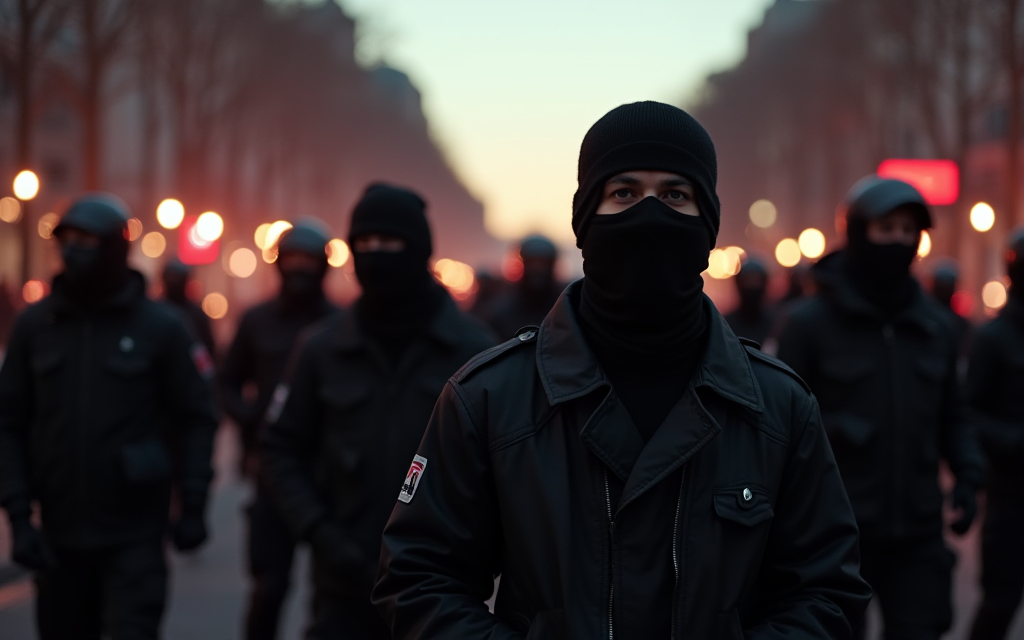
The Black Block is not a formal organization but a tactic—a uniform of sorts. Dressed in all black with faces obscured by ski masks or balaclavas, these protesters are a familiar sight at demonstrations across Europe. In France, they emerge from side streets as dusk falls, ready to confront riot police. Their aim, they say, is to disrupt the capitalist system and make their voices heard.
French intelligence estimates there are around 5,000 ultra-left activists in the country. Among them is a 17-year-old who calls himself “Anticapitalist Starflix.” He showed the BBC his homemade paint bombs—eggshells filled with paint and sealed with medical tape—which he throws at police visors. “We want to destroy a system that is a capitalist system,” he says, “but to change society in a way that we think will be better for the most people.”
However, not all protesters are aligned with the Black Block. Many peaceful demonstrators condemn the violence, arguing that it detracts from their message. Yet, as the unrest continues, the line between peaceful protest and violent disruption is becoming increasingly blurred.
Voices from the Streets
The BBC team spoke to a range of protesters, from angry teenagers in the banlieues to seasoned activists. Their stories reveal a deep-seated frustration with a system they believe has failed them.
Nas, 18, from a deprived suburb, insists he is not politically organized. “Without violence, you don’t achieve anything,” he says. “It’s the only way to get our voices heard.” For him and his friends, the protests are a cry of despair from communities plagued by poor schools, high unemployment, and a sense of abandonment.
Others, like the masked students standing atop a bus shelter, downplay the rioting. “What’s a smashed shop window compared to police using stun guns on protesting school kids?” one asks. They argue that state violence is the real problem, and that the media focuses disproportionately on protester violence.
A veteran Black Block activist denies that the ultra-left is organized or funded by political parties. “It’s totally false of the authorities to say we are all organized,” he says. “The uniting factor is rage—and not just in France. You see the same rage in Italy, Germany, Spain. It’s exploding by itself.”
The Role of Social Media and Political Fallout
Social media has become a crucial tool for protesters. Encrypted messaging apps like Signal and Telegram are used to coordinate meetups, while Instagram profiles offer tips on avoiding police detection. This decentralized approach makes it difficult for authorities to identify leaders or disrupt planning.
The unrest has become a political football ahead of next year’s presidential and parliamentary elections. The left blames the center and right for the cost-of-living crisis; the right pledges to restore order; and the hard left, led by Jean-Luc Mélenchon, is accused of exploiting the chaos. Mélenchon’s France Unbowed party is present at most protests, distributing pamphlets and rallying support. But Black Block activists dismiss him as part of the system.
As France grapples with deep-seated social and economic problems, the protests show no sign of ending. The government’s heavy-handed policing has only fueled anger, and the youth at the forefront of the movement are determined to be heard—by any means necessary.
