

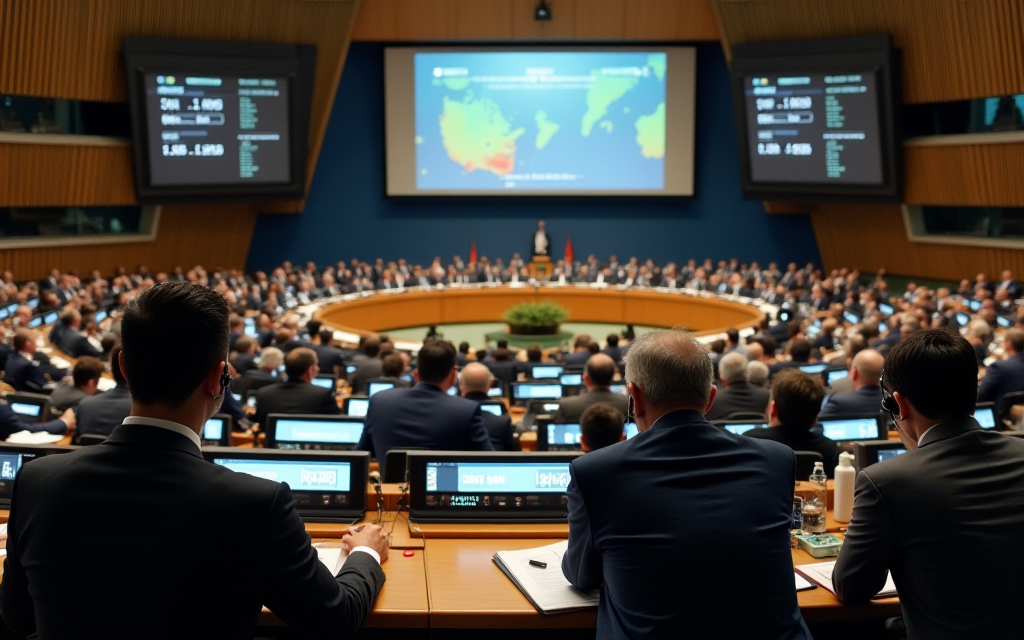
COP31 Climate Talks Collapse: No Deal as Fossil Fuel and Finance Rows Derail UN Summit
The UN COP31 climate summit in Turkey ended without a deal after marathon talks, becoming the longest conference ever. Deep divisions over fossil fuel language and financial support for developing nations prevented consensus. The EU, Pacific islands, and poorer countries rejected the draft for omitting explicit fossil fuel references and concrete finance commitments. UN Secretary-General Guterres criticized fossil fuel interests, while oil-producing nations opposed phase-out language. Some side agreements were reached, but the failure raises questions about the future of UN climate negotiations.
COP31 Ends Without Agreement After Marathon Negotiations
The UN climate conference in Antalya, Turkey, concluded on Sunday without a major political agreement, marking the first such failure since the 2009 Copenhagen summit. The talks, which ran two days past their scheduled Friday finish, became the longest UN climate conference in history. Deep divisions over fossil fuels and financial support for developing nations proved insurmountable.
UN Secretary-General António Guterres expressed deep disappointment, criticizing “powerful fossil fuel interests” for blocking progress. He accused them of taking “a page from Big Tobacco’s playbook: distorting the science, delaying policy, blocking action, and piling up huge profits while people everywhere pay the price.”
Fossil Fuel Phase-Out at Center of Dispute
The final draft deal omitted any direct mention of fossil fuels, the primary driver of global warming. Instead, it only indirectly referenced the 2023 COP28 agreement to “transition away” from fossil fuels in energy systems. This omission drew sharp criticism from the EU, Pacific island nations, and others.
“It is unconscionable that we would have a climate pact that makes no mention of fossil fuels,” said Irish Minister Darragh O’Brien, representing the EU. Panama and the Marshall Islands also condemned the deal for insufficient ambition.
Oil-producing nations, led by Saudi Arabia and Russia, opposed explicit language. Saudi delegate Mohammad Ayoub argued that Arab countries only account for a small share of historical emissions, while Russia warned that rapid divestment from fossil fuels could lead to “fuel poverty.”
Former US Vice President Al Gore called it “outrageous that a handful of petro-states have veto power over any mention of fossil fuels,” and urged reform of the COP process.
Financial Support for Poorer Nations Remains Unresolved
Another major sticking point was climate finance. Developing countries demanded clear commitments from richer nations to help them adapt to worsening impacts such as heatwaves and droughts. Last year at COP30 in Brazil, nations agreed to triple adaptation finance, but this year’s draft contained no concrete figures or baselines, raising fears of loopholes.
“Rich nations and polluting governments cannot keep arriving empty-handed,” said Mohamed Adow of Power Shift Africa. The UK’s Energy Secretary, Miatta Fahnbulleh, called the failure “immensely disappointing” but reaffirmed the UK’s commitment to climate action.
What’s Next for the UN Climate Process?
Despite the overall failure, some agreements were reached, including progress on a “just transition mechanism” to support workers and communities shifting to clean energy. Over 80 countries backed Turkey’s target to increase electricity’s share of global energy use to 35% by 2035.
However, the collapse raises questions about the consensus-based UN process in a geopolitically fractured world. UN climate chief Simon Stiell said he would seek advice on potential reforms, acknowledging the process “fell short” but insisting it can “come back stronger.” The next conference, COP32, is scheduled for November 2027 in Ethiopia.
As 2026 heads toward becoming the hottest year on record, the failure to reach a deal underscores the widening gap between scientific urgency and political will.
