

Gambia Election 2026: Voters Demand Delivery on Decade-Old Promises
As Gambians vote on December 5, they demand action on unemployment, rising costs, unreliable electricity, and delayed justice. Nearly a decade after Jammeh's exit, incumbent Adama Barrow faces seven challengers. Voters like Sosseh Jagne, whose catering business suffers from power cuts, and Maram Mendy, a jobless graduate, express frustration. The election tests whether the next president can fulfill the promises of the 2017 transition, including constitutional reform and accountability for past abuses. With 53.4% below the poverty line and youth unemployment at 11.5%, the stakes are high.
Gambia’s Pivotal Election: A Test of Democratic Transition
As Gambians head to the polls on December 5, the nation stands at a crossroads. Nearly a decade after the departure of long-time ruler Yahya Jammeh, voters are questioning whether the next president can fulfill the promises of change that fueled the 2017 transition. With eight candidates vying for the presidency, including incumbent Adama Barrow seeking a third term, the election is overshadowed by persistent economic hardships, unreliable public services, and unfinished justice reforms.
For many citizens, the euphoria of 2017 has given way to frustration. Unemployment, rising living costs, and chronic power outages are daily reminders that the promised dividends of democracy have yet to materialize. As the country prepares to vote, the hopes and disappointments of ordinary Gambians paint a complex picture of a nation still finding its footing.
Economic Hardship and the Struggle for Survival
Unemployment and Migration: A Generation in Limbo
The 2025 Gambia Labour Force Survey paints a stark picture: overall unemployment stands at 8.3%, up from 7.6% in 2022-23. Among youth aged 15-35, it’s 11.5%, and a staggering 41.3% are neither employed nor in education or training. For graduates like 26-year-old Maram Mendy, the lack of jobs is a bitter pill after years of study. “I’m now fed up with looking for a job,” she says, highlighting the Catch-22 of experience requirements.
This desperation drives many to attempt irregular migration to Europe, known as the ‘backway.’ Hakeem Touray’s brother died trying to cross the Mediterranean in 2021. “Our young people are not necessarily running away from The Gambia; many are running away from hopelessness,” Hakeem explains. UN figures reveal that 1,603 Gambians died attempting irregular migration in 2024 alone, underscoring the deadly consequences of economic stagnation.
Rising Costs and Failing Infrastructure
Beyond unemployment, the cost of living has soared. According to the Gambia Bureau of Statistics, 53.4% of the population lived below the poverty line in 2020, with rural areas hit hardest at 76%. At Bakoteh Market, vegetable seller Fatoumatta Jawara struggles to feed her family. “Survival is becoming harder with each passing day,” she says. Access to affordable healthcare is another pressing concern.
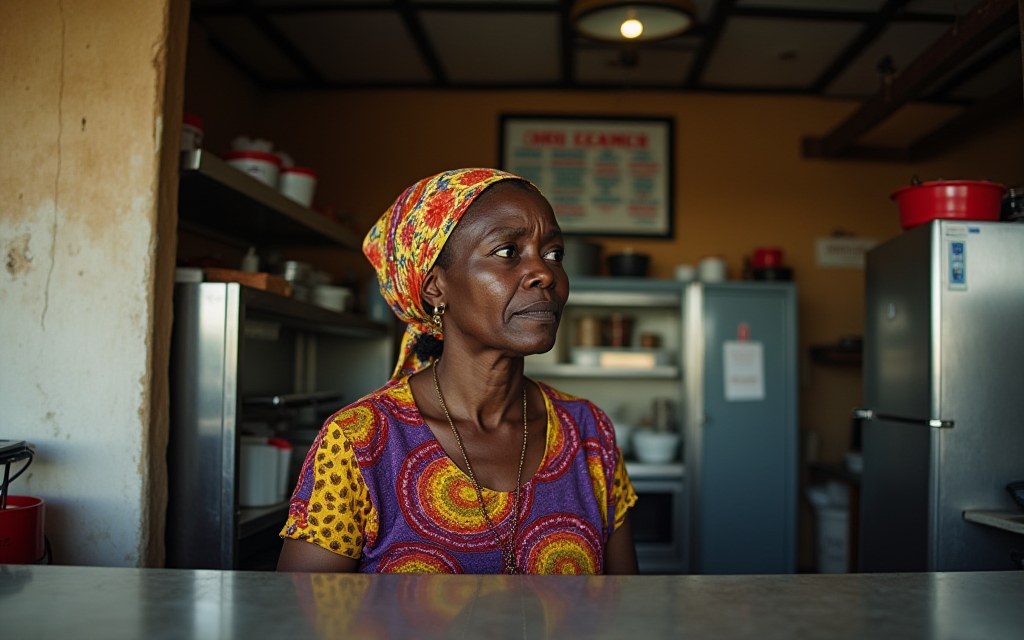
For entrepreneurs like Sosseh Jagne, unreliable electricity is a major obstacle. Her catering business lost over 40,000 dalasis ($532) due to spoilage from frequent outages, some lasting 19 hours. “Electricity is not a luxury; it is a necessity,” she asserts. These infrastructure failures stifle small businesses and exacerbate economic hardship.
Justice Delayed: The Unfinished Business of Transitional Justice
Victims Still Waiting for Accountability
The promise of justice for atrocities committed under Jammeh remains largely unfulfilled. Sainabou Camara Lowe, who was shot during a 2000 student protest and left with a spinal injury, received reparations but says it has done little to ease her suffering. “We are forgotten as victims and continue to wallow in pain and poverty,” she says.
According to Kebba Jome of the Gambia Centre for Victims of Human Rights Violations, fewer than 25% of the Truth, Reconciliation and Reparations Commission’s (TRRC) recommendations have been implemented. A special tribunal to prosecute alleged crimes is expected to begin hearings early next year, but families like the Sandengs, whose father died in custody in 2016, demand faster action. “Victims have been waiting, victims are dying,” says Fatoumatta Sandeng. “Justice is long overdue.”
Political Promises and the Path Forward
Constitutional Reform and Competing Visions
A key pledge of the post-Jammeh era was replacing the 1997 Constitution. The 2020 Draft Constitution, which included a two-term limit for presidents, failed to pass in the National Assembly. President Barrow blames opposition resistance and promises to revisit reform if re-elected. His main challenger, Ousainou Darboe of the UDP, pledges to reintroduce the draft within his first 100 days and to serve only one term.
Other candidates include Talib Ahmed Bensouda, former mayor of Kanifing Municipality, and independent Almameh Gibba, who has vowed to facilitate Jammeh’s return. Isatou Touray, the first woman to run for president, promises a new constitution and improved living conditions. Political scientist Essa Njie notes that economic conditions, personalities, and party loyalty will shape the vote, but ethnic and religious lines also play a role.
Voter Expectations and the Burden of Hope
For many Gambians, this election is about tangible improvements. Sosseh Jagne wants reliable electricity; Maram Mendy seeks job opportunities; Buba Sanneh hopes to avoid the backway. Market sellers like Isatou Ceesay are tired of empty promises: “All they do is promise, and after the election you don’t hear from them again.” Families of victims demand accountability.
Nearly a decade after Jammeh’s departure, the democratic journey remains incomplete. Whoever wins on December 5 will inherit not only the responsibility of governing but also the heavy burden of unfulfilled promises. As Hakeem Touray puts it, “Our young people are not necessarily running away from The Gambia; many are running away from hopelessness.” The next president must restore hope and deliver the change that Gambians still await.
