

Global Jihadism After 9/11: Has It Failed or Just Evolved?
Twenty-five years after 9/11, global jihadism is not defeated but evolving. Groups like al-Qaeda and IS are shifting from global attacks to local power grabs, employing pragmatic strategies and rebranding to win support in Africa and beyond. This article explores the internal debate between hardliners and pragmatists, the rise of figures like Ahmed al-Sharaa in Syria, and the implications for global security.
Global Jihadism at a Crossroads: Failure or Transformation?
Twenty-five years after the September 11 attacks and more than a decade after the Islamic State (IS) declared its caliphate, the global jihadist movement is undergoing a profound transformation. While neither al-Qaeda nor IS has achieved its ultimate goal of establishing a transnational Islamic state, the movement is far from defeated. Instead, it is adapting, rebranding, and shifting its focus to local conflicts, particularly in Africa and parts of Asia.
This evolution raises a critical question: Has global jihadism failed, or is it simply changing shape? The answer lies in the movement’s growing pragmatism, its strategic compromises, and the lessons it has drawn from past defeats and recent victories.
The Rise of Pragmatic Jihadism
In Syria, the unexpected ascent of Ahmed al-Sharaa—formerly known as Abu Mohammed al-Jolani—has become a source of inspiration and controversy within jihadist circles. Once a commander for IS and al-Qaeda, Sharaa gradually severed ties with both groups and focused on building local power in Syria’s Idlib province. His willingness to engage with non-Islamist groups and foreign powers, including Russia, ultimately paved his way to power in December 2024.
Sharaa’s success has not only reshaped Syria’s political landscape but also ignited a fierce debate among jihadists. Hardliners accuse him of betrayal, while pragmatists see his approach as a viable path to power. This divide is evident in groups like al-Qaeda’s Sahel branch, JNIM, which has increasingly downplayed its global jihadist branding in favor of local grievances and alliances.
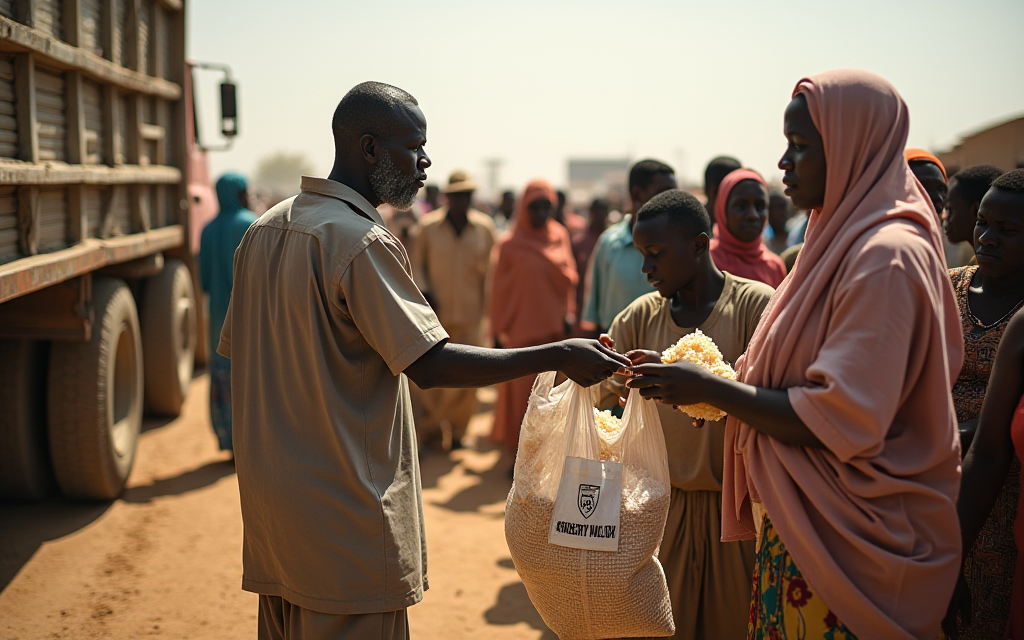
Similarly, al-Shabab in Somalia has been showcasing its “humanitarian” work, distributing aid and winning over local communities. In October, it even reached a truce with a powerful Somali tribe, the Ma’awisley, dealing a blow to government forces. These moves suggest a strategic shift from global confrontation to local consolidation.
Africa: The New Battleground
Africa has emerged as the primary theater for jihadist activity. Al-Qaeda’s branches in the Sahel (JNIM) and Somalia (al-Shabab) are fighting long-running insurgencies, while IS maintains active branches in Nigeria, the Democratic Republic of Congo, Mozambique, and Somalia. The continent’s vast ungoverned spaces, weak states, and socioeconomic grievances provide fertile ground for recruitment and expansion.
JNIM’s recent alliance with Tuareg separatists in Mali, despite past hostilities, underscores its pragmatic approach. By portraying itself as a defender of ordinary people against corrupt rulers and foreign interference, JNIM aims to build local legitimacy. Its propaganda now emphasizes local problems rather than global Muslim causes, and it has even suggested “balanced relations” with Russia—a nod to the diplomatic tactics employed by Sharaa in Syria.
Al-Shabab’s outreach to local tribes and its humanitarian messaging serve a similar purpose: to present itself as a viable alternative government. With African Union forces withdrawing from Somalia and the government facing internal crises, the group may soon have an opportunity to seize power.
Western Distraction and Jihadist Opportunism
Jihadist groups believe that Western powers are increasingly distracted by other global crises, including the war in Ukraine, US-Iran tensions, and rivalries with China and Russia. The chaotic US withdrawal from Afghanistan in 2021 and the Taliban’s return to power reinforced this perception. Sharaa’s rise in Syria, despite his past as a wanted terrorist, further emboldened the pragmatists.
According to Colin Clarke of the Soufan Center, some jihadist groups have learned that avoiding direct confrontation with the US can help them escape military action and “live to fight another day.” This does not mean the West has abandoned counterterrorism, but if jihadists perceive a lack of will or attention, they may feel more confident in pursuing power.
However, history offers a cautionary tale. After the 2011 Arab uprisings, al-Qaeda affiliates in Yemen, Libya, and Tunisia adopted the name Ansar al-Sharia to gain local support while masking their global ambitions. In Mali in 2012, al-Qaeda leaders advised jihadists not to rush into imposing strict Islamic law but to work with local allies and downplay their links to al-Qaeda. The ultimate goal remained the same: establishing a state governed by their interpretation of Sharia.
The Debate Within: Hardliners vs. Pragmatists
The internal debate between hardliners and pragmatists is not new, but it has intensified since 2025. Hardliners reject any compromise, viewing concessions on Sharia, participation in elections, or alliances with non-Islamist groups as apostasy. Pragmatists, on the other hand, argue that such flexibility is necessary to gain power and eventually implement their vision.
This debate is particularly acute within JNIM, where two camps vie for influence. One favors the Taliban’s approach of seizing power through force with minimal concessions, while the other advocates for a Syrian-style strategy of alliances and diplomacy. According to jihadism expert Wassim Nasr, the pragmatists currently have the upper hand, but a break with al-Qaeda may be inevitable as JNIM’s political evolution continues.
For now, groups like JNIM and al-Shabab are testing whether pragmatism can deliver tangible results. Their ability to govern, provide services, and gain legitimacy will determine whether they can transition from insurgent groups to governing authorities.
Conclusion: A Movement in Flux
Global jihadism has not failed; it has evolved. The movement’s center of gravity has shifted from the Middle East to Africa, and its tactics have adapted to local realities. While the ultimate goal of a global Islamic state remains, many groups are now prioritizing local power and governance. This pragmatic turn may be a tactical shift rather than a fundamental change, but it presents new challenges for counterterrorism efforts.
As Western attention wanes and local opportunities arise, jihadist groups may find new pathways to power. Whether they succeed will depend on their ability to balance ideology with pragmatism, and on the responses of local and international actors. The question is no longer whether global jihadism has failed, but how it will continue to shape the world in the years to come.
