

Mecca Pact Allies Condemn Houthi Attacks on Saudi Arabia, Pledge Collective Defense
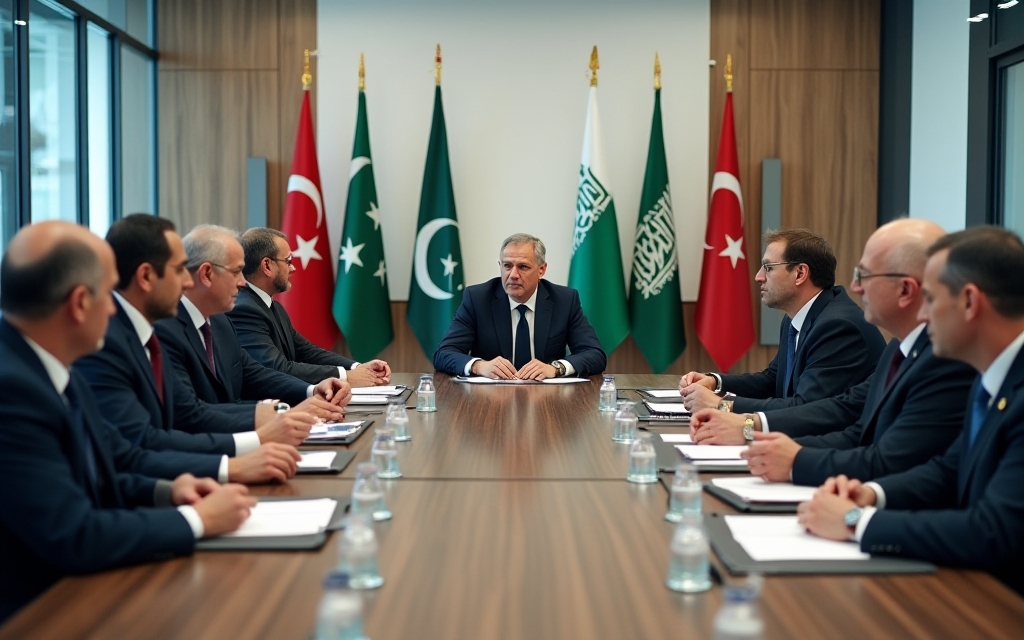
Senior officials from Pakistan, Saudi Arabia, and Turkiye met in Islamabad on Friday, condemning Houthi attacks on Saudi Arabia as "heinous" and reaffirming their commitment to collective defense under the Mecca Joint Defence Agreement. The talks focused on regional security and defense industry cooperation, as Houthi attacks continue to target Saudi infrastructure, killing at least 26 people since September.
Mecca Pact Allies Condemn Houthi Attacks on Saudi Arabia
ISLAMABAD, Pakistan — Senior officials from Pakistan, Saudi Arabia, and Turkiye condemned ongoing Houthi attacks on Saudi Arabia as “heinous” and reaffirmed their commitment to collective defense during a meeting in Islamabad on Friday.
The Strategic Political and Defence Committee (SPDC) of the Mecca Joint Defence Agreement, signed on August 7, held talks for about two and a half hours, focusing on regional security and the implementation of previous decisions.
Strong Condemnation and Collective Resolve
Pakistan’s Deputy Prime Minister and Foreign Minister Ishaq Dar told reporters that the three countries reiterated their “strong condemnation of the persistent and heinous attacks by the Houthi militia, targeting civilians and civilian infrastructure in the Kingdom of Saudi Arabia.”
“They reaffirmed their collective resolve to continue and intensify efforts to support the kingdom in safeguarding its security, sovereignty, and territorial integrity, in accordance with the collective defence provisions of the Mecca Agreement for Joint Defence,” Dar said.
The meeting reviewed the evolving regional security situation and emphasized the determination of the three nations to work collectively towards peace, security, and stability in the region.
Houthi Attacks Persist Despite Pact
The talks come as Saudi Arabia continues to face attacks by the Iran-backed Houthis, who have repeatedly targeted Saudi cities, oil facilities, and shipping since fighting in Yemen intensified in July.
According to Saudi authorities, at least 26 people have been killed in suspected Houthi drone and missile attacks in Saudi Arabia since September 23, with 23 of those killed in strikes on airports.
While these attacks were expected to dominate Friday’s agenda, no concrete measures were announced. However, at an emergency meeting in Riyadh on October 5, the pact’s members agreed to provide forces and capabilities and ensure their rapid deployment in the kingdom.
Pakistan has previously pledged to defend Saudi territory but ruled out attacking the Houthis inside Yemen. Turkish Foreign Minister Hakan Fidan said last week that Ankara’s current policy is aimed at the defense of Saudi Arabia.
“No decision has been made on deploying troops inside Yemen. However, the necessary support is being provided in defending Saudi Arabia,” Fidan said.
Defense Industry Cooperation and Expansion
Dar said Friday’s discussions also focused on implementing decisions from previous meetings and boosting cooperation across various sectors.
“The parties reaffirmed their commitment to strengthening cooperation in defence industries, joint technological development, training, and capacity building, with a view to enhancing the collective capabilities and cohesion of their armed forces,” he said.
Fidan emphasized that integration is at the core of the pact’s strategy. “The greatest goal of this alliance is for countries here to pool their own capabilities – not only their military capabilities, but also their defence industry capabilities – to generate greater power, create greater impact, and make a larger contribution to peace and stability,” Anadolu news agency quoted him as saying.
Fidan also mentioned that ongoing negotiations between the United States and Iran were discussed, and several decisions were made in principle regarding the roadmap for other countries wishing to join the alliance.
Several regional nations have expressed interest in joining the pact. Turkish President Recep Tayyip Erdogan said in August that Egypt could potentially join. Bangladesh is actively considering joining, and Syria’s Foreign Minister Asaad al-Shaibani said last month that Damascus is weighing whether to enter the Mecca alliance.