

Taiwan Votes on Nuclear Power Revival Amid AI Energy Demands
Taiwan holds a referendum on reviving nuclear power, driven by surging AI energy demands and security concerns. The vote could overturn the island's nuclear-free policy and impact the global semiconductor supply chain. With Taiwan importing over 97% of its energy and holding only 11 days of LNG reserves, the outcome is closely watched amid rising tensions with China.
Taiwan Holds Referendum on Nuclear Power as AI Industry Strains Grid
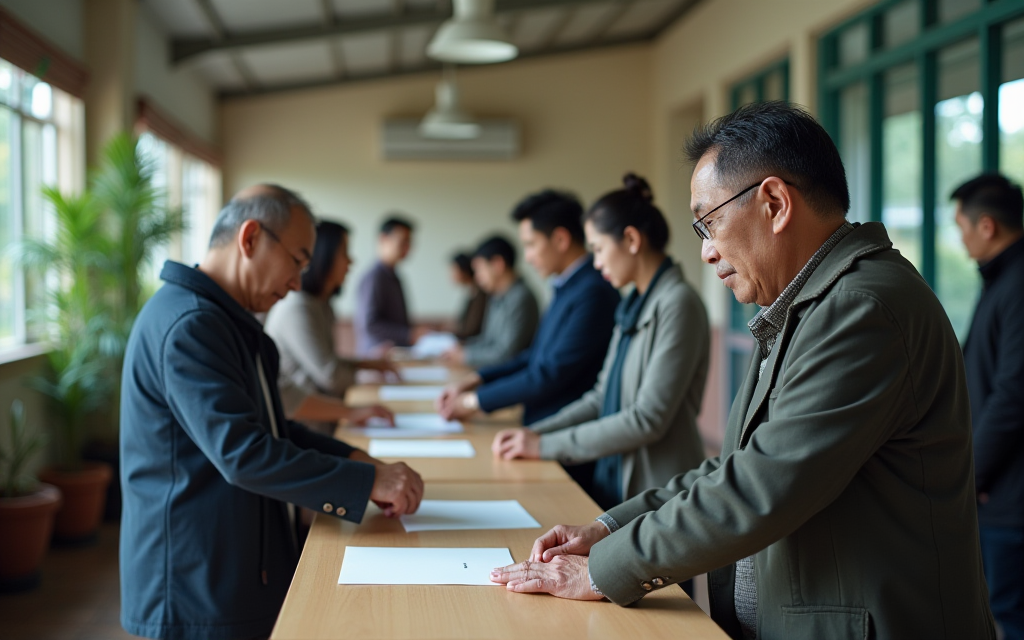
TAIPEI, Taiwan — Voters in Taiwan are casting ballots Saturday in a referendum that could overturn the island’s longstanding “nuclear-free homeland” policy, a decision with significant implications for the global AI supply chain and energy security amid rising tensions with China.
The vote, held alongside local elections, asks whether the government should restart nuclear power to boost the economy. It is Taiwan’s fourth nuclear referendum in eight years, reflecting deep divisions over the controversial energy source.
Background: Taiwan’s Nuclear Phase-Out
Taiwan once relied heavily on nuclear power, which produced 52 percent of its electricity in 1985. However, the issue became increasingly partisan, with the ruling Democratic Progressive Party (DPP) advocating for a nuclear-free policy and the opposition Kuomintang (KMT) supporting nuclear energy.
Safety concerns, particularly after Japan’s 2011 Fukushima disaster, and unresolved nuclear waste disposal issues have fueled public skepticism. In May last year, Taiwan shut down its last operational reactor at Maanshan in Pingtung County.
“There was a major group of environmentalists that were part of the [DPP] that were very anti-nuclear,” said Lev Nachman, an assistant professor at National Taiwan University. “The nuclear industry, by contrast, was built and run under the KMT.”
Why Nuclear Is Back on the Agenda
Surging electricity demand from Taiwan’s semiconductor and AI industries, coupled with energy security fears, has renewed the debate. Taiwan imports more than 97 percent of its energy, with natural gas and coal arriving by ship. The island holds only about 11 days of liquefied natural gas (LNG) in reserve, compared to 14-20 days for Japan and South Korea.
“If China actually blockades Taiwan and cuts off access to the outside world, then Taiwan only has so much energy it can rely on,” Nachman said. The war with Iran this year has further disrupted LNG shipments from the Middle East.
Taiwan’s semiconductor industry, led by TSMC, consumes massive amounts of electricity. In September, the sector used over 4.5 billion kilowatt-hours for the first time, up 11.55 percent year-on-year. S&P Global estimates TSMC alone used about 8 percent of Taiwan’s electricity in 2023, a share that could rise to nearly 24 percent by 2030.
Political Shifts and Referendum Prospects
The DPP has begun to shift its stance. In March, President William Lai Ching-te said the government would start the process of restarting the Maanshan and Kuosheng plants, citing AI-driven demand and foreign conflicts disrupting energy supplies. On September 24, the Nuclear Safety Commission approved Taipower’s restart plan for Maanshan, though further safety assessments are required.
“Lai has tried to push his party to rethink its ‘very dogmatic anti-nuclear stance,'” Nachman said. “The question is whether DPP voters have come around.”
For the referendum to pass, ‘yes’ votes must outnumber ‘no’ votes and exceed a quarter of all eligible voters. Nachman expressed skepticism about its passage, noting that similar measures have failed before. “We keep doing it over and over again and it still doesn’t usually pass,” he said.
If the referendum passes, the restart process is already under way, with supporters saying reactors could be running within 18 months to three years. Opponents argue it could take five to 10 years and cost hundreds of billions of New Taiwan dollars.
Implications for AI and Energy Security
Taiwan is the most important link in the global AI supply chain, producing more than 90 percent of the world’s most advanced semiconductors. TSMC makes Nvidia’s Blackwell and Rubin AI processors, and Taiwanese firms build most of the world’s AI servers.
“In today’s media, Taiwan has become a single issue, just about semiconductors,” Nachman said. “For a lot of people in Taiwan, the semiconductors aren’t even the priority. It really is the security side.”
China, which claims Taiwan as its own territory, has not commented on the referendum. Beijing has previously suggested closer integration could solve Taiwan’s energy problems, but Taipei rejects unification.
The referendum concerns civilian power reactors, not weapons. Taiwan’s leaders have consistently stated they will not seek nuclear weapons, and its nuclear facilities are inspected under an arrangement with the US and the IAEA.
Results are expected Saturday night.