

Leamington High Line Project Gains Access to Disused Viaduct, Unveils Garden Vision
A community group in Leamington Spa has gained access to a disused railway viaduct for the first time, publishing conceptual designs for five themed gardens. The Leamington High Line CIC aims to transform the 500-meter structure into an elevated park, but funding and surveys for bat roosts and structural damage remain key challenges. The project could cost up to £50 million and take a decade to complete.
LEAMINGTON SPA, England — A community group aiming to transform a disused railway viaduct into a elevated park has taken a major step forward, gaining access to the top of the structure for the first time and publishing conceptual designs for five themed gardens.
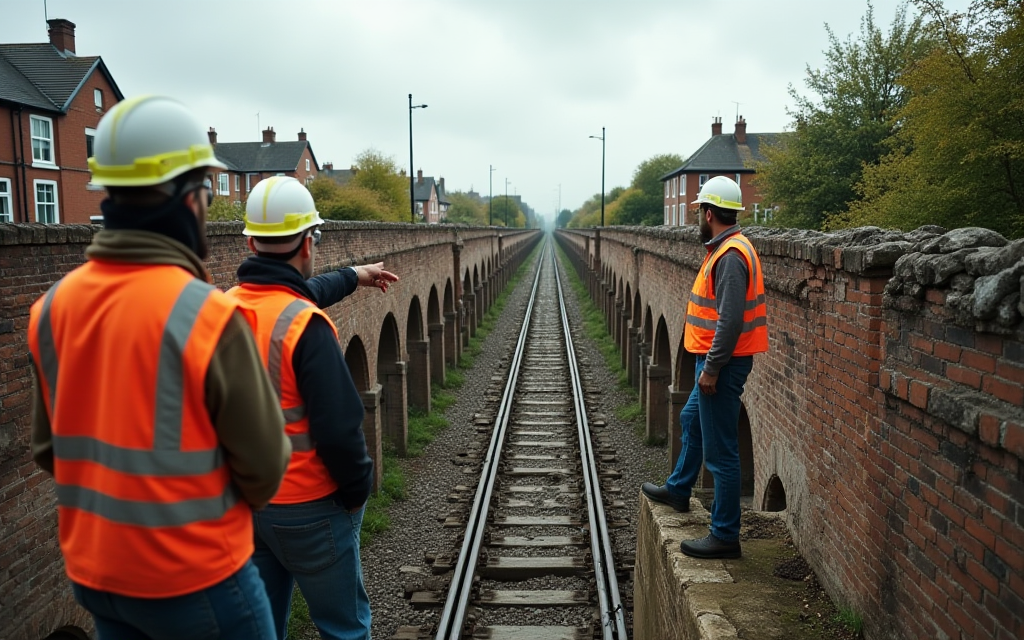
The Leamington High Line Community Interest Company (CIC) has raised enough funds to install a permanent ladder and platform at the Bath Place end of the viaduct, allowing volunteers and experts to begin surveying the condition of the 180-year-old brickwork and assess wildlife, including bat roosts.
The project, inspired by New York City’s High Line, aims to create a green travel route and public gardens along the 500-meter viaduct, which runs from Lower Avenue to the Victoria Business Centre on Neilston Street. The viaduct, built in 1844, carried goods and passengers until the 1960s but has since fallen into disuse.
Access Enables Critical Surveys and Site Preparation
With access now secured, the CIC’s first tasks include surveying for bat roosts and removing self-seeded plants and trees whose roots are damaging the brickwork and arches below, where local businesses operate.
“The first job is to survey carefully for bat roosts and take off some of the self-seeded plants and trees, which are breaking up the brickwork and pushing roots into the arches below, where local businesses trade,” said Alan Bartlett, a director of the CIC. “So clearing them is the first good thing we can do for the structure and for our neighbours.”
Derrick Knight, another director, said the group is “going to turn this neglected heritage structure into a place the town can enjoy for generations.”
Five Themed Gardens Planned Along the Viaduct
The conceptual drawings, created by London-based landscape architects Greenwood-Hill, reveal plans for five distinct gardens along the former track bed:
- Faith Garden: Features a renovated railway carriage serving as a café and bar.
- History Garden: Tells the story of the viaduct’s construction in 1844.
- Hope Garden: A community allotment with a long table running its length.
- Solar Garden: Includes pergolas with energy-generating solar panels.
- Sky Garden: The longest garden, offering seating and space for community events.
“The sketches set out some early ideas for how the High Line could become a greener, more accessible and welcoming place for people and wildlife alike,” a spokesperson for Greenwood-Hill said. “It’s an exciting community-led vision, and we hope these initial concepts help people imagine the potential of this unique asset in the heart of Leamington.”
Funding and Timeline Remain Uncertain
The project is estimated to cost between £10 million and £50 million, funded through grants and donations. Ian Dunning, another CIC director, said most of the park could open to the public in five years, though funding still needs to be secured.
“The funding in terms of grants still needs to be unlocked and we’re in the process of submitting funding applications,” Dunning said. He is confident the final bill will be lower than the higher estimate.
Similar high line projects have been developed in cities worldwide, including Manhattan’s High Line, which opened in 2009, and Seoul’s Seoullo 7017 Skygarden. However, such projects can face funding obstacles, as seen in Camden, north London, where a high line scheme has stalled due to rising costs.
For now, the Leamington High Line CIC is focused on the first steps: making the viaduct safe, assessing its condition, and building community support for a project that could reshape the town’s green infrastructure for generations.