

White Christmas 2026: UK Odds Higher Than You Think Despite Forecast Uncertainty
With Christmas a month away, the UK has a higher-than-average chance of a white Christmas, but forecasting snow remains difficult. El Niño and an early sudden stratospheric warming event could influence conditions, yet uncertainty is high.
White Christmas 2026: What Are the Chances?
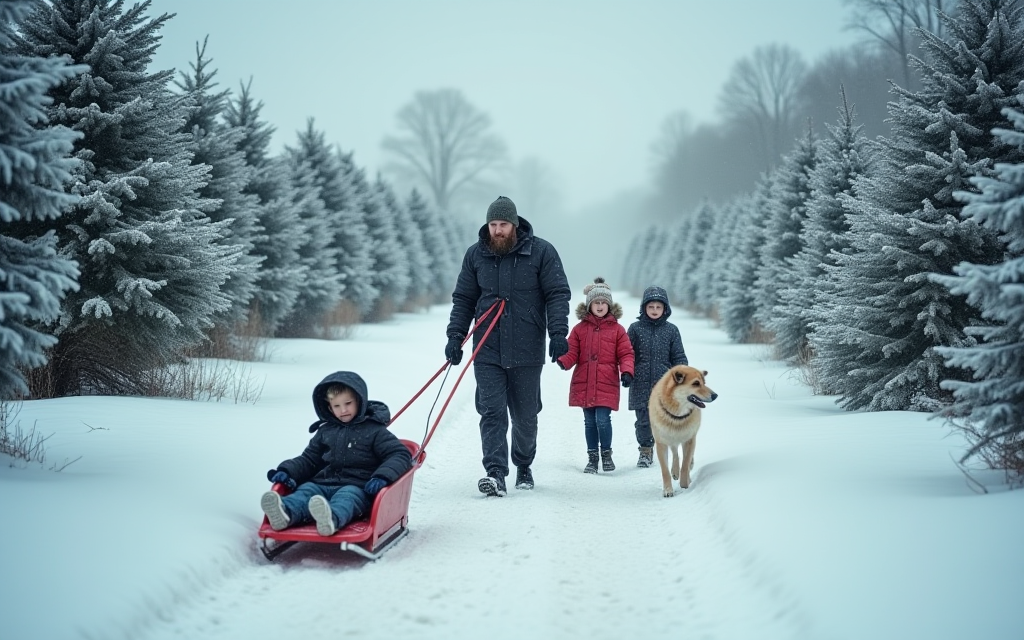
With Christmas Day just a month away, the question on many minds is whether the UK will see a white Christmas this year. According to BBC Weather, the likelihood is higher than you might imagine. Over the past 65 years, there have been 41 white Christmases, meaning we are more likely than not to see one somewhere in the UK.
However, forecasting snow a month ahead is notoriously difficult. While early indicators offer some hints, the exact conditions on 25 December remain uncertain. Here’s what we know so far.
How Is a White Christmas Defined?
For a Christmas to be officially declared ‘white’, a single snowflake must be recorded falling at any point during 25 December at any of the Met Office’s network of around 300 weather stations. This means a thick covering of snow on the ground isn’t necessary—if no new snow falls on the day, it cannot technically be called a white Christmas.
The last widespread white Christmas was in 2010, when snow fell at 19% of measuring stations and a significant 83% reported snow lying on the ground. Every year from 2020 to 2023 was officially a white Christmas, though very few places saw settling snow.
What Factors Could Influence This Year’s Weather?
Several large-scale climate phenomena are in play, though their impacts on UK weather are far from certain.
El Niño
A record-breaking El Niño is approaching its peak in the Pacific, according to scientists. While its strongest effects are felt in the tropical Pacific, the energy it releases can ripple through global weather patterns. In the UK, strong El Niño events can increase the odds of wet and stormy weather in late autumn and early winter, and some studies suggest they may raise the chances of colder weather later in the season—but the evidence from past events is mixed.
Sudden Stratospheric Warming
Earlier in November, the winds of the stratospheric polar vortex weakened and reversed, marking the earliest sudden stratospheric warming (SSW) event on record. This phenomenon tends to occur later in winter and can—but doesn’t always—weaken the jet stream, increasing the chance of cold northerly or easterly winds. Occurring so early, its effects this time are hard to quantify.
The latest Met Office predictions, taking these and other factors into account, suggest an increased likelihood of colder and drier-than-average conditions during December, January, and February. However, this only represents an increased probability, and shorter-term milder, wetter spells are still very likely.
When Will We Know for Sure?
Accurately forecasting snow in the UK is tricky even a day or two in advance. Snow requires just the right combination of cold air and moisture, and small changes can mean the difference between rain and snow. Longer-range forecasts are even more challenging, and with Christmas still a month away, precise predictions are impossible.
For the latest updates, keep an eye on BBC Weather online and via the app.
