

Putin Vows ‘Inevitable’ Retaliation as Ukraine Strikes Russian Oil Refineries
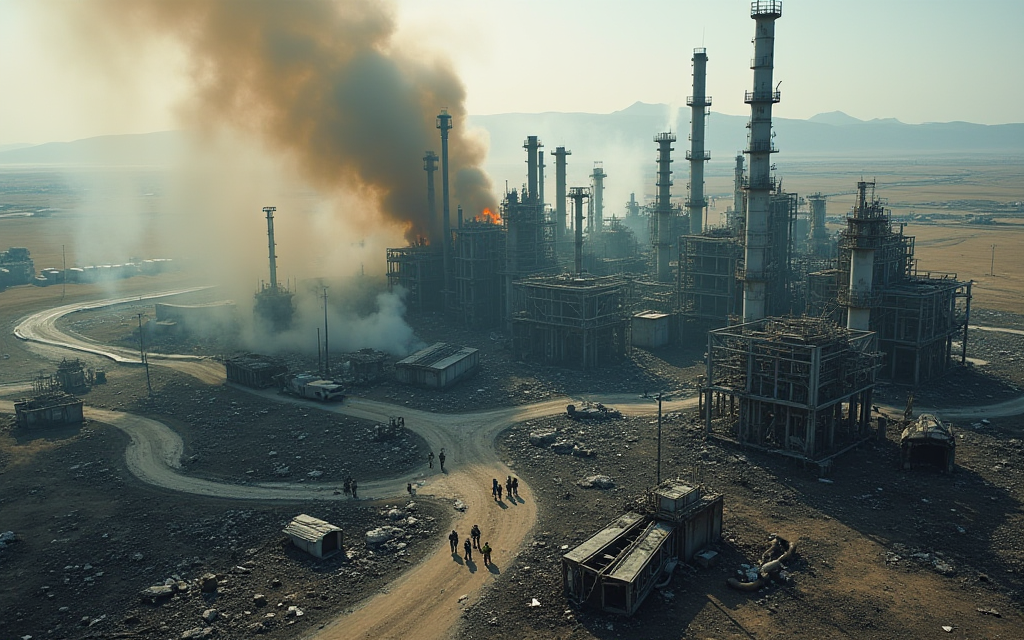
Russian President Vladimir Putin has threatened “inevitable” retaliation after Ukraine resumed drone strikes on Russian oil refineries, defying a US request for a ceasefire. The attacks have cut Russia’s refining capacity by 45 percent since late October, prompting fuel restrictions in several regions. Meanwhile, the conflict shows signs of widening, with Poland accusing Moscow of airspace violations and Ukraine striking a Russian naval vessel in Libya. Civilian casualties continue to mount, with a deadly attack in Zaporizhzhia killing two and wounding dozens.
Russian President Vladimir Putin has declared that retaliation is “inevitable” after Ukraine continued drone attacks on Russian oil refineries, despite a request from US President Donald Trump to halt such strikes. The statement, made during a Kremlin meeting with government officials and senior oil executives on Tuesday, marks a sharp escalation in rhetoric as the conflict widens beyond Ukrainian borders.
Ukraine Defies Trump’s Ceasefire Appeal
Ukrainian attacks on Russian energy infrastructure had briefly subsided following Trump’s mid-October declaration of an energy ceasefire. However, strikes resumed later that month, prompting Putin to accuse Kyiv of ignoring Washington’s appeals. “We see that the Kyiv regime continues to attack our refining facilities, despite the US president’s appeal and direct request to refrain from such attacks,” Putin said. “In this regard, I would like to stress that retaliatory measures on our part are inevitable.”
Ukrainian officials have maintained that they will cease strikes on Russian energy targets only when Moscow does the same. The renewed attacks have significantly impacted Russia’s refining capacity. According to industry sources cited by Reuters, Ukrainian drone strikes have cut combined crude processing volumes at Russian refineries by 45 percent since late October. Several Russian regions have since introduced restrictions on retail fuel sales, though Putin claimed petrol prices have stabilised after peaking in October.
Conflict Spills Into NATO Territory
The conflict is increasingly showing signs of widening beyond Ukraine. On Tuesday, Poland accused Moscow of deliberately violating its airspace when a Russian surveillance drone briefly crossed the border. Al Jazeera’s Abdelaziz Mujahid, reporting from Kyiv, noted that the incursion “may also signal that the conflict and these confrontations are widening.”
In a separate incident, Warsaw reported that three Russian Kh-101 missiles landed in Poland on Friday. On Saturday, a Russian cargo ship with links to the military was hit by drones and caught fire in the Baltic Sea, in an attack claimed by Ukraine. Moscow also accused Estonia, a NATO and EU member, of hostile actions “on the verge of triggering open war” after Estonia announced the closure of their shared land border.
Further afield, Ukraine sank a Russian naval corvette in a Libyan port using maritime drones on Sunday. Ukraine’s Foreign Minister Andrii Sybiha defended the attack as a legitimate act of self-defence, following criticism from Libya’s internationally recognised government in Tripoli. Meanwhile, British security officials warned UK companies providing “material support” to Ukrainian forces to brace for potential Russian sabotage attempts.
Civilian Casualties Mount in Zaporizhzhia
Amid the escalating tensions, civilian casualties continue to rise. A Russian attack killed two people and wounded 40 others, including four children, in the Ukrainian city of Zaporizhzhia overnight, according to regional governor Mykhailo Semikin. Images shared on his Telegram account showed a damaged apartment building with blown-out windows and rubble scattered on the ground.
Russia’s Defence Ministry, cited by Interfax, reported that its forces struck drone control sites, Starlink satellite terminals, and other military assets in Ukraine’s Sumy region, also claiming to have killed a number of servicemen. As both sides intensify their campaigns, the prospects for a ceasefire appear increasingly distant, with Putin’s latest threat underscoring the risk of further escalation.
