

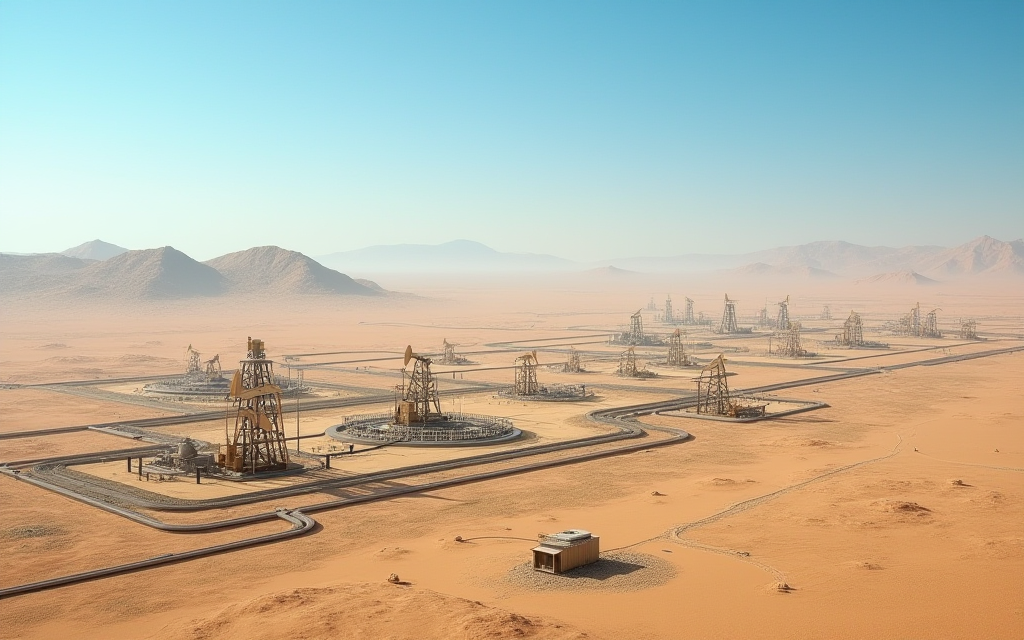
Iraq PM Orders Federal Takeover of Oilfields and Border Crossings in Kurdish-Controlled Areas
Iraq's Prime Minister Ali al-Zaidi has ordered the federal Ministry of Oil to take over oilfields in Kurdish-controlled areas and directed the border crossings authority to assume control of all crossings in the Kurdistan Region. The move, covering Diyala, Kirkuk, Salahuddin, and Nineveh provinces, aims to centralize oil exports under SOMO and curb smuggling. It follows a long dispute over independent Kurdish oil sales and could escalate tensions between Baghdad and Erbil.
Baghdad Moves to Assert Control Over Kurdish Oil and Borders
In a significant escalation of federal-regional tensions, Iraq’s Prime Minister Ali al-Zaidi has directed the federal Ministry of Oil to assume management of oilfields located in areas under Kurdish security control. The order, announced on Tuesday, covers oilfields in the provinces of Diyala, Kirkuk, Salahuddin, and Nineveh, according to a statement from the prime minister’s office.
The move is part of a broader effort by Baghdad to centralize control over the country’s oil resources and border crossings, potentially deepening the rift with the semi-autonomous Kurdistan Regional Government (KRG) in the north. Al-Zaidi also instructed the border crossings authority to take over all crossings in the Kurdish region and directed the KRG to approve exports of crude oil and petroleum products only through the federal Oil Ministry.
Security and Monitoring Measures
The statement emphasized that Baghdad would “secure and monitor all oilfields with cameras, including fields within the administrative boundaries of the federal government that are under the security authority of the regional government.” Additionally, the Border Forces Command has been ordered to close unofficial crossings along international borders with neighboring countries, including those in the Kurdistan Region, and to shut down all seasonal roads between the four governorates and the Kurdish region.
These measures are aimed at curbing unauthorized trade and ensuring that all oil exports flow through federal channels. The federal government insists that all excavation and marketing of oil should remain under its state organization, SOMO, a position that the Kurdish region has consistently rejected.
Background of the Dispute
The latest developments are rooted in a long-standing dispute over oil revenues and budgetary transfers between Baghdad and Erbil. The KRG has been independently selling oil without Baghdad’s approval, leading to a halt in pipeline shipments to Turkey for over two years. The sides agreed in September 2025 to restart the flows, but tensions have persisted.
Al Jazeera’s Mahmoud Abdelwahed, reporting from Baghdad, noted that the prime minister’s orders could exacerbate tensions and disputes over control of oil and sharing of budgetary resources. “The federal government is keen to keep all excavation and marketing of oil under its state organization, SOMO, but this has been totally rejected by the Kurdish region,” he said.
Broader Anti-Corruption and Security Context
In a related move, Prime Minister al-Zaidi removed the head of the border crossings authority and suspended the director general of the North Oil Company and his deputies pending further investigation, according to Iraq’s state news agency. This follows a separate case in which Iraqi officials accused Kataib Hezbollah, an Iran-backed armed group, of running an oil smuggling network in its stronghold of Jurf al-Sakhar, south of Baghdad. The group denied the accusation.
These actions suggest a wider push by the federal government to combat corruption and assert control over strategic resources and borders, which could have significant implications for Iraq’s political stability and relations with the KRG.
Implications for Federal-Kurdish Relations
The prime minister’s orders are likely to strain already fragile relations between Baghdad and Erbil. The KRG has long sought greater autonomy over its resources, and any federal takeover of oilfields in disputed territories could be seen as a violation of its constitutional rights. The closure of border crossings and seasonal roads may also disrupt local economies and humanitarian access.
Observers warn that without a negotiated solution, the dispute could escalate into a broader political crisis, affecting Iraq’s oil exports and overall stability. The international community, including the United States and Turkey, will be closely watching the developments, given the region’s strategic importance.
- Key oil provinces affected: Diyala, Kirkuk, Salahuddin, Nineveh.
- Federal demands: KRG must export oil only through SOMO; all border crossings under federal control.
- KRG position: Rejects federal control over oil sales, citing constitutional rights.
- Recent history: Pipeline exports to Turkey halted for two years due to dispute; resumed in September 2025.
