

Europe’s Tiny Car Boom: Why Teens and Seniors Are Driving Licence-Free Microcars
Tiny, licence-free cars are booming across Europe, driven by teenagers and seniors seeking affordable mobility. The Citroën Ami's 2020 launch sparked a shift, with electric models now dominating. Sales have doubled in five years, but safety concerns persist on faster roads. For many, these microcars offer independence where public transport fails.
Europe’s Tiny Car Revolution
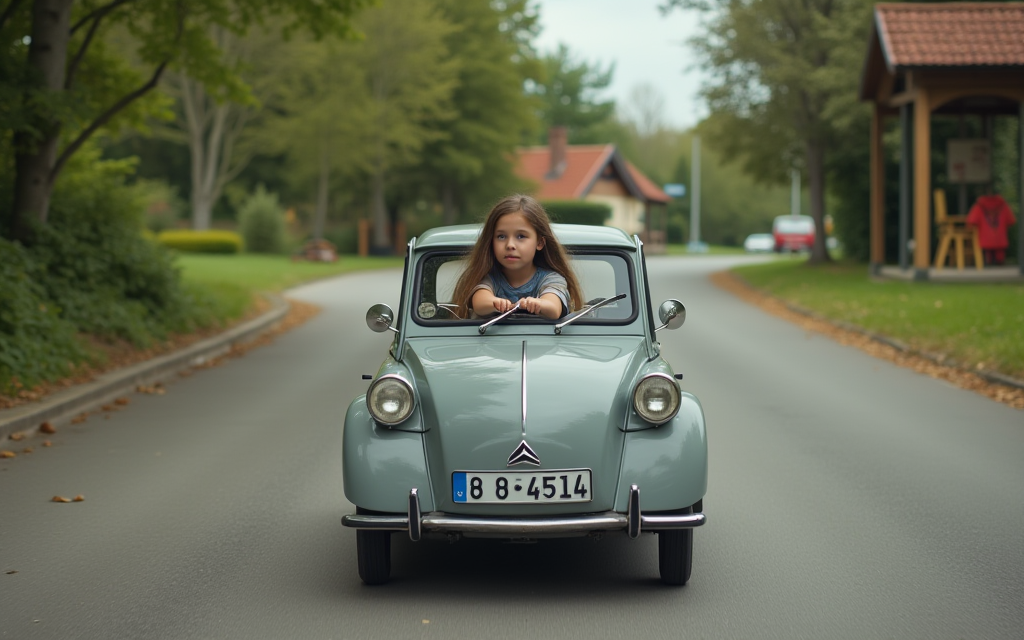
In rural France, 16-year-old Selena Buse reverses her Citroën Ami out of a parking space and heads to school. The boxy, grey-and-red microcar turns heads—futurist to some, toaster-like to others—but for Selena, it’s a lifeline. “I got it because I really needed it to get to school,” she says. “It’s indispensable in rural areas like where I live.”
Selena is part of a growing wave of Europeans embracing tiny, licence-free cars. These quadricycles, legally classified as motorised quadricycles (four-wheel mopeds), can be driven from as young as 14 in France and Italy, 15 in Germany and Spain, and 16 in the UK. Registrations in France have surged from about 13,000 in 2019 to around 25,000 last year, while European sales have doubled from 30,000 to 60,000 over the past five years.

The Citroën Ami Effect
Launched in 2020, the electric Citroën Ami transformed the market’s image and attracted a new demographic: teenagers. They now account for a quarter of all mini-car sales. “The launch of the Ami was the beginning of the transformation of the sector, with more and more electric models coming on to the market,” says Marie-Laure Nivot, market analyst at AAA Data. “In 2026, more than 67% of new licence-free cars are electric.”
Stricter EU regulations on mopeds and scooters also played a role. “It proved too costly for manufacturers to apply the new EU rules, so mopeds and small scooters have almost disappeared from the market since 2020 and licence-free cars have taken their place,” Nivot adds.
Ironically, the entry of a giant like Stellantis (Citroën’s parent) into the niche market benefited established French manufacturers like Aixam and Ligier. “They gave a lot of visibility to our market,” says Tom Faget, Aixam’s sales and marketing director. Aixam has invested €30m to expand production in France and is growing sales across Europe even as the French market slows due to subsidy cuts.

Safety Concerns and Practical Limits
For Daniel Laprès, 77, who moved from Paris to a village two years ago, the microcar was a necessity after he lost his driving licence. “We tried living off taxis and it was a disaster,” he says. “Then we heard about how you could drive without having to have a licence, and it was the exact solution to our problem.” But he feels vulnerable: “They’re little more than tin cans on wheels. You’re not going to be driving fast, but someone else could be.”
These cars are banned on motorways and top out at 45km/h (28mph), making them a hazard on faster roads. “You go on national highways at your risk and peril,” Laprès warns. “I did it once and I will never, ever do it again.”
Despite the limitations—two seats, low speed, no motorways—the appeal is clear. For Selena, who rents her Ami for €60 a month plus insurance, it’s a small price for independence. “When I’m on faster roads and there’s a lot of traffic the cars behind me sometimes honk their horns but I can’t go any quicker!” she laughs.

The Future of Micro-Mobility
As traditional mopeds decline, microcars are filling the gap for young and old alike. Ligier reports that young people now make up 40% of its customers, choosing microcars over scooters for safety and weather protection. With more electric models and increasing sophistication—some costing as much as a small conventional car—the tiny car is no longer just a compromise; it’s a choice.
For now, Selena and Daniel represent two ends of a spectrum united by the same need: affordable, accessible mobility in areas where public transport falls short. And as European cities grapple with congestion and emissions, the tiny car’s footprint—both physical and environmental—may prove increasingly attractive.
