

Renewed Strikes on Hodeidah Port Threaten Yemen’s Humanitarian Lifeline
Renewed Saudi-led coalition strikes on Yemen's Hodeidah port threaten a critical lifeline for millions. The port handles 70% of commercial imports and 80% of humanitarian aid, and aid agencies warn that disruption could worsen an already acute crisis. The strikes are a response to Houthi territorial gains and attacks on Saudi Arabia, but risk cutting off food, fuel, and medicine to Houthi-controlled areas.
Renewed Strikes on Hodeidah Port Threaten Yemen’s Humanitarian Lifeline
The Saudi-led coalition has launched a new wave of airstrikes on Houthi targets at Yemen’s port of Hodeidah, raising fears of a worsening humanitarian crisis in a country already devastated by over a decade of conflict. The strikes come as Houthi forces make significant territorial gains and escalate attacks on Saudi Arabia.
Why Hodeidah Port Is Critical
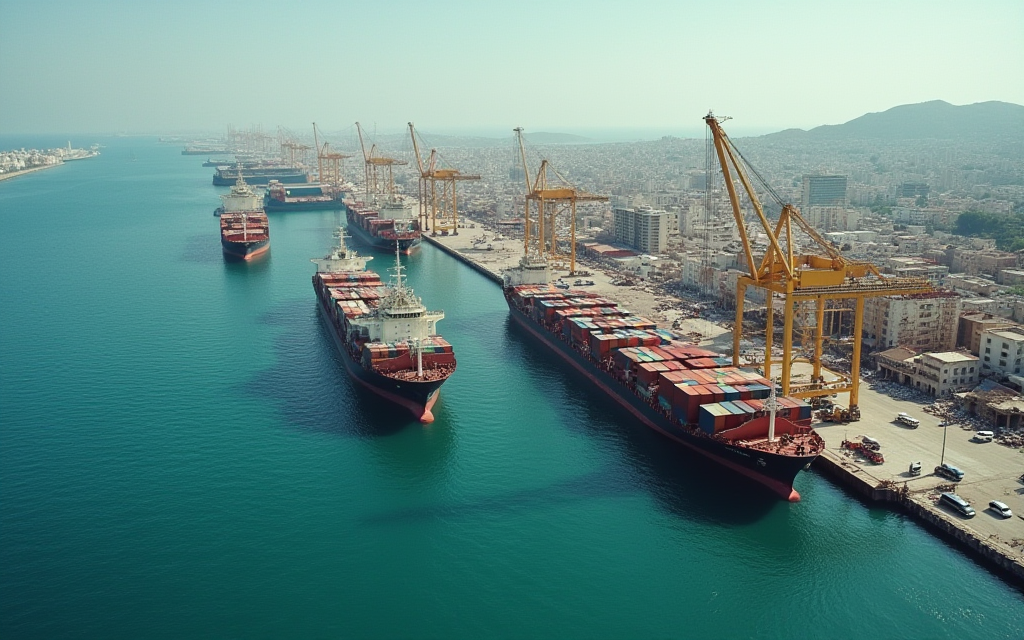
Hodeidah, located on Yemen’s western Red Sea coast, is the country’s principal commercial seaport and has been under Houthi control since 2014. It serves as a major entry point for food, fuel, and humanitarian aid, supplying densely populated northern and western regions, including the capital Sanaa.
According to the United Nations Mission to Support the Hodeidah Agreement, the port handled about 70 percent of commercial imports and 80 percent of humanitarian aid entering Yemen in September 2025, earning it the label of a “lifeline.”
“The closure or disruption [of the port] under the current circumstances would delay the arrival of food, medicine and fuel; increase transport costs and prices; and exacerbate the suffering of families already facing an acute humanitarian crisis,” said Abdusattor Esoev, Yemen Chief of Mission for the International Organization for Migration.
Francesca Quinto, programme manager for Yemen at Doctors Without Borders, emphasized that “Hodeidah remains a critical lifeline” for millions facing severe food insecurity.
However, the Houthis have long been accused of using the port for both civilian and military purposes, including smuggling weapons from Iran. “The Houthis’ increasing militarisation of vital civilian infrastructure by smuggling and storing arms, fuel and narcotics is undermining the humanitarian functions they serve in wartime,” said Ibrahim Jalal, a senior researcher and policy adviser.
A History of Attacks
The port has repeatedly come under attack since Yemen’s civil war began in 2014, from the Saudi-led coalition, the United States, the United Kingdom, and Israel. Pro-government forces also attempted to capture it in 2018. A UN-brokered truce in 2022 eased restrictions, but a campaign of US, British, and Israeli strikes in 2024 and 2025 jeopardized the port’s recovery.
About 70 percent of Yemenis live in Houthi-controlled areas, and while aid also enters through other ports like Mocha and Aden, renewed fighting has made overland distribution difficult. The detention of UN staff by the Houthis has further curtailed humanitarian operations.
Motives and Escalation
The Saudi-led coalition announced the strikes on Wednesday, days after warning civilians to evacuate the area. The Houthis have vowed retaliation.
Since full-scale war resumed in September, the Houthis have made sweeping territorial gains, pushing back government forces and threatening Aden, the interim capital. A government counteroffensive launched in early October has failed to stem the advances.
“Broadly speaking, the strikes [on Hodeidah’s port] were a response to the shift on the battlefield in favour of the Houthis,” said Ali al-Dhahab, a Yemeni military and strategic analyst. “They were aimed at undermining and crippling their economic and logistical capabilities, including infrastructure, such as ports and airports, as well as their military capabilities.”
Escalating Houthi attacks on Saudi airports, oil infrastructure, and commercial buildings—including a recent strike on the headquarters of Saudi Arabia’s sovereign wealth fund in Riyadh—also played a role.
What Lies Ahead
Before the strikes, Houthi military spokesperson Yahya Saree threatened retaliation on Saudi seaports, naming Jeddah in particular.
Nabil Al-Bukairi, a Yemeni researcher and policy expert, warned that the strikes have gone beyond symbolism. “Continued bombardment would inevitably lead to its closure and render it inoperable once its infrastructure and logistical capabilities have been targeted,” he said.
Even without a full closure, disruptions risk delaying critical aid as Yemen’s war shows no sign of ending. The international community faces a stark choice: push for de-escalation or watch as the lifeline for millions is severed.
