

Democrats Vow to End Trump’s Iran War, But Policy Differences With Republicans Remain Blurry
Democrats have won the midterms and are calling for an end to Trump's Iran war, but analysts say the party's approach to Tehran may not differ fundamentally from Republicans. Decades of bipartisan hostility, Obama's diplomatic pivot, and Biden's retreat show a complex legacy. Iranian leaders remain skeptical of any change in Washington's policy.
Democrats Pledge to End ‘Reckless’ Iran War After Midterm Victory
WASHINGTON — Fresh off a decisive midterm election victory, Democratic leaders are vowing to end the nine-month U.S.-Israel war on Iran, but analysts say the party’s approach to Tehran may not represent a fundamental break from decades of bipartisan hostility.
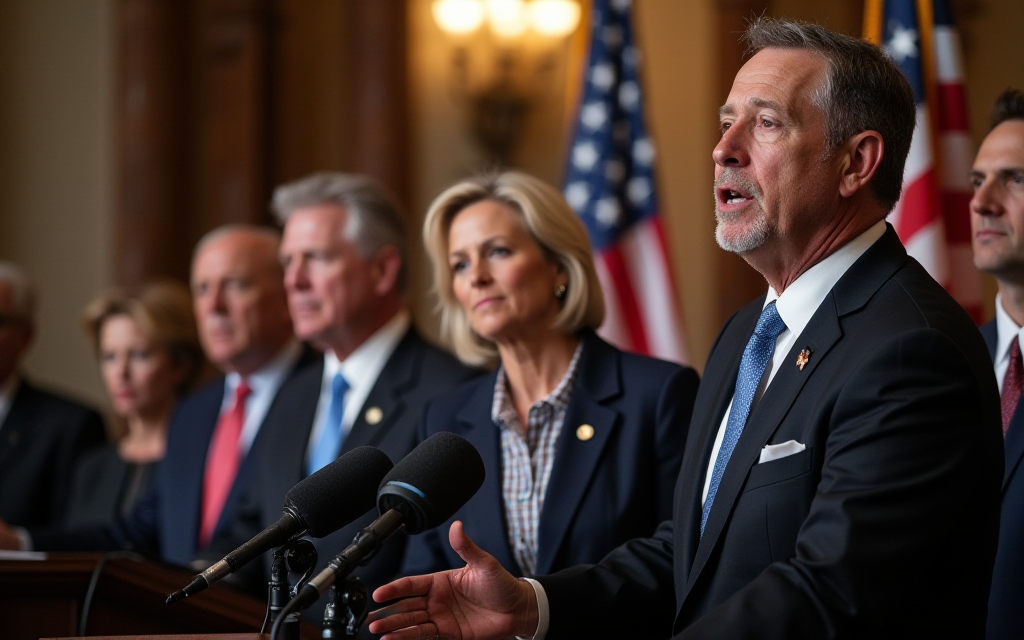
Presumptive incoming House Speaker Hakeem Jeffries said last week that Democrats must “work and move aggressively to end the reckless and costly war of choice in Iran right out of the gate.” Senate Minority Leader Chuck Schumer, who opposed the 2015 nuclear deal, said Americans do not know “what the heck we’re fighting for in Iran.”
The election came amid widespread public opposition to the war, which has sent energy prices soaring. But in Tehran, Iranian Supreme Leader Mojtaba Khamenei warned that anyone expecting the election to change Washington’s policy is “seriously mistaken.”
Decades of Bipartisan Hostility Toward Iran
Since the 1979 Islamic Revolution, hostility toward Iran has often superseded partisanship in Washington. It was Democratic President Jimmy Carter who began imposing sanctions after the U.S. embassy seizure in Tehran. Democratic President Bill Clinton significantly expanded economic isolation through a “dual containment” policy and signed legislation in 1996 sanctioning foreign companies investing in Iran’s energy sector—a bill that passed the House 415-0.
Even when Washington and Tehran found common ground, rapprochement was short-lived. After the September 11, 2001, attacks, Iran cooperated with the U.S. against the Taliban, but months later Republican President George W. Bush branded Iran part of an “axis of evil.”
“When it comes to Iran policy, there hasn’t been much variation between Republicans and Democrats,” Maryam Jamshidi, associate professor of law at the University of Colorado Boulder, told Al Jazeera. “Both parties have broadly viewed post-revolutionary Iran as an enemy to be constrained, marginalised, and suffocated.”
Indeed, until Trump, the worst rounds of Iran sanctions came under Democratic presidencies, specifically Clinton and Obama. In 2010, Obama signed the Comprehensive Iran Sanctions, Accountability and Divestment Act, which passed the House 408-8 and the Senate 99-0.
Obama’s Diplomatic Pivot and Biden’s Retreat
While the Obama administration helped impose sweeping international sanctions, it also engaged directly with Tehran, culminating in the 2015 Joint Comprehensive Plan of Action (JCPOA). Under the deal, Iran agreed to curb uranium enrichment in exchange for sanctions relief.
“The JCPOA was much more than a nuclear agreement,” said Negar Mortazavi, senior non-resident fellow at the Center for International Policy. “It represented the possibility of a fundamentally different relationship between Washington and Tehran, based on diplomacy rather than confrontation.”
However, the subsequent Biden presidency further reduced any substantive difference between Democrats and Republicans. Despite campaigning on restoring the nuclear deal, Biden failed to revive it and retained much of Trump’s “maximum pressure” tactics. He also provided extensive military and diplomatic support to Israel during its war in Gaza.
“Biden represented the more hawkish, traditional establishment wing of the Democratic Party,” Mortazavi said. “But unlike Trump, even Biden stopped short of launching an all-out war against Iran.”
Erosion of Trust in Tehran
Iranian distrust of Washington dates back to the 1953 CIA-backed coup that reinstalled the shah. More recently, attempts at negotiations have failed to produce lasting settlements. The Obama administration committed to sanctions relief but largely failed to deliver, while Biden’s 2023 prisoner exchange—which unlocked $6 billion in frozen funds—was blocked after the October 7 attacks on Israel.
“Both Biden and Obama failed to follow through on their promises,” Jamshidi said.
These failures have reshaped Iranian politics, strengthening the arguments of those who believe Washington ultimately seeks regime change. Within Iran’s leadership, pragmatists argue that military and political wins must lead to diplomatic and economic gains, while hawks demand total victory at the negotiating table.
What Comes Next?
The Democratic victory comes amid a broader party debate over Washington’s role in the Middle East, particularly its longstanding support for Israel and reliance on military intervention. Mortazavi pointed to a growing progressive and antiwar wing within the party that could push for a more fundamental shift.
But with the war ongoing and Trump still in office until January, the immediate focus is on ending the conflict. Whether a Democratic-led Congress can force a change in course—and whether that change would be more than rhetorical—remains uncertain.