

India-Israel Ties Extend Beyond Modi: From Spyware to Missiles
India's strategic partnership with Israel extends far beyond Prime Minister Modi, encompassing defense, surveillance, and intelligence cooperation. Despite political controversies, both countries maintain deep ties driven by mutual strategic interests, with India becoming Israel's largest arms buyer. From spyware to missile technology, the relationship is likely to endure regardless of political changes.
India-Israel Strategic Partnership: A Deepening Alliance Beyond Politics
India’s relationship with Israel has evolved into a comprehensive strategic partnership that spans defense, surveillance, and intelligence, transcending the leadership of Prime Minister Narendra Modi. Despite international criticism over Israel’s actions in Gaza, India’s main opposition party, the Indian National Congress, has signaled its support for maintaining strong ties, reflecting the depth of a relationship that analysts say is likely to endure regardless of political changes.
Surveillance and Spyware: A Controversial Dimension
India’s reliance on Israeli surveillance technology has come under scrutiny. A recent investigation by the Internet Freedom Foundation revealed that Home Minister Amit Shah bypassed India’s own procurement rules to purchase phone-hacking technology from Israel. This follows the 2019 Pegasus spyware scandal, where WhatsApp disclosed that the Israeli firm NSO Group’s spyware had targeted Indian journalists and human rights defenders. Amnesty International confirmed infections on the phones of journalists Siddharth Varadarajan and Anand Mangnale, though the government denied unauthorized surveillance.
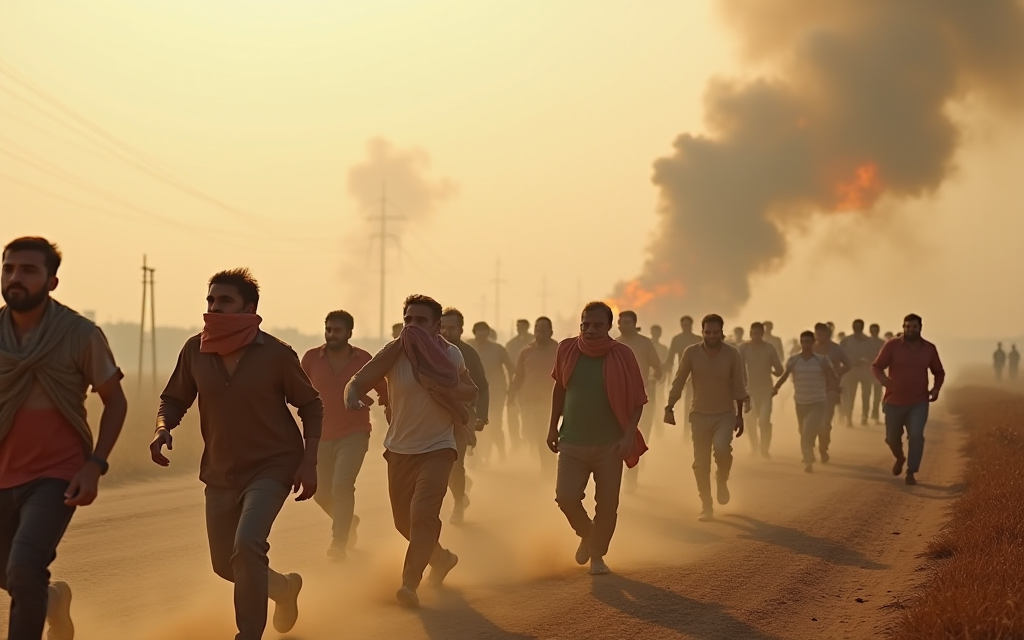
Analysts argue that India’s cooperation with Israel has always involved exploring Israeli methods for intelligence gathering, border management, and controlling dissent. “It was only a matter of time before Israeli products or methods would be used against Indians themselves, including farmers,” said Azad Essa, author of Hostile Homelands, a book on the India-Israel alliance. In Haryana, for instance, the state government spent six years trying to replicate Israeli police and army tactics, and in February 2024, state police used drones to fire tear gas at farmers marching towards Delhi.
Defense and Arms Trade: The Backbone of the Relationship
Since 2014, India has become Israel’s most reliable arms buyer, accounting for about 37 percent of Israeli defense exports. The relationship is anchored in a robust defense trade, with the Adani Group, led by billionaire Gautam Adani—widely seen as a close Modi associate—playing a central role. In 2016, Adani formed a joint venture with Israel’s Elbit Systems to manufacture Hermes 900 drones in Hyderabad, the first such facility outside Israel. Since 2020, Adani has held a 51 percent stake in BLR Systems, which produces Negev machinegun parts with Israel Weapon Industries. In January 2023, Adani and Israel’s Gadot completed the $1.15 billion purchase of Haifa’s port, with Israeli Prime Minister Benjamin Netanyahu attending the handover.
Essa notes that India “is increasingly becoming a manufacturing and supply base for Israeli companies.” Ashutosh Singh, an independent researcher in New Delhi, calls Hyderabad the best example of Indian capital embedded in Israel’s military infrastructure under the guise of the Make in India initiative. However, Nicolas Blarel, an associate professor at Leiden University, cautions that the Hyderabad facility is “mostly late assembly” of Israeli-designed drones, and it is “not clear how much technology has been actually completely shared.” Still, deliveries were made to Israel in late 2023 and early 2024 when some of those drone models were being used in the Gaza conflict.
Amnesty International’s “Made in India” report documented 2,596 shipments of weapons, ammunition, and military components from Indian firms to Israel between October 7, 2023, and November 30, 2025. The report named nine companies, three of them wholly owned by India’s Ministry of Defence, and concluded that the Indian state itself was transferring weapons whenever those firms export. The Ministry of External Affairs spokesperson, Randhir Jaiswal, said India has a “robust” legal framework for strategic trade without addressing the allegations.
Why India Buys: No Strings Attached
Analysts suggest that India’s preference for Israeli defense technology stems less from technology itself and more from the absence of conditions attached to its use. Kabir Taneja of the Observer Research Foundation describes Israel as “that Walmart of defense technologies that you can just go and purchase without any terms and conditions that stop you from using these technologies in whatever manner is required.” He contrasts Israeli drones, which India deploys along its front with Pakistan, with MQ-9 drones bought from the United States, which come unarmed and with restrictions on their use.
Blarel traces the trust to the 1999 Kargil War with Pakistan, when other suppliers imposed embargoes after India’s nuclear tests, but Israel continued supplying spare parts and ammunition. Israel “has not really cared for embargoes” and has attached “no conditions,” something “both Congress and the BJP have noted.” Israel also supplies technology the West “has always been more reluctant to supply,” and its systems work with Russian-origin equipment, which makes up much of India’s arsenal. Israeli firms “have been more willing to share technology and to work together” with Indian companies, Blarel added.
That matters because New Delhi now wants to build, not just buy. Taneja notes that India increasingly tells manufacturers that if they want to sell, they must indigenize a good chunk of production. The Hyderabad plant feeds that push, while for the Israeli side, it is a commercial venture: “If the commercial part does not work, they will not come.” Israel’s appeal, in other words, is that it lets India buy now and localize later.
Ideology or Convenience?
Experts are divided on whether ideology drives the relationship. Essa argues that ideology and strategy cannot be separated. “The relationship is both ideological and strategic,” he said. “Both states present themselves as civilizational states facing an existential crisis, often revolving around the idea of being besieged by Muslims. Much of this is underpinned by the kinship between Hindutva and Zionism.” Hindutva is the Hindu majoritarian ideology of the BJP and its ideological parent, the Rashtriya Swayamsevak Sangh (RSS), which seeks to turn India into a Hindu state.
Netanyahu has echoed this sentiment, saying at a conference in the occupied West Bank in May: “We have problems of delegitimization in the world, but not in India. There is tremendous love for Israel there, … truly tremendous. I think I have more followers from India than from anywhere else.”
Taneja, however, sees the closeness as “at the base level of things very transactional,” driven by a country surrounded by security threats. “If France offers the same, I don’t think India will discriminate.” Blarel sits in between, acknowledging “a basis” for the ideological argument, as RSS founders VD Savarkar and MS Golwalkar cited Israel as a model, though they also admired Nazi Germany, which he calls “an opportunistic understanding of these models.” Still, Modi’s personal affinity with Netanyahu is “not hidden.”
Salman Khurshid, a senior Congress leader and former external affairs minister, said the government has never clarified its stance. Relying on Israel for defense “is understandable,” he said, but the country has not been told that Modi’s embrace comes from “some ideological affinity.”
A Long, Quiet History
India’s strategic relationship with Israel did not begin with Modi. India voted against the UN Partition Plan for Palestine in 1947 and against Israel’s UN admission in 1949, yet recognized Israel in 1950. During the 1971 India-Pakistan War, Israel secretly supplied weapons to India even though the two countries did not have formal diplomatic ties. Full diplomatic relations were established in 1992, and since then, the relationship has grown steadily, with defense and strategic cooperation at its core.
As India continues to modernize its military and address security challenges, its partnership with Israel is likely to remain a cornerstone of its foreign and defense policy, regardless of which party holds power. The deep-rooted ties, built on shared strategic interests and mutual benefits, are poised to outlast any single leader or government.
